
My work is celebration — in the most literal sense of the word. And I’m not talking about the thousands of hours of preparation, the tension, the nerves, the sleepless nights, the missed lunches… all of it done just to make sure everything goes perfectly. What I want to speak about are the moments of gratitude.
The moments when you can finally simply enjoy the result — when, within magical scenography, love stories unfold, relationships deepen, families unite, cultures intertwine, and I am allowed to witness it all. I feel blessed to have found this calling: to be a witness to every union, and to guide each couple through the journey of planning. To me, it is a gift.
And what makes it even more special is that even years later, after working with so many couples, we always have something to talk about — to share memories, to relive emotions, to feel as if everything happened only yesterday.
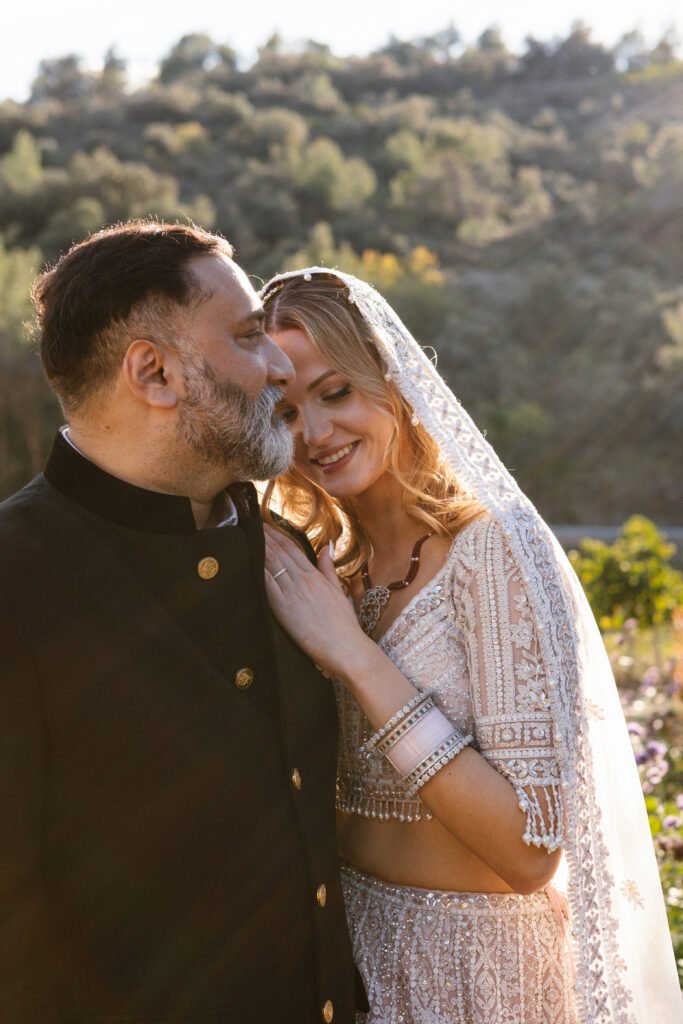
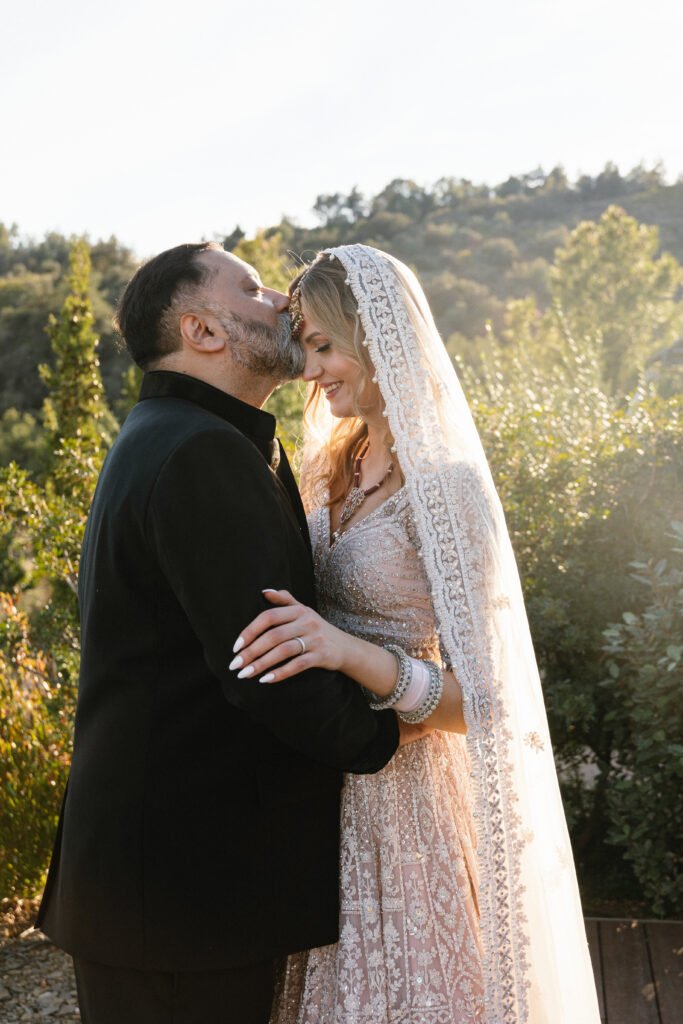
Today, I want to share the story of Eidvilė and Kulpreet. And none of this would be possible without the beautiful photographs by „M2visualstudio” – a team that was a true joy to work with — effortless, professional, and fun from start to finish.
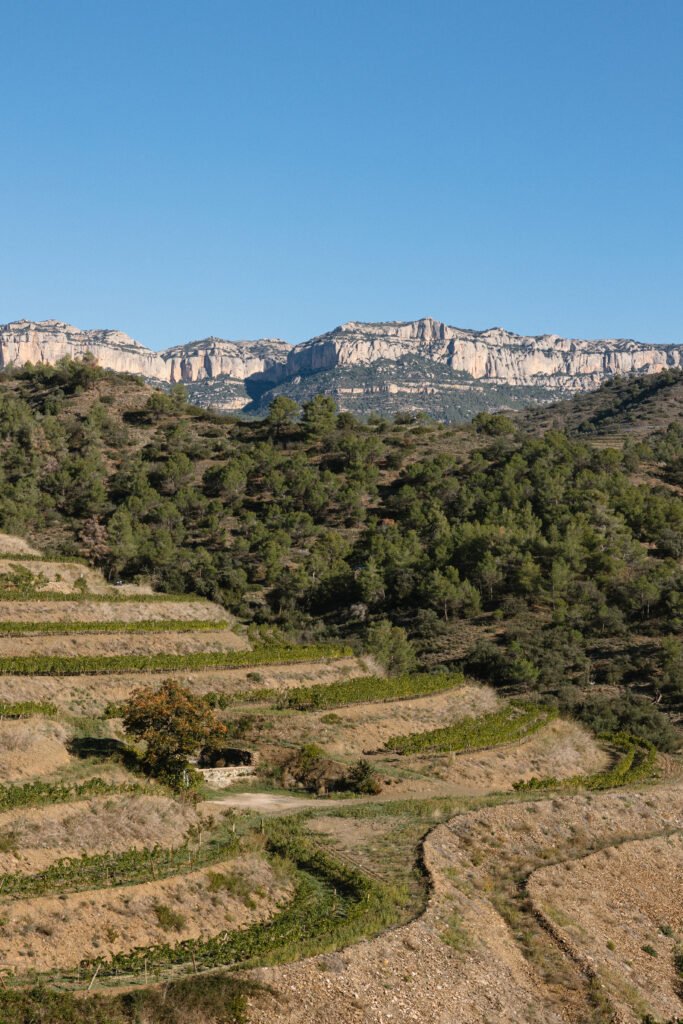
We met in person only in Spain, just before their wedding celebration at the end of October 2024. But that never stopped us from creating something unforgettable and full of joy together. I will always be grateful to them for introducing me to the Priorat region in Catalonia, near Tarragona. Thanks to its unique natural conditions — llicorella soil, mountainous terrain, and a distinctive climate — this land produces only a small amount of exceptional wine: dark, powerful, and unforgettable. That autumn, we were gifted warm days, velvet-like sunsets, endless mountains, and vineyards stretching as far as the eye could see.
And then, last summer, we unexpectedly crossed paths again — this time in Vilnius, at the reception of „Hotel Pacai”. That’s when I knew their story had to be told. Our meeting was the sign.
How it began: a quiet start, a certain feeling
Eidvilė and Kulpreet’s story didn’t begin with a dramatic grand gesture or a perfectly planned moment. It started naturally — almost quietly — the way many of the most meaningful relationships do. They met through shared circles and conversations that slowly grew into something more. There was no immediate pressure to define anything — just curiosity, ease, and a feeling that spending time together felt… right. What stood out from the very beginning was how effortless their connection felt. There was laughter, openness, and a sense that they could simply be themselves around each other.
Their first date reflected that same simplicity. It wasn’t about an elaborate plan or an impressive setting, but about presence. They talked for hours, losing track of time, getting to know each other on a deeper level.
It was one of those moments where nothing extraordinary seems to be happening from the outside — yet internally, everything quietly shifts. Looking back, they both agree that this gentle, unforced beginning set the tone for their entire relationship. There was no rush, no expectations — just two people choosing each other, one conversation at a time.
The Proposal
The engagement felt very much like Eidvilė and Kulpreet themselves — thoughtful, personal, and free of unnecessary spectacle. There was no pressure to turn the moment into a performance. Instead, it was about meaning. Kulpreet wanted the proposal to feel sincere and grounded in who they are as a couple, rather than following a predefined idea of what an engagement should look like. “I didn’t want it to be about impressing anyone,” Kulpreet shares. “It was important that it felt intimate and real — something that belonged just to us.” For Eidvilė, the moment came as a surprise, but not in a shocking or overwhelming way. It felt natural, almost inevitable — like a quiet confirmation of something she already knew deep down. “It wasn’t dramatic, and that’s exactly why it was perfect,” she reflects. “It felt honest. It felt like us.” Both of them describe the engagement not as a single defining moment, but as part of a longer journey — a continuation of conversations they had already been having about life, commitment, and choosing each other intentionally. That sense of calm certainty carried forward into the next chapter: planning their wedding.
Planning the Celebration
From the very beginning, Eidvilė and Kulpreet knew they didn’t want their wedding planning experience to feel rushed or overwhelming — even though, at times, it naturally came with both excitement and stress. What brought them the most joy was having the freedom to imagine their day beyond traditional expectations. Instead of starting with a rigid checklist, they focused on one essential question:
How do we want this day to feel — for us and for our guests?
“We kept coming back to the experience,” Eidvilė shares. “Not just how it would look, but how people would feel being there.” The planning process became a balance between inspiration and logistics. Choosing suppliers, aligning schedules, and making decisions from a distance required trust — both in the professionals they worked with and in each other. At times, the amount of choices and coordination felt intense, especially when planning abroad, but having a clear vision helped ground every decision. “Whenever things felt stressful, we reminded ourselves why we were doing this,” Kulpreet reflects. “It wasn’t about perfection. It was about creating a meaningful moment together.” They envisioned a wedding that felt warm, welcoming, and deeply personal — a celebration where guests wouldn’t feel like spectators, but part of the story. Instead of a tightly scripted timeline, they wanted space for real moments: conversations, laughter, emotions, and presence. They both agree that letting go of unnecessary expectations was key. The more they trusted the process, the more the planning itself became an extension of their relationship — a shared journey rather than a task to be completed.
Why Spain: a place that invites you to slow down
Spain wasn’t a random choice for Eidvilė and Kulpreet. It was a place that already held emotional weight for them — a country they associated with warmth, openness, slow living, and a certain ease that reflected how they wanted their wedding to feel. Rather than choosing a destination simply because it was popular or picturesque, they were drawn to the idea of gathering their closest people somewhere that encouraged presence. Spain offered exactly that: sunlight, long conversations, shared meals, and a natural rhythm that invites people to slow down. “We wanted our guests to really arrive — not just physically, but emotionally,” Eidvilė explains. “Spain makes that easy.”
„Mas d’en Bruno”: a venue that felt like a world of its own
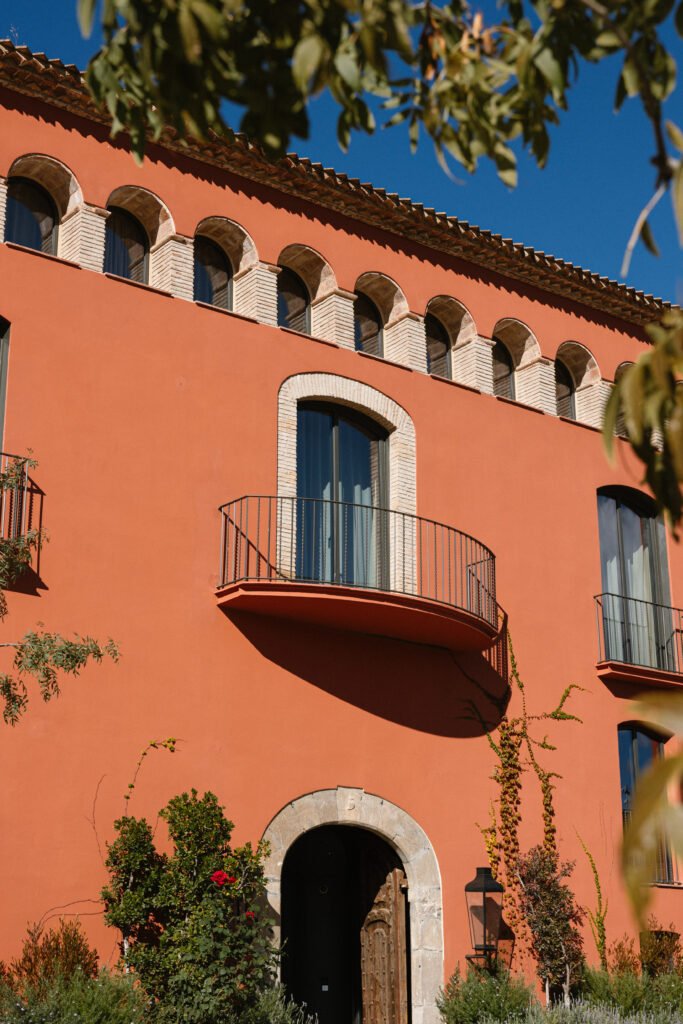
„Gran Hotel Mas d’en Bruno” felt like the natural extension of this vision. Nestled in nature, away from distractions, it offered privacy and intimacy — the sense of being in a world of their own, even if only for a few days. It wasn’t about grandeur, but about atmosphere. “The moment we saw „Mas d’en Bruno”, it felt calm,” Kulpreet recalls. “It didn’t feel like a venue. It felt like a place where people could truly connect. ”The surroundings allowed the celebration to unfold organically. Guests weren’t rushing from one place to another; instead, they shared time together — mornings, afternoons, and evenings blending into one continuous experience. Choosing Spain, and „Mas d’en Bruno” specifically, was ultimately about creating more than a wedding day. It was about creating space — for connection, for emotion, and for memories that would linger long after everyone returned home.
Eidvilė’s Bridal style: where tradition meets instinct
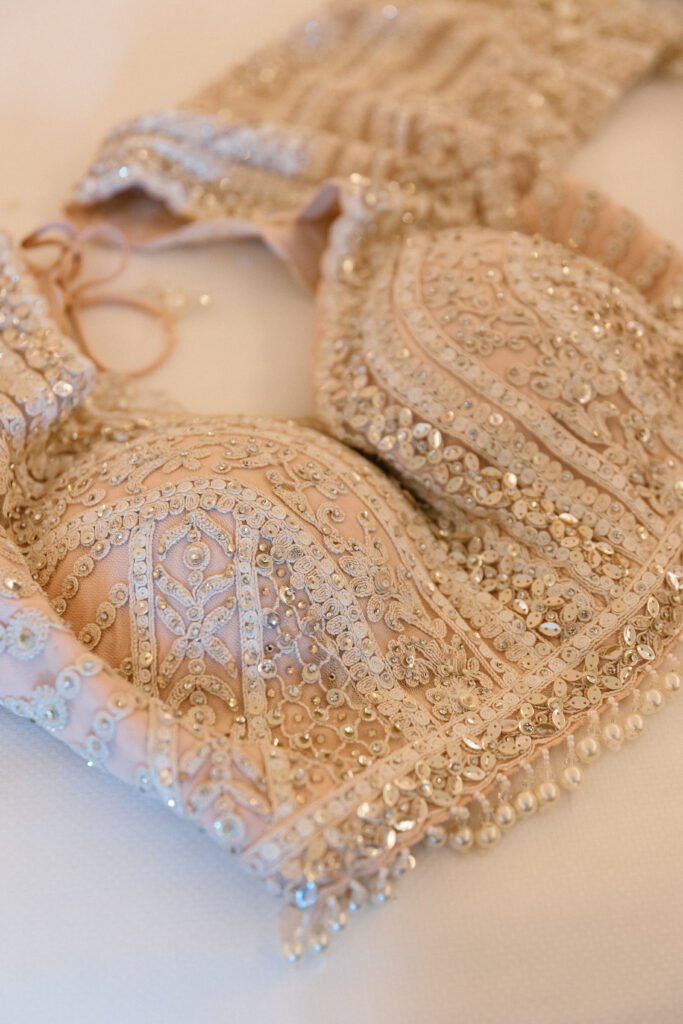
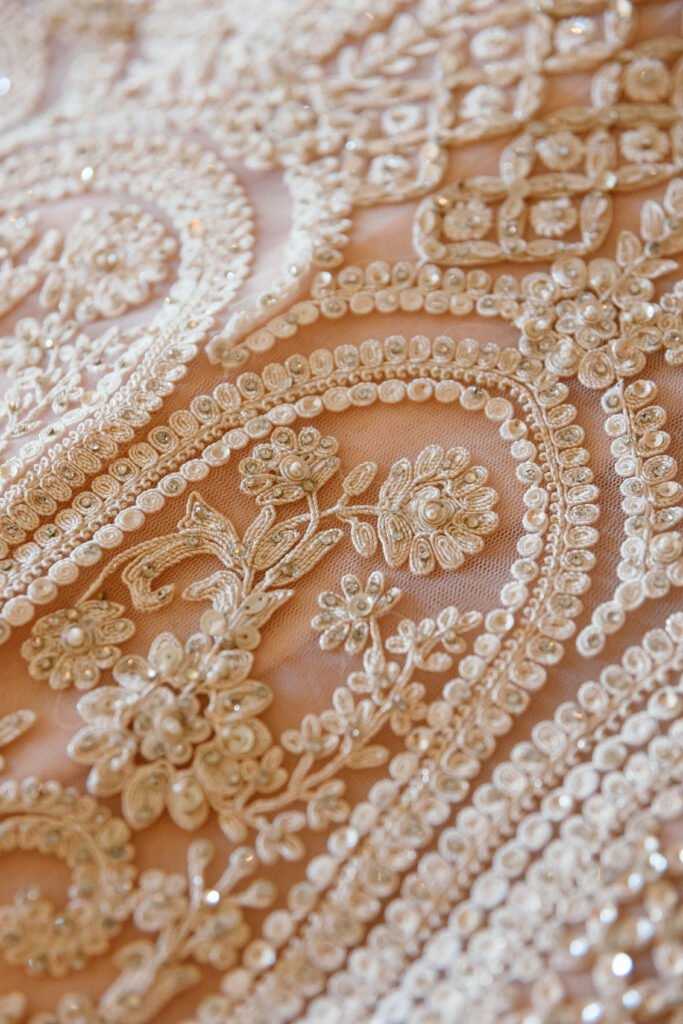
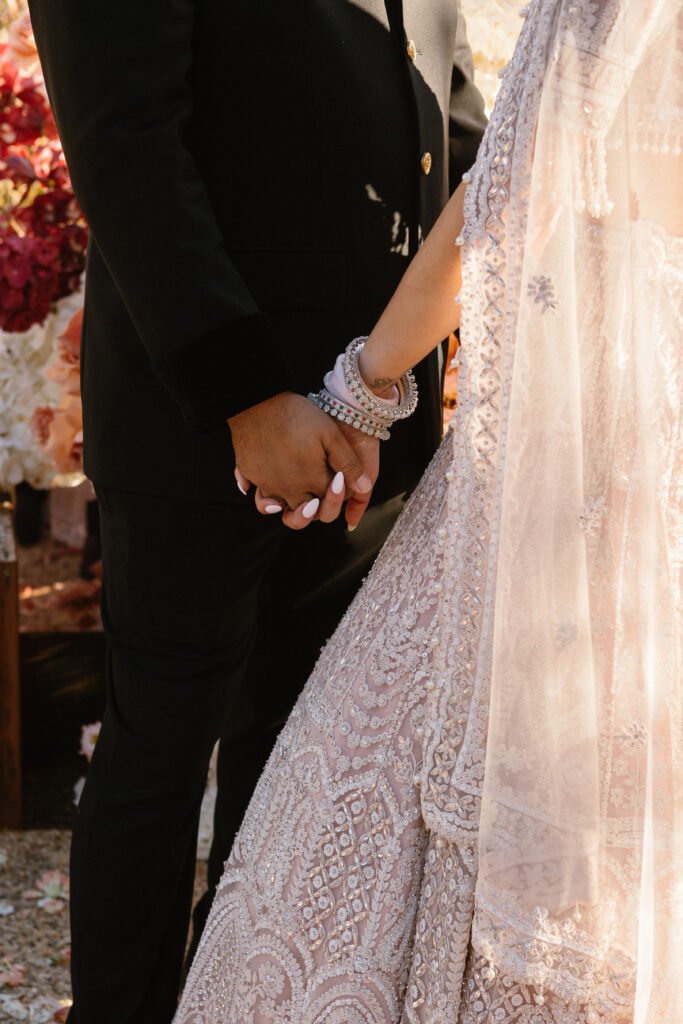
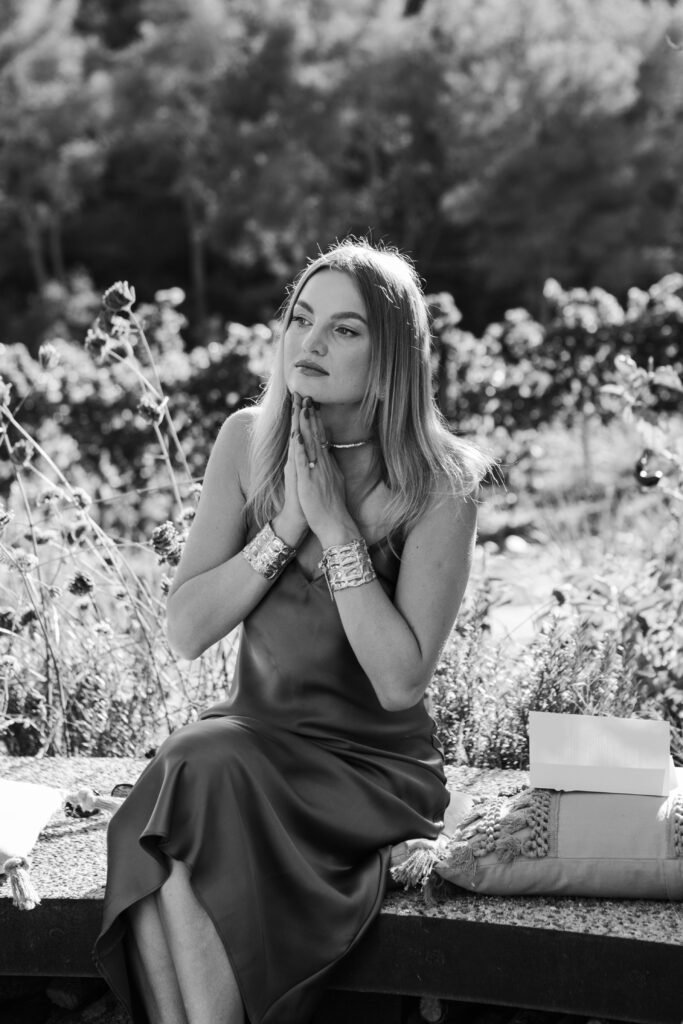
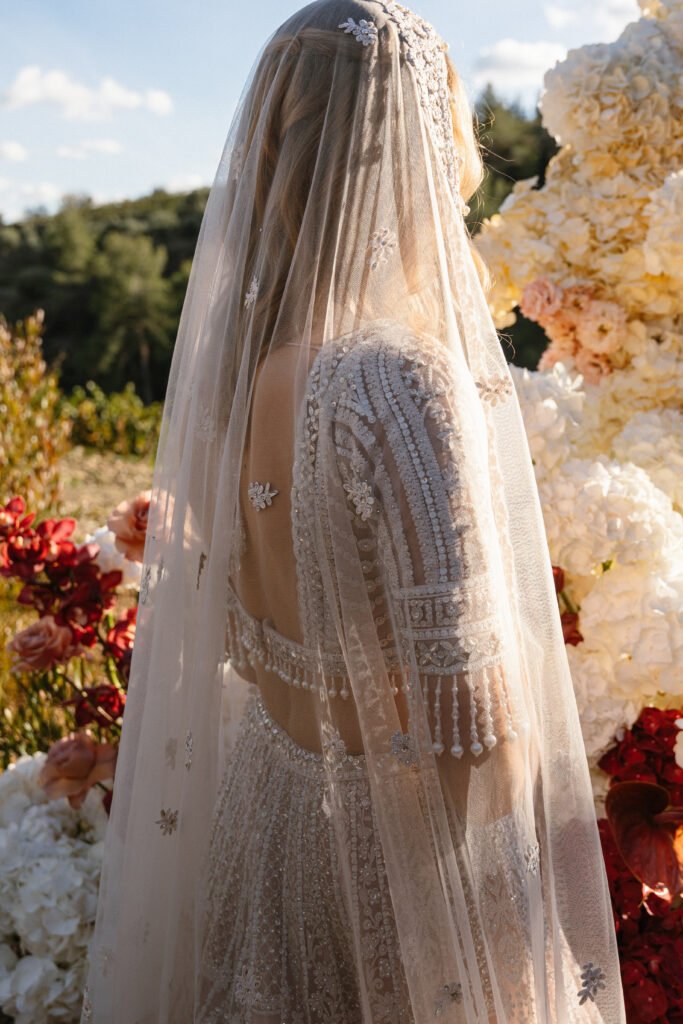
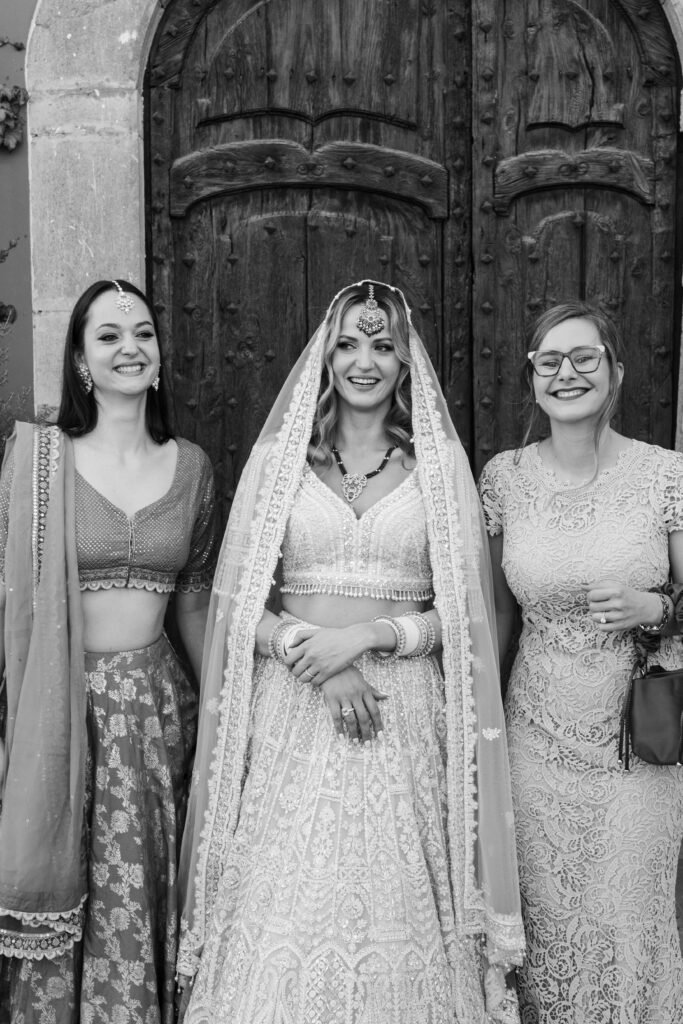
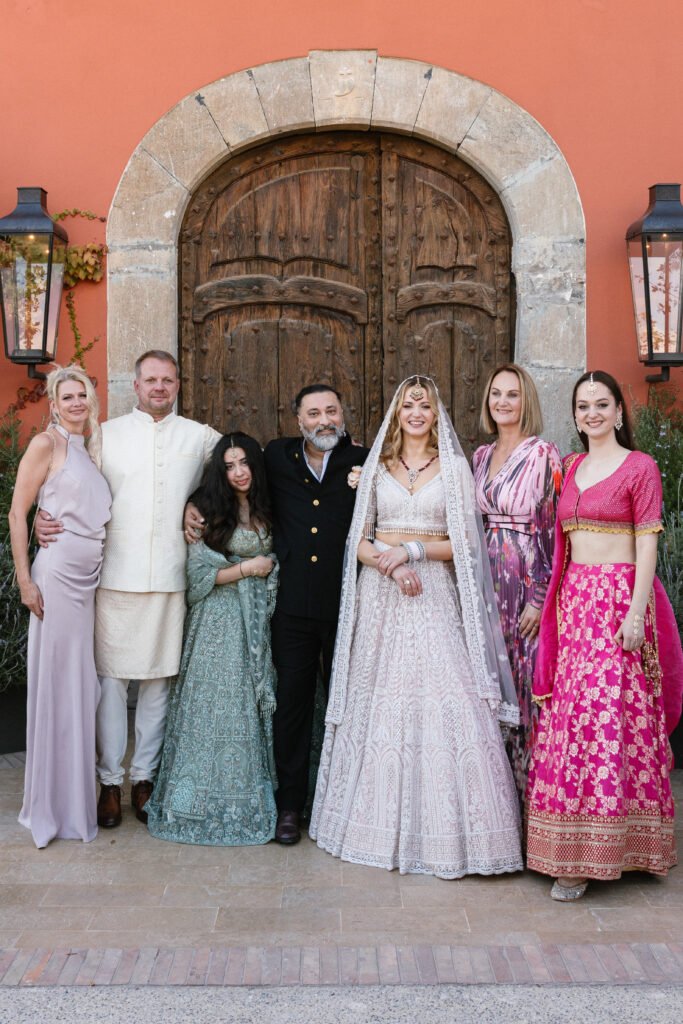
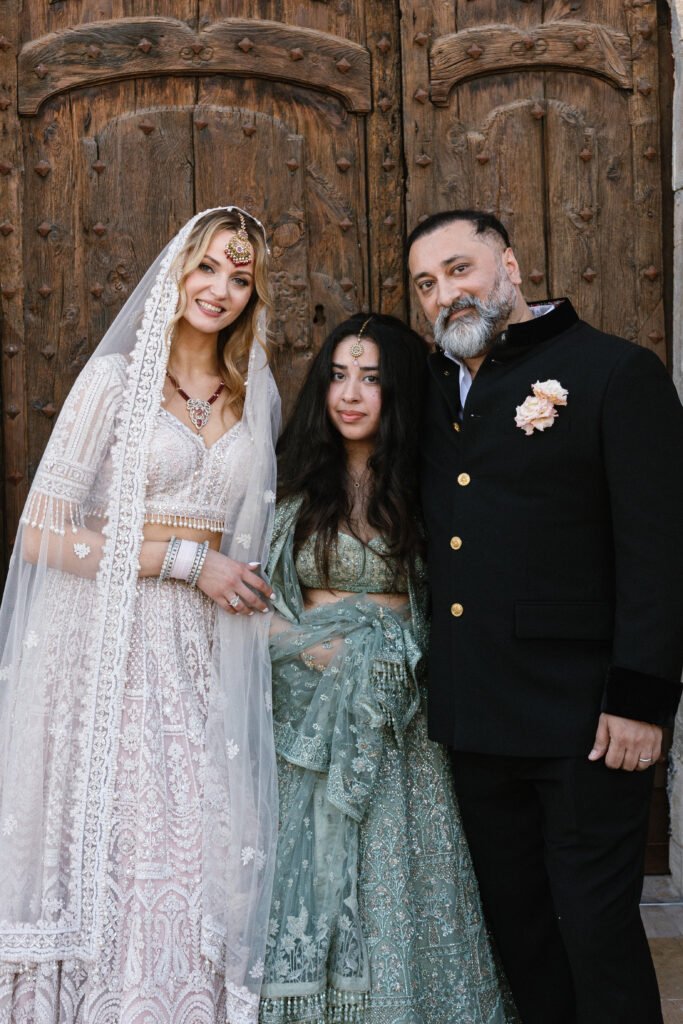
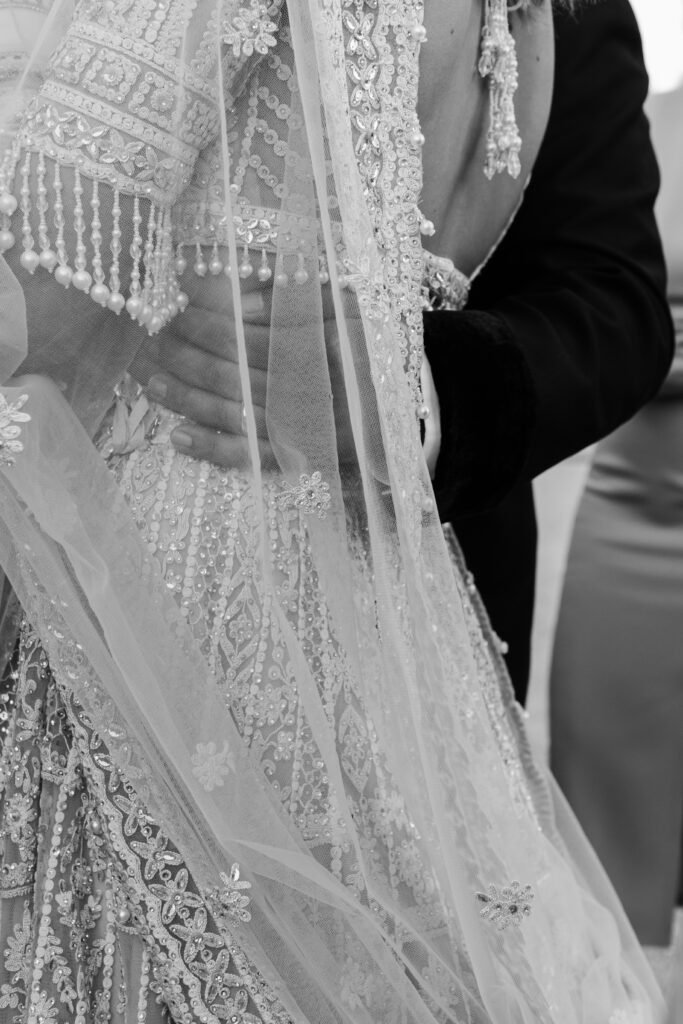
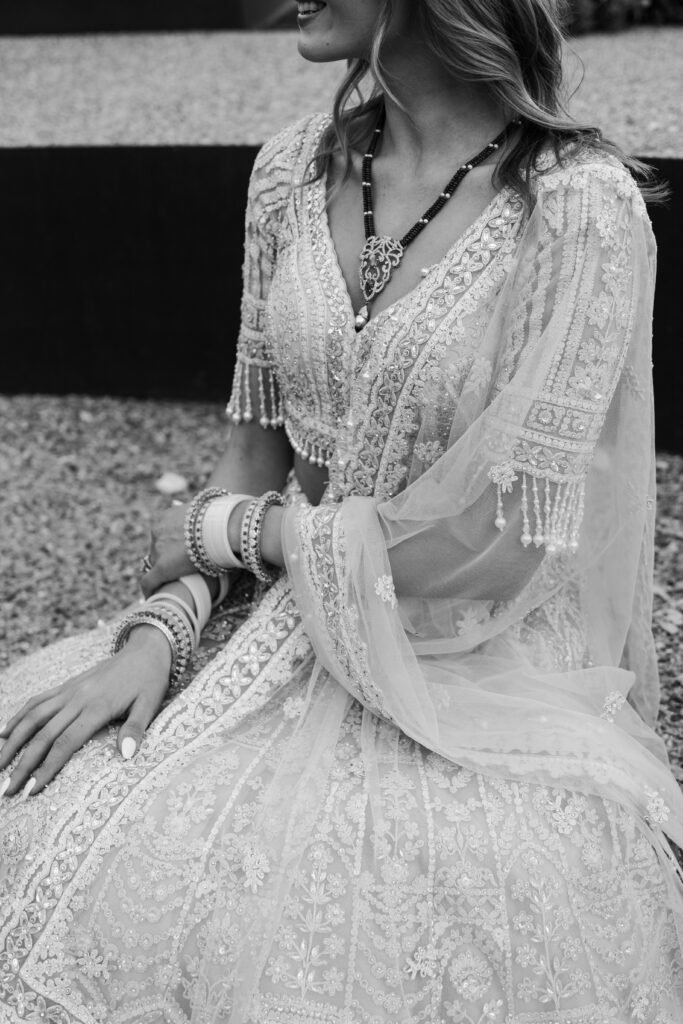
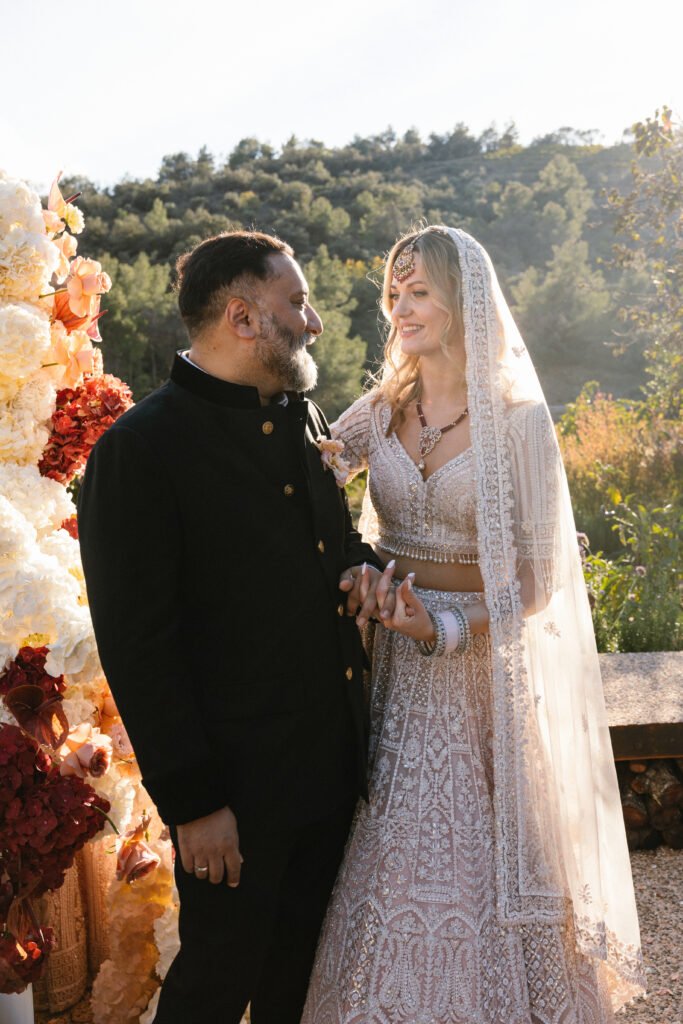
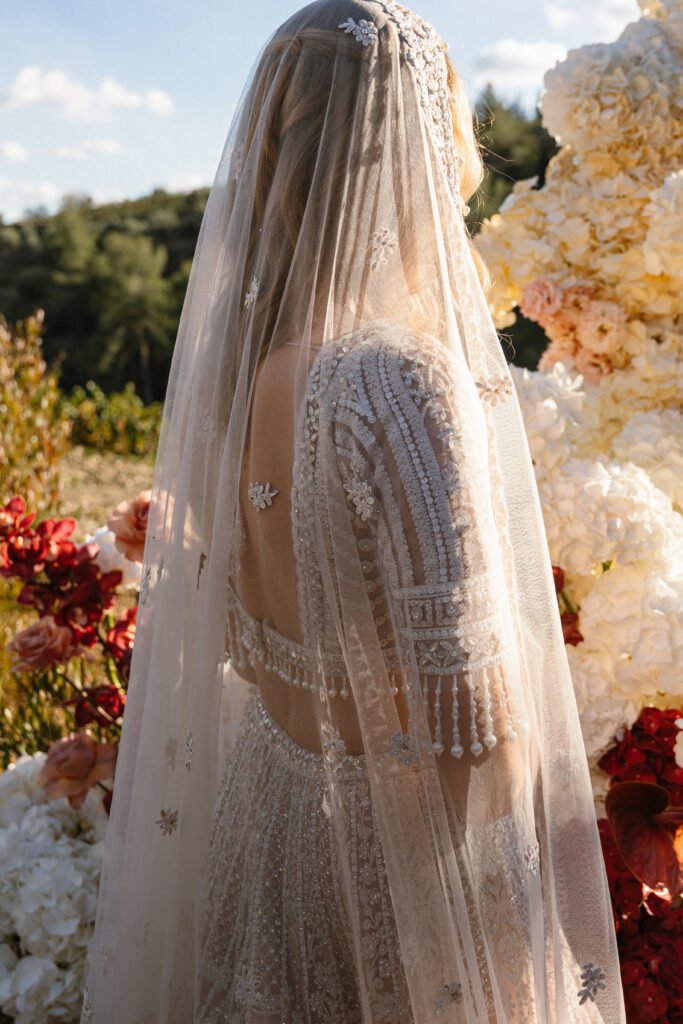
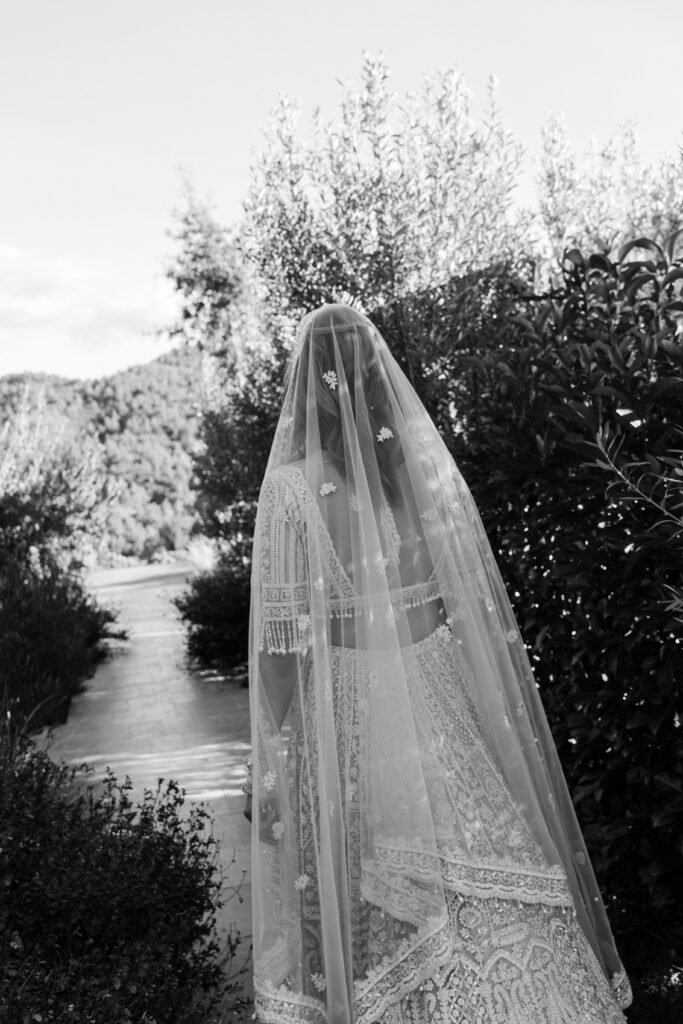
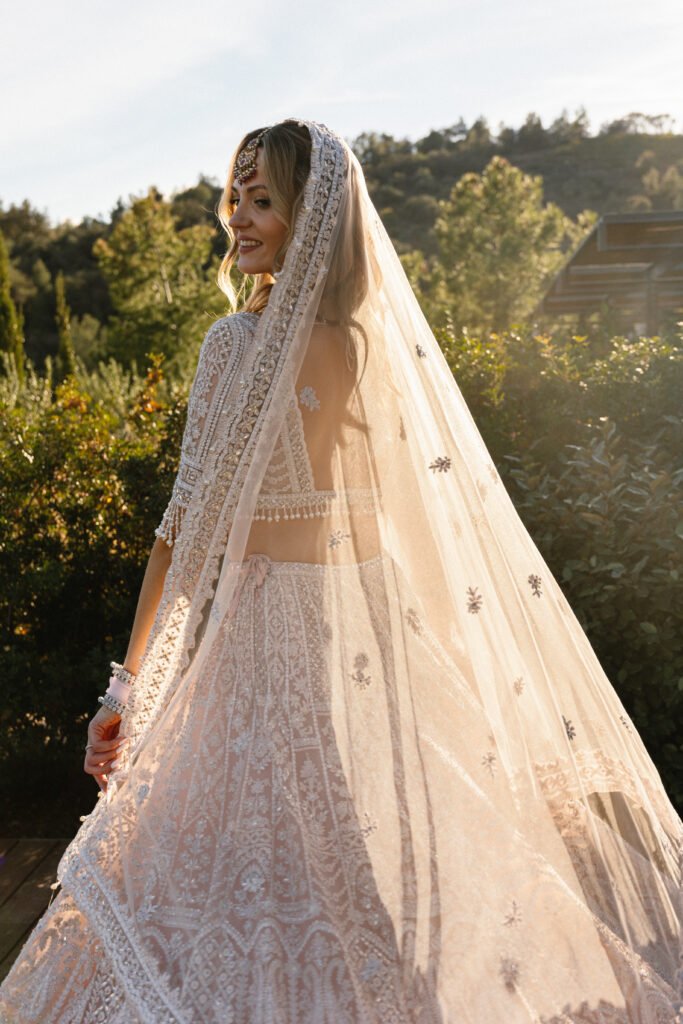
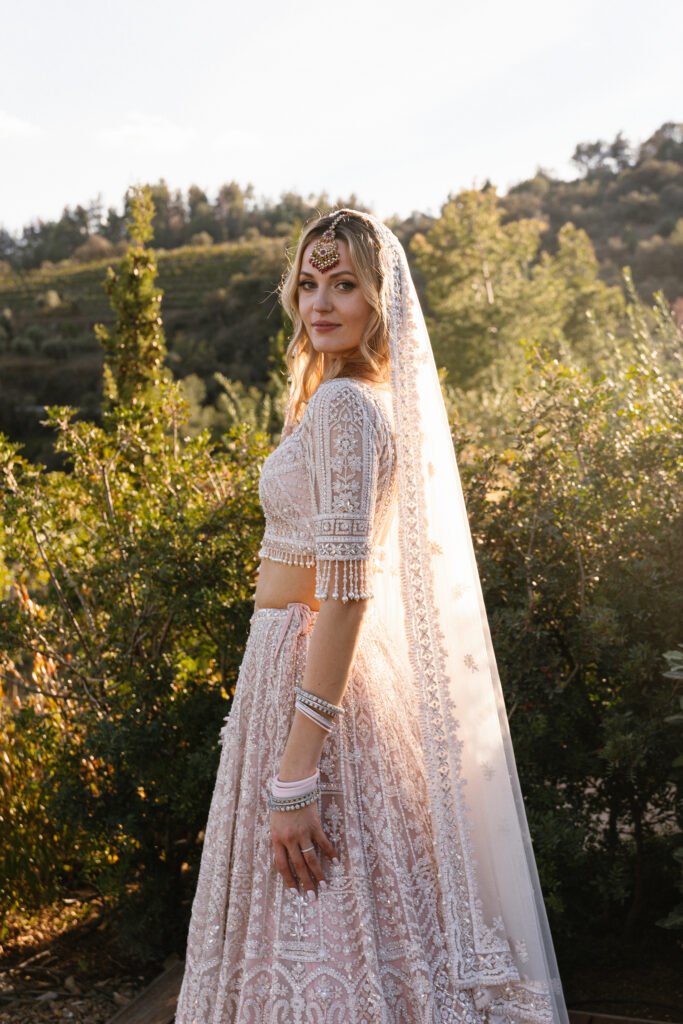
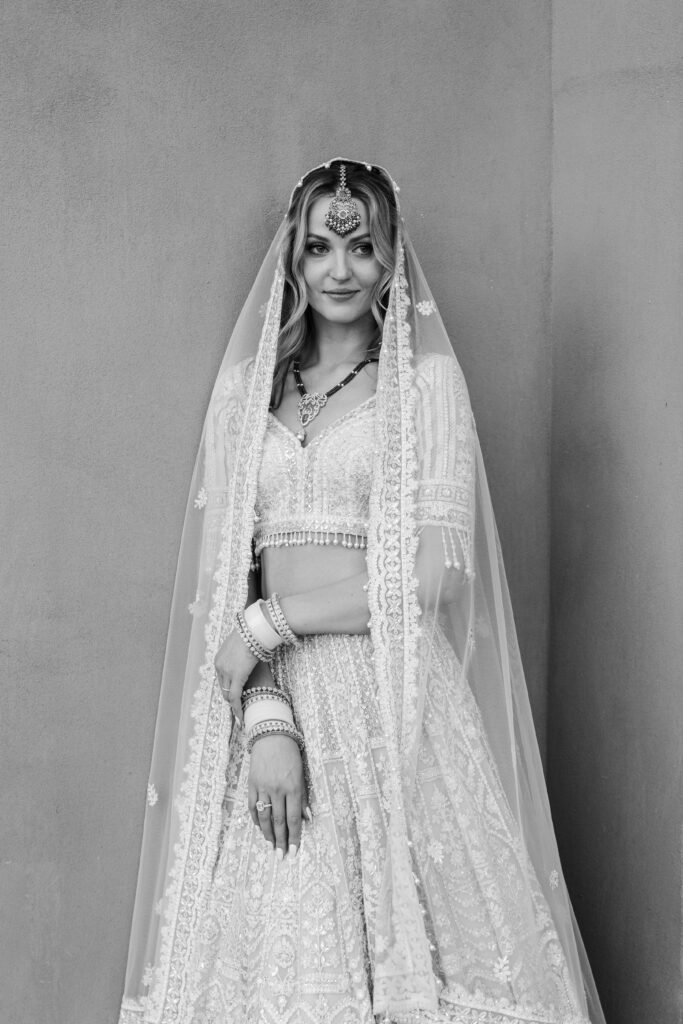
Choosing her wedding look was one of those moments where tradition and intuition quietly met. Eidvilė knew that the setting, the atmosphere, and the people around her would naturally influence how she wanted to look — yet she never felt the need to fully conform to a traditional idea of a bridal outfit. While there was an awareness of expectations, both cultural and familial, her main focus remained the same: to feel like herself. “I wanted to feel comfortable and confident — not like I was playing a role,” Eidvilė shares. Finding the dress wasn’t about chasing a trend or a dramatic reveal. It was a feeling — subtle, but unmistakable. When she tried it on, there was a quiet certainty rather than an emotional overload. It simply felt right. “There was no doubt,” she recalls. “It felt natural, and I could imagine myself moving, laughing, and being present in it.”
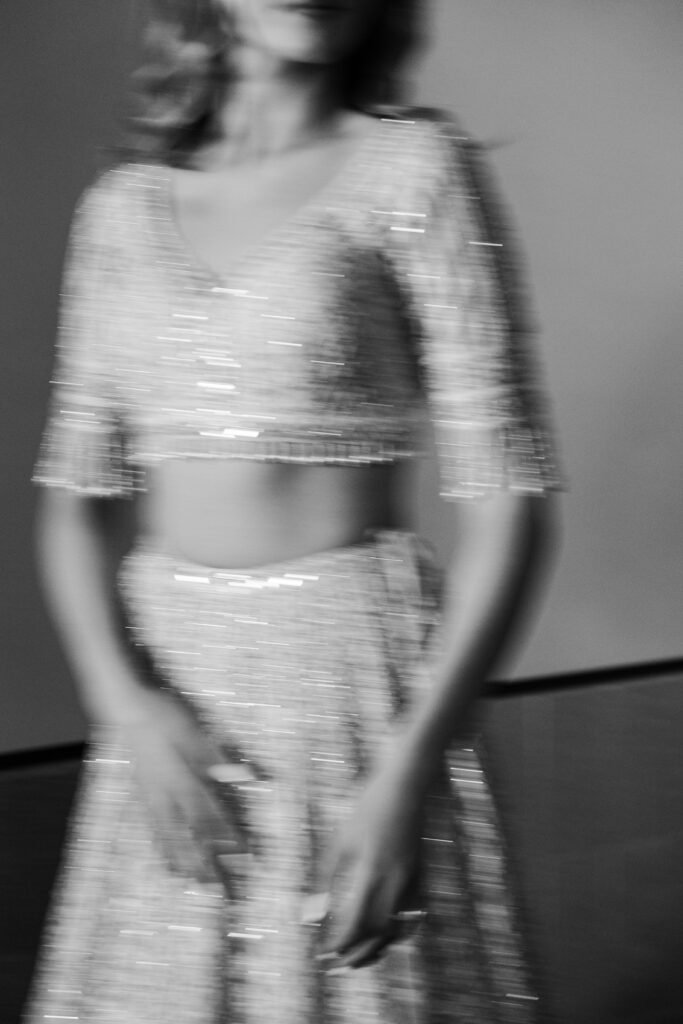
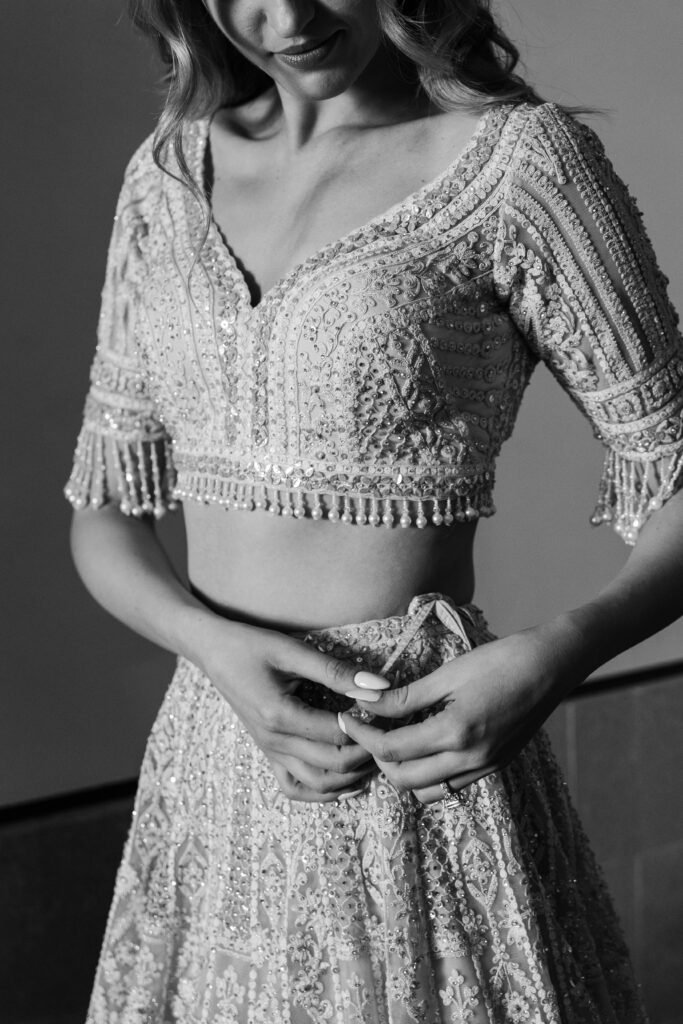
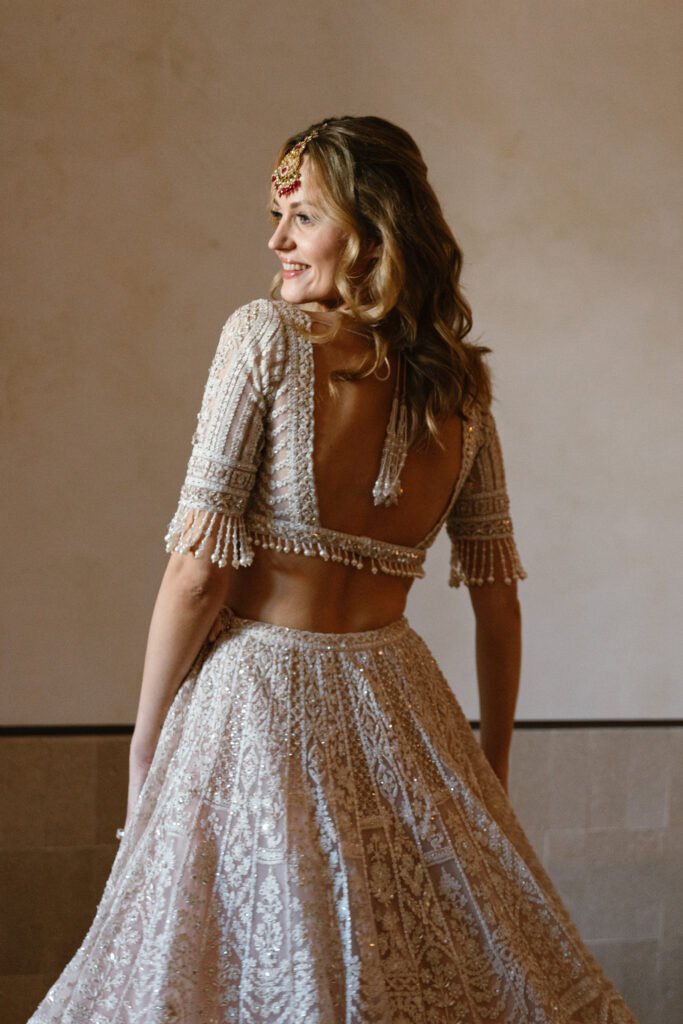
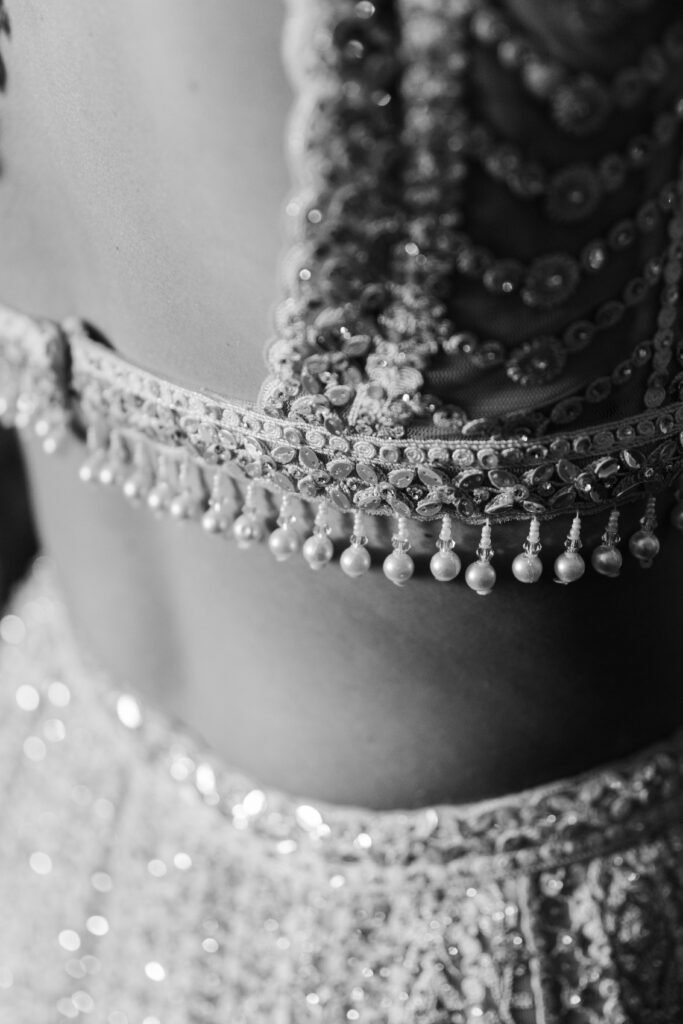
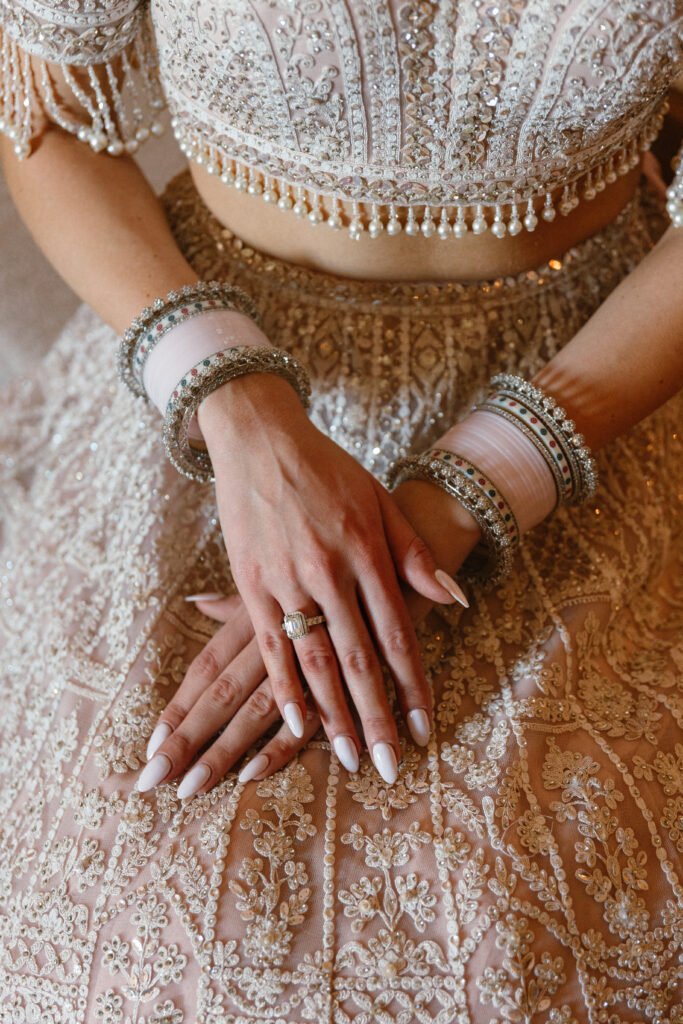
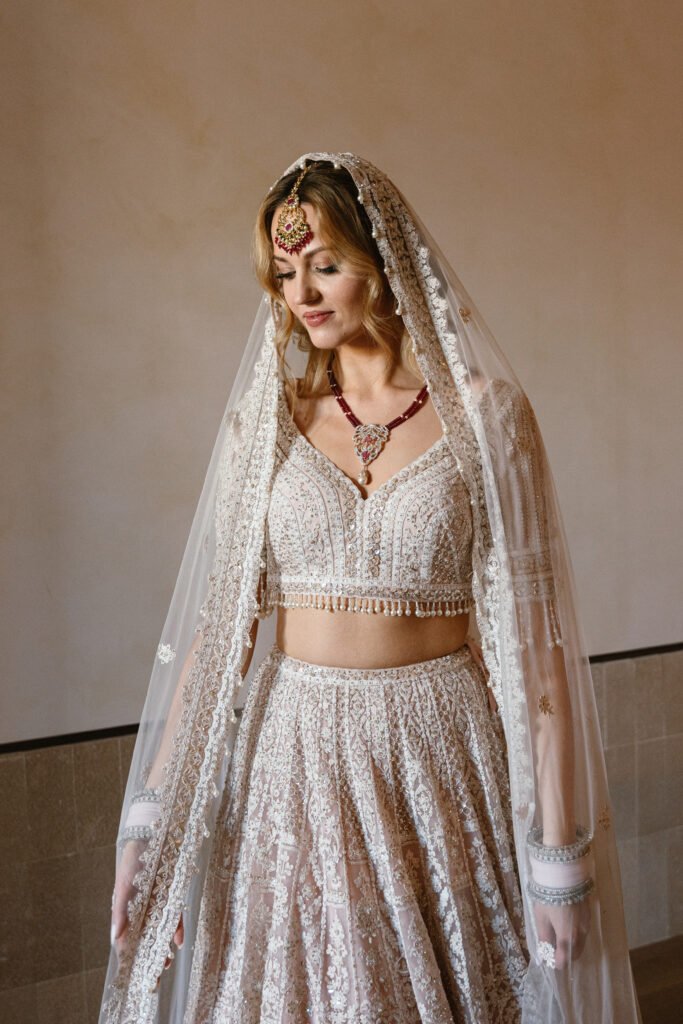
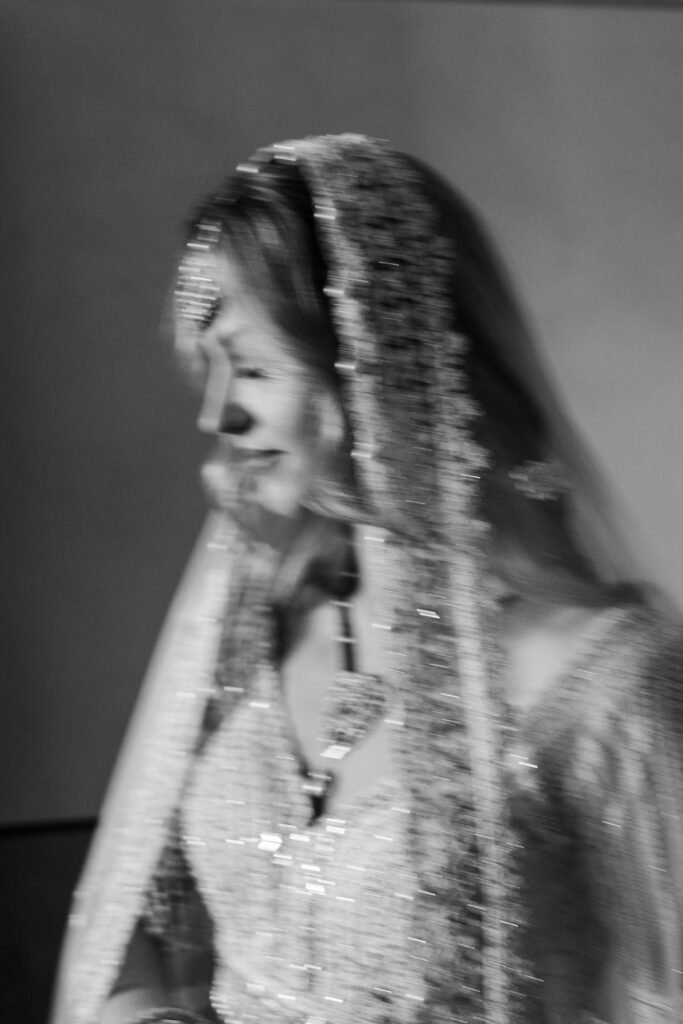
The idea of a second dress came organically. As the day transitioned into evening, the celebration shifted too — from ceremony to dancing, from stillness to movement. The second look allowed her to fully embrace that change, offering freedom and ease without losing the essence of the day.
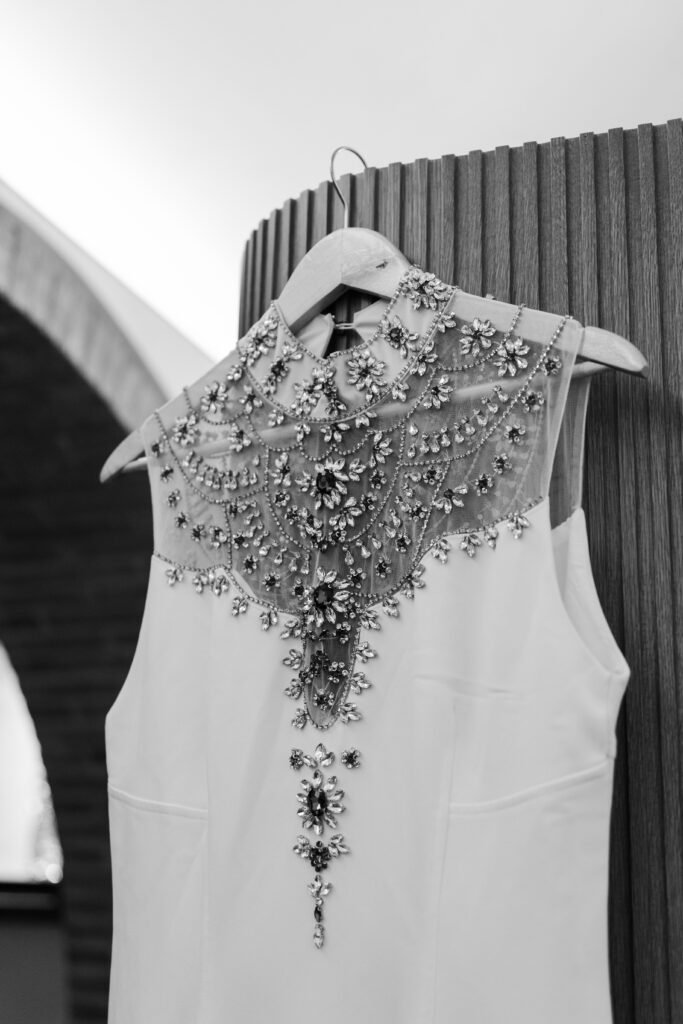
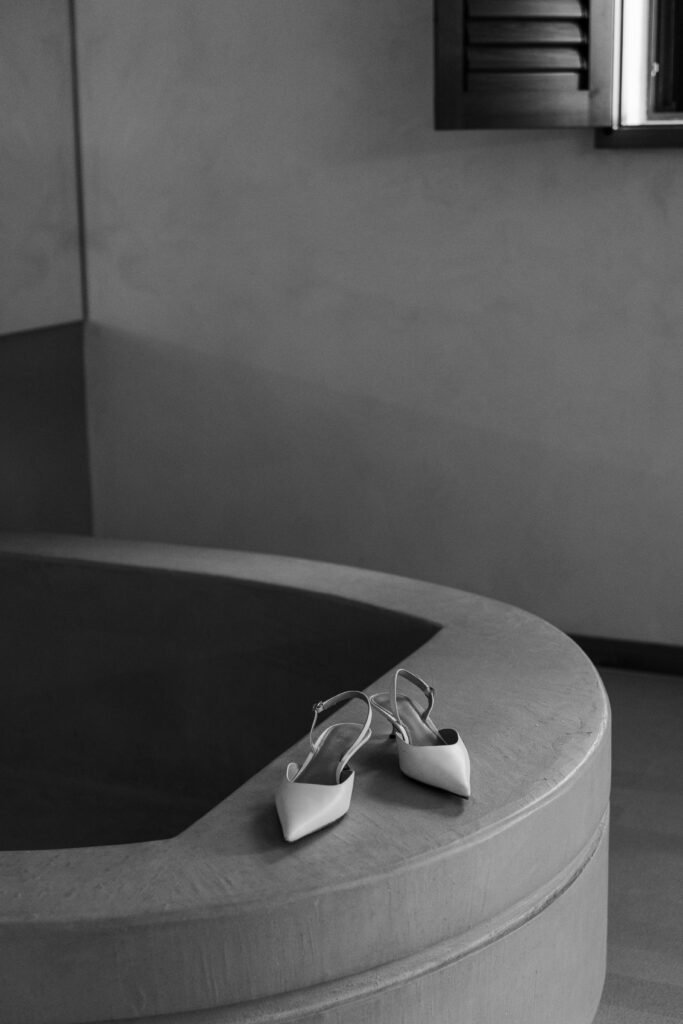
Accessories played a thoughtful, intentional role. Nothing felt excessive or purely decorative. Each element was chosen to complement the overall feeling rather than stand out on its own — a reflection of Eidvilė’s understated and refined approach.
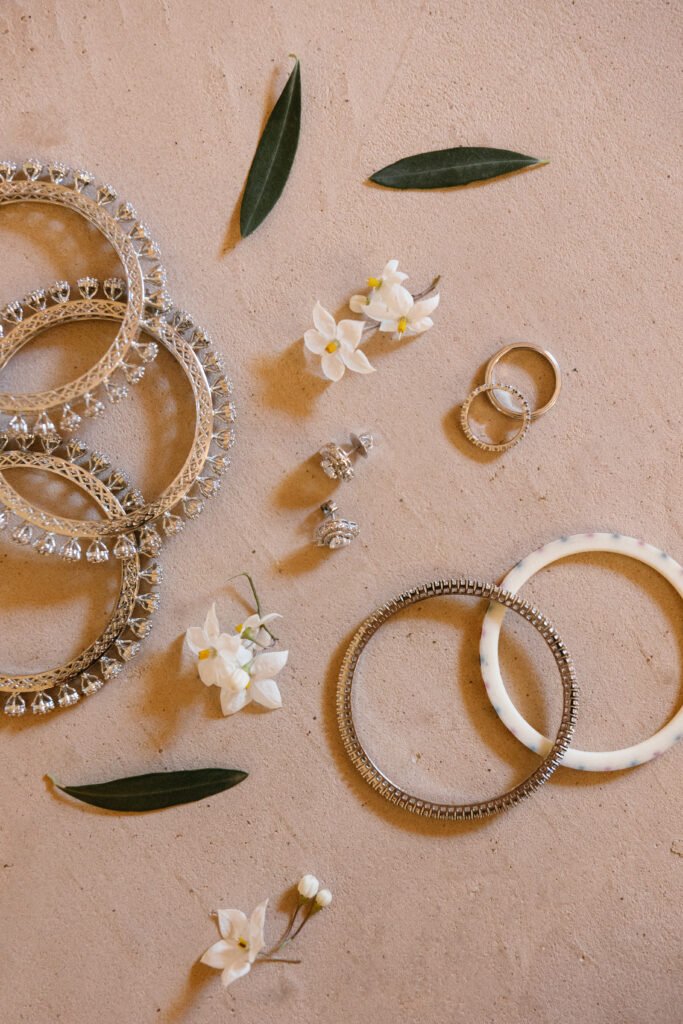
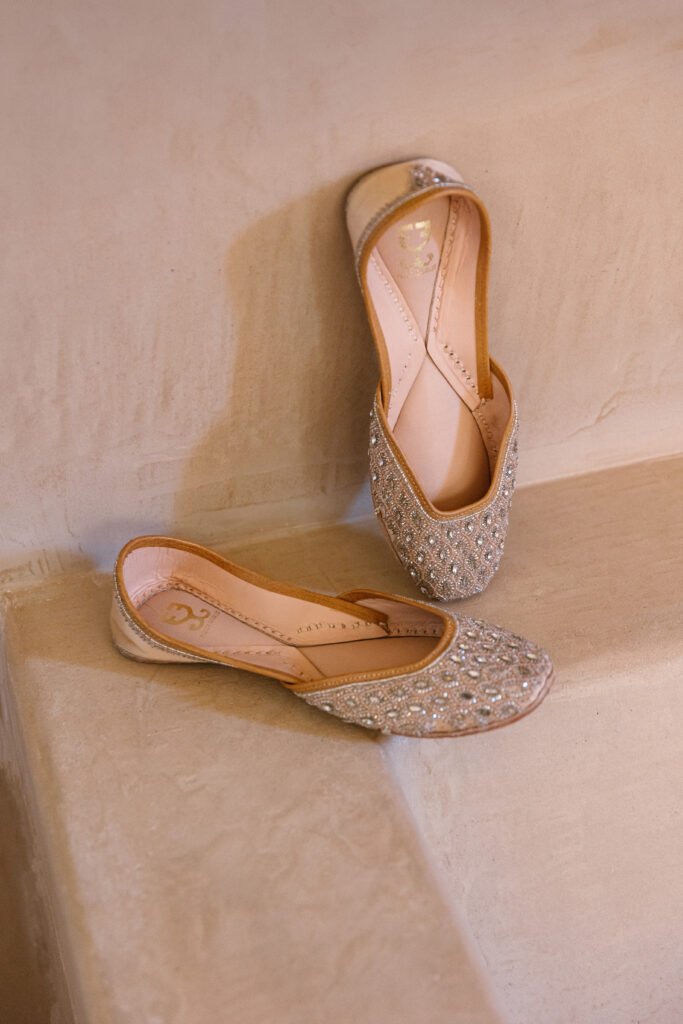
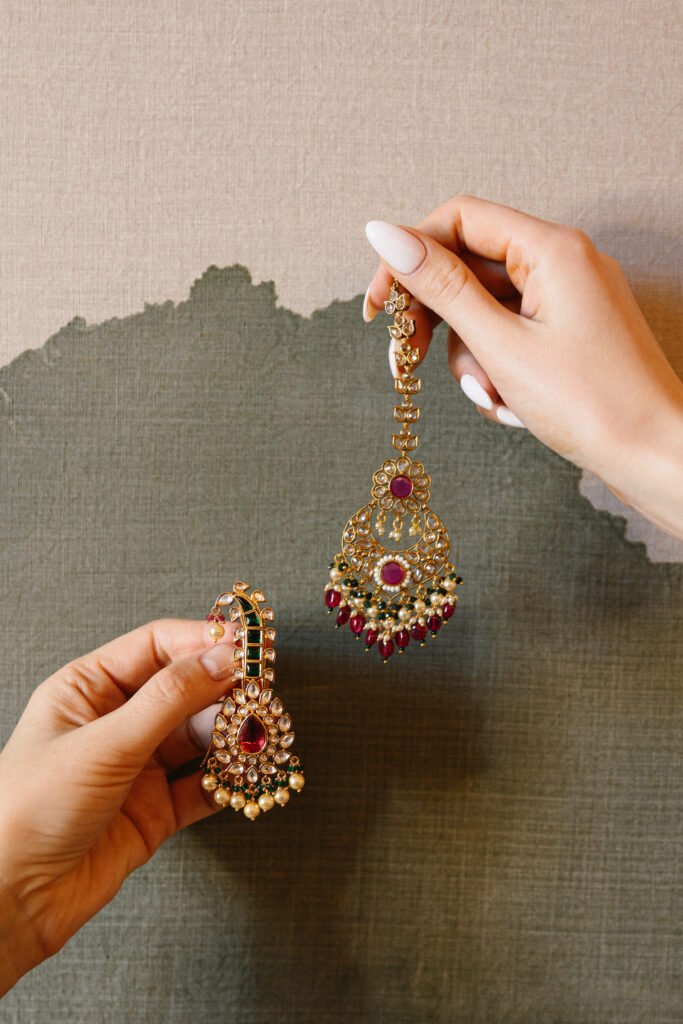
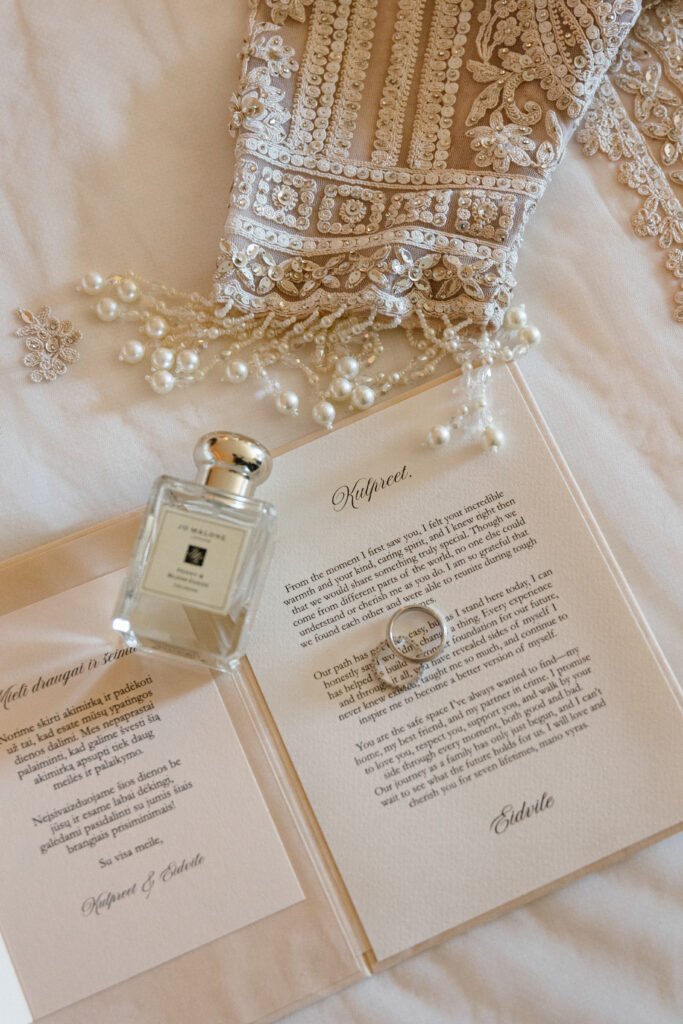
Looking back, she sees her wedding look not as a single outfit, but as part of the entire experience — something that supported her rather than demanded attention. It was less about how she appeared, and more about how she felt throughout the day.
Beauty details: a softer, more refined version of herself
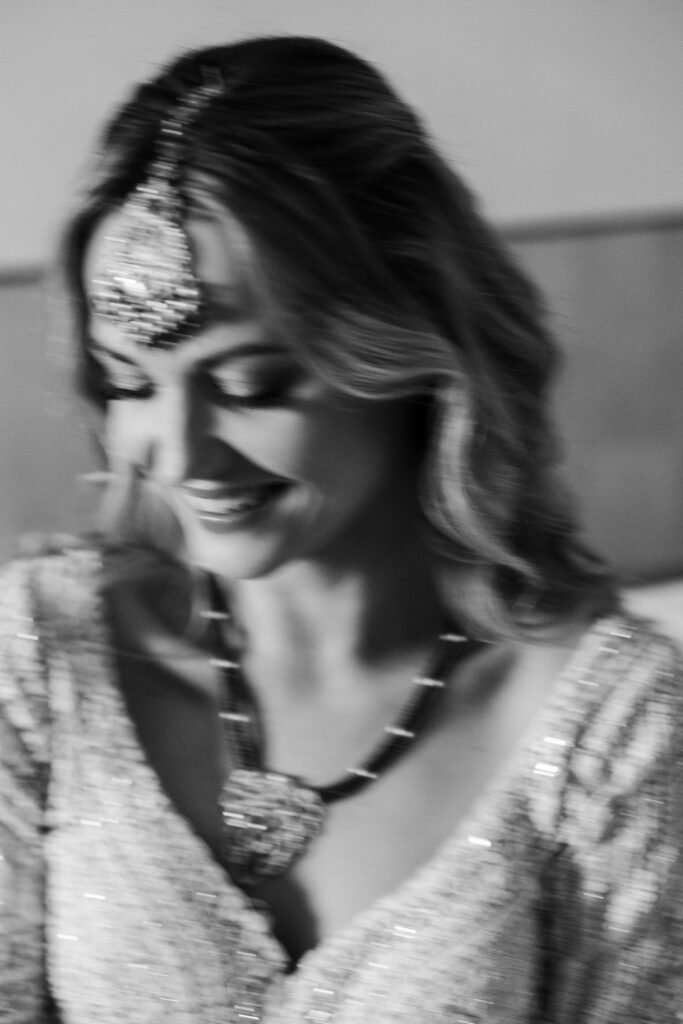
When it came to hair and makeup, Eidvilė approached the process with the same mindset that guided the rest of her wedding decisions: clarity about how she wanted to feel, rather than how she wanted to look. From the start, she knew she wasn’t aiming for a dramatically transformed version of herself. The goal was familiarity — a polished, elevated reflection of who she already was. “I wanted to recognise myself,” she says. “Just a calmer, softer, more refined version.” The inspiration was rooted in simplicity and effortlessness. Nothing too structured, nothing too heavy. Her hair and makeup needed to work in harmony with the surroundings, the dress, and the overall mood of the day — natural light, warm air, and a relaxed rhythm.
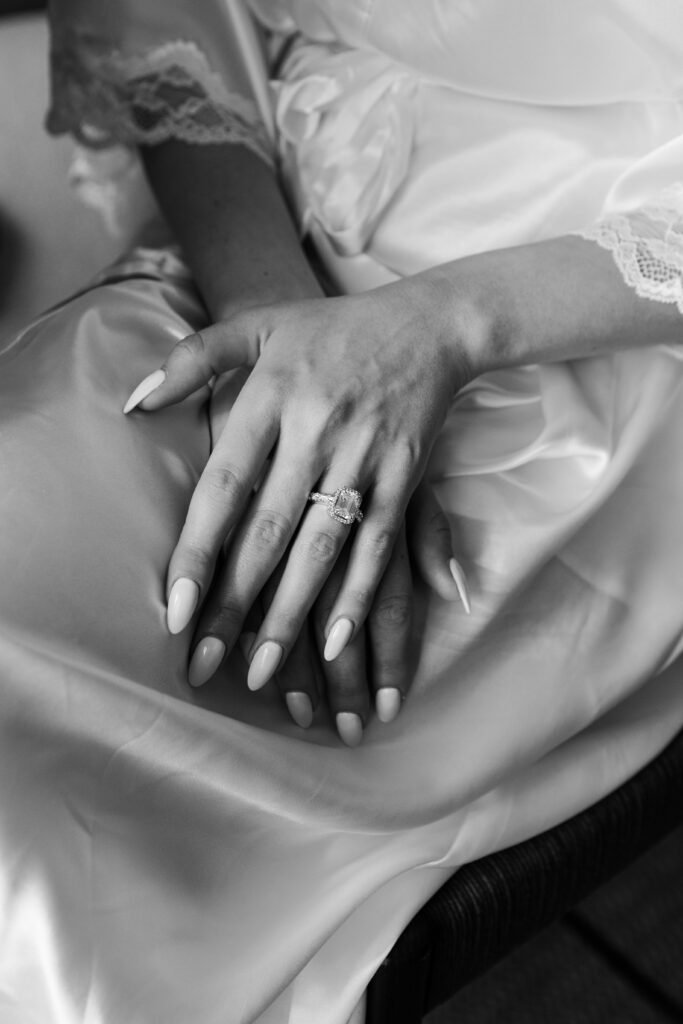
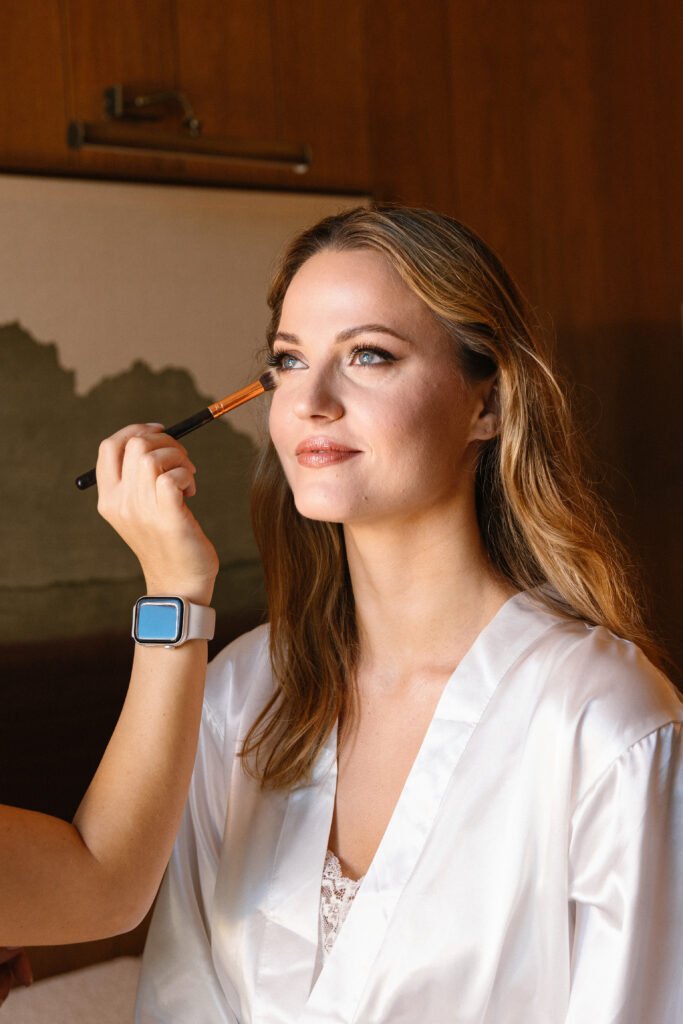
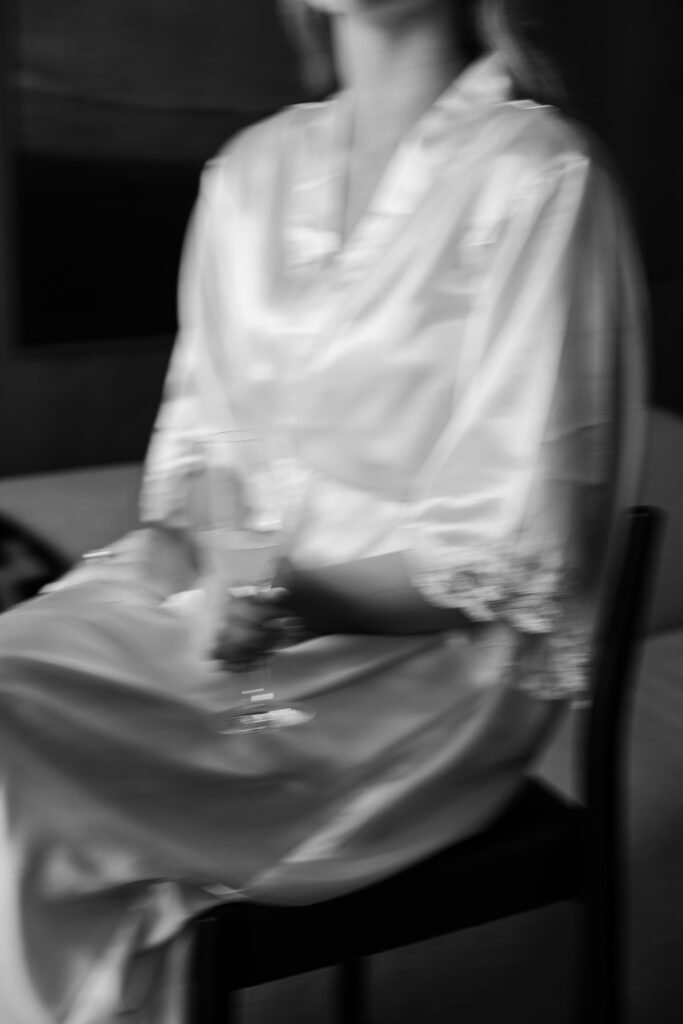
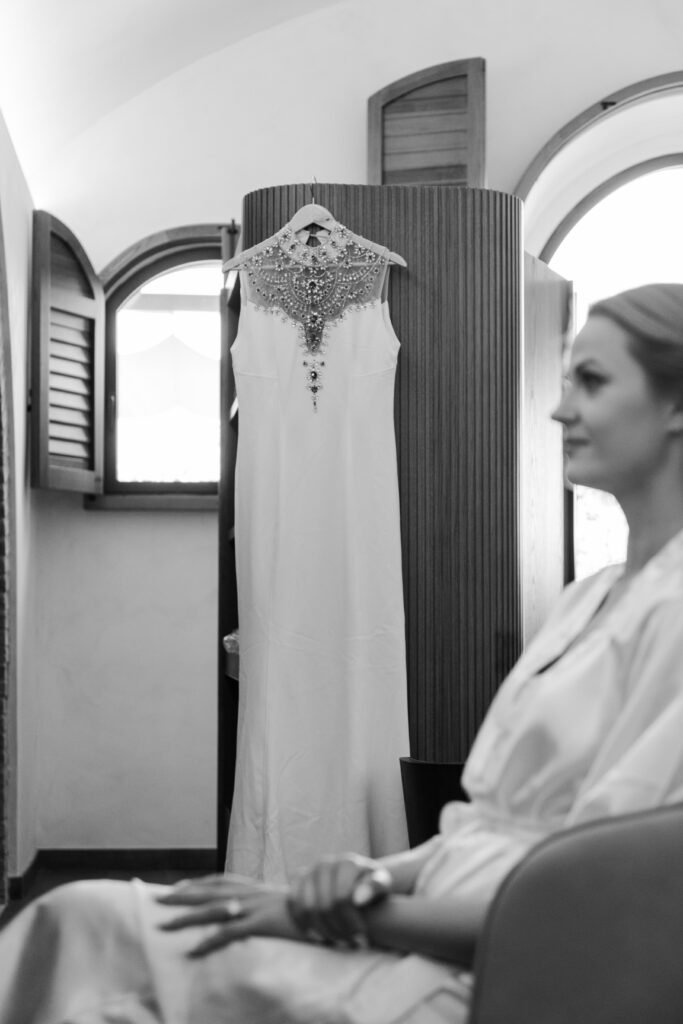
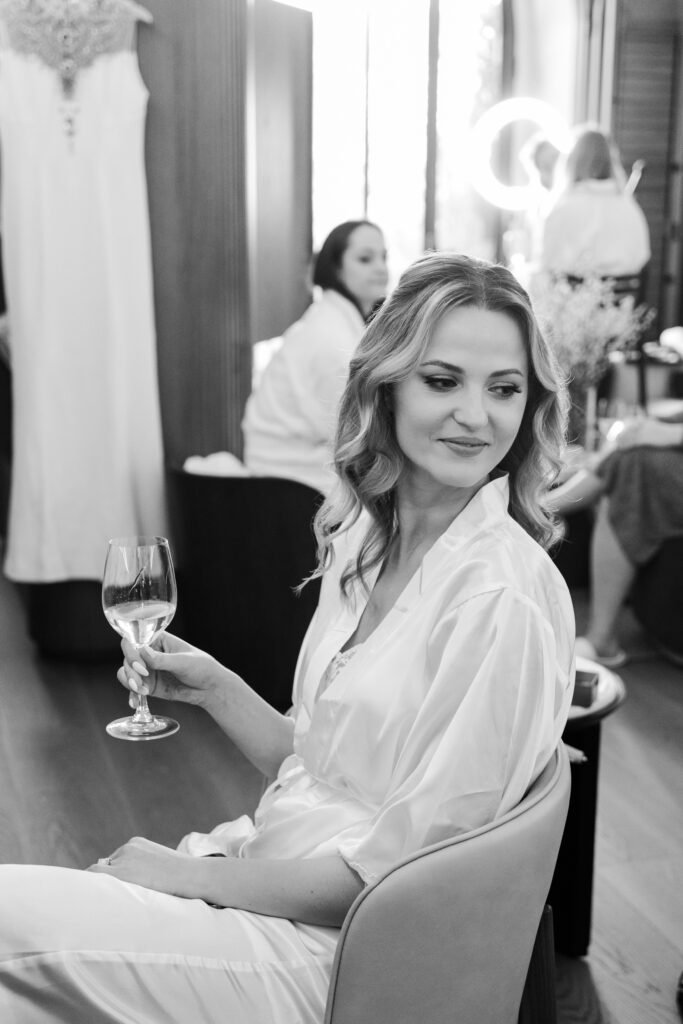
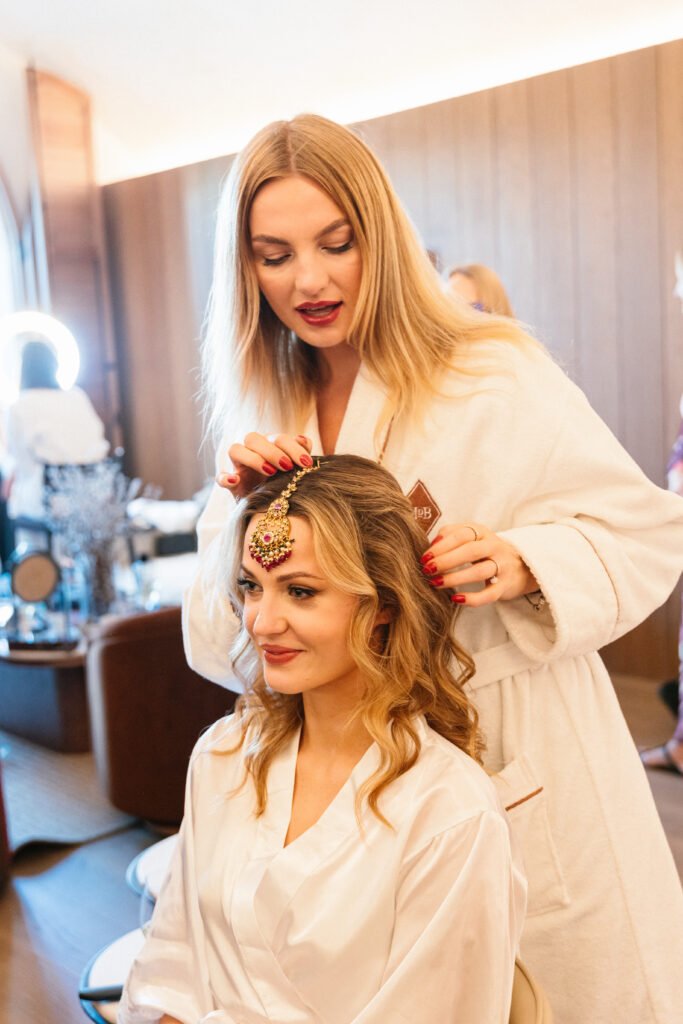
There was a strong sense of trust in the professionals she chose. Instead of micromanaging every detail, Eidvilė allowed space for collaboration, knowing that the right result often comes from letting go rather than controlling. “I trusted the process,” she reflects. “That made the morning feel calm instead of stressful.”
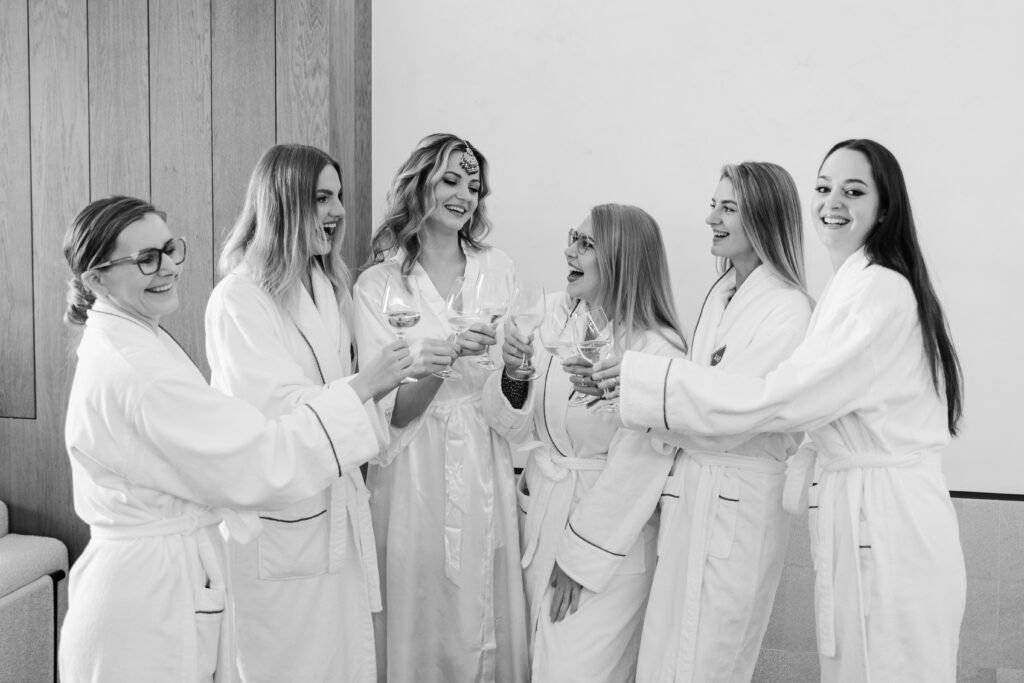
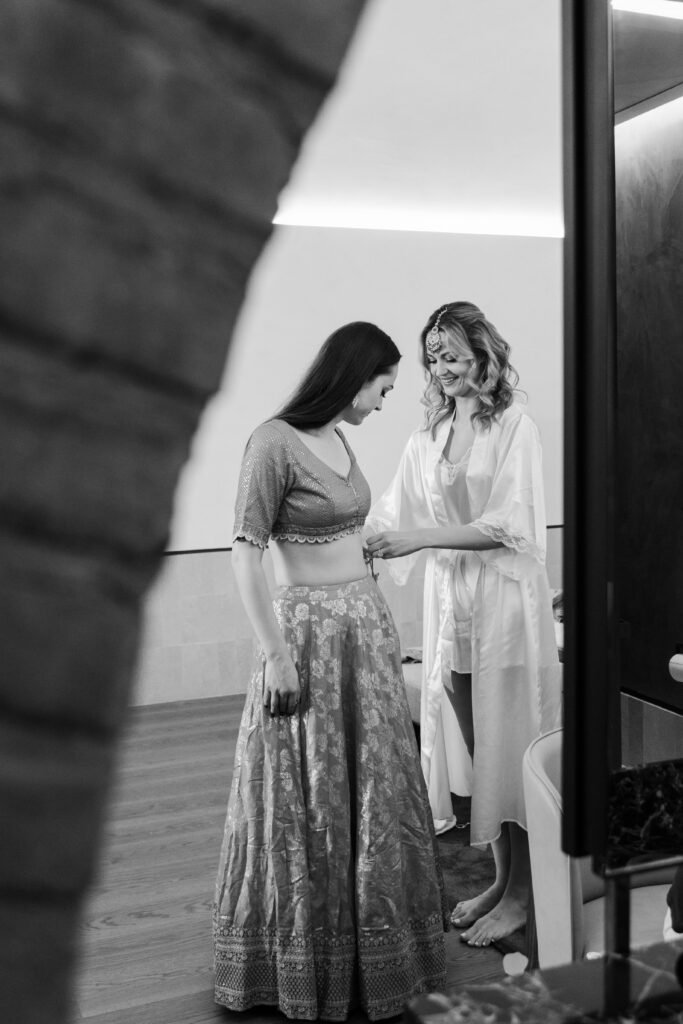
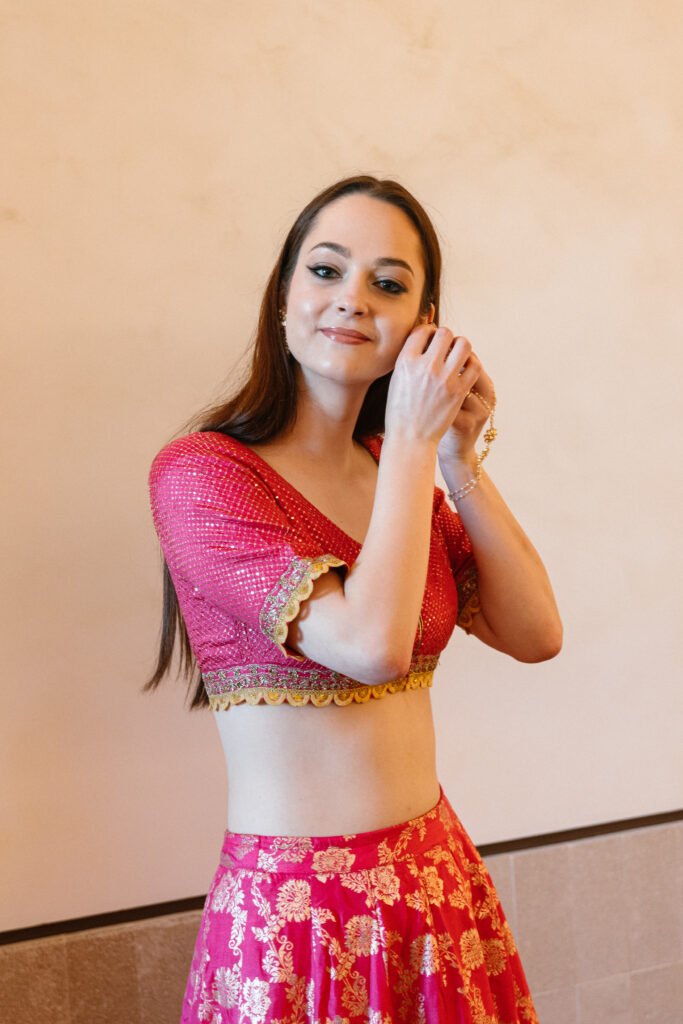
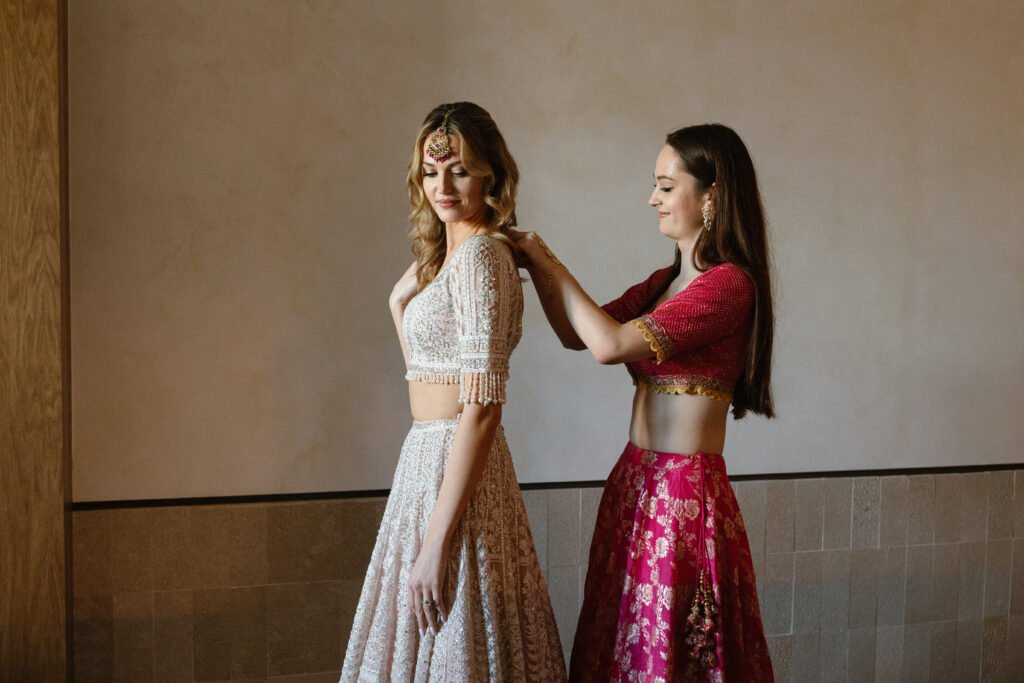
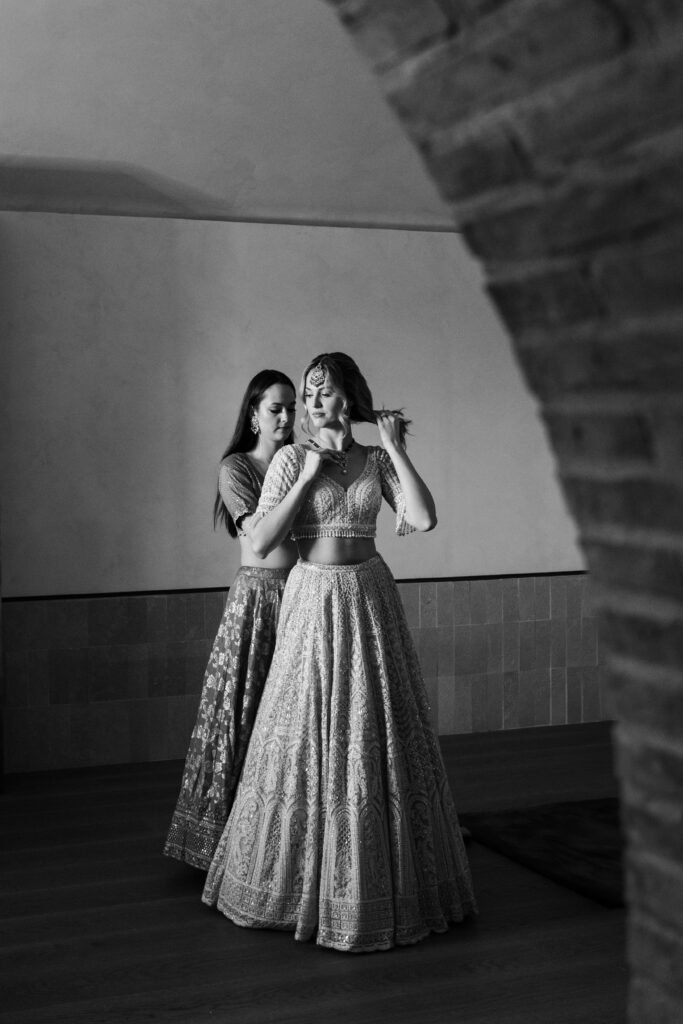
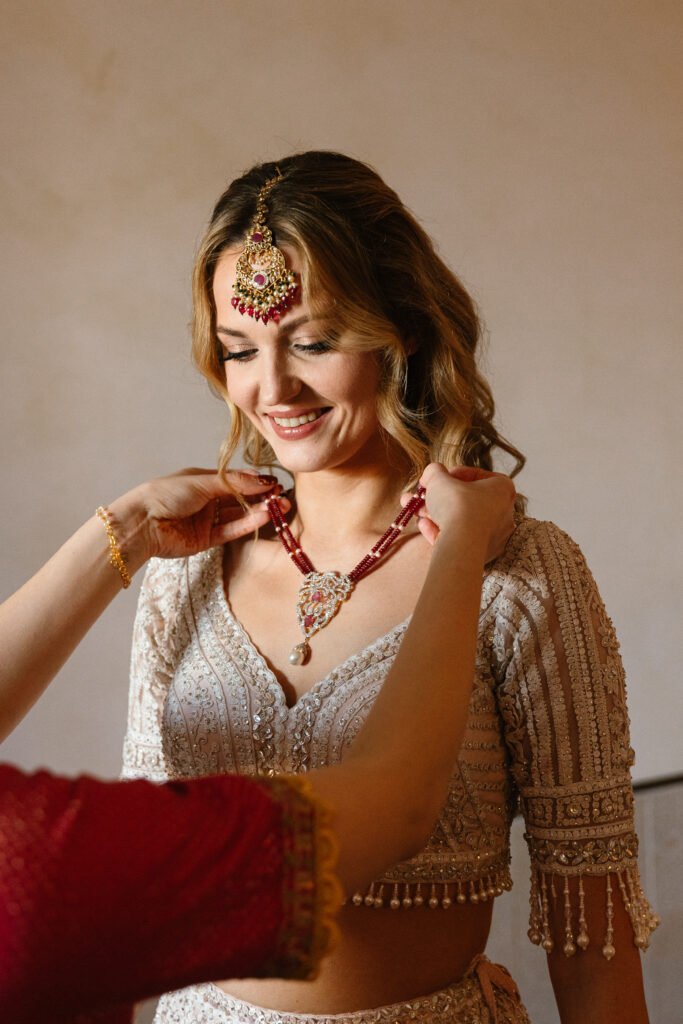
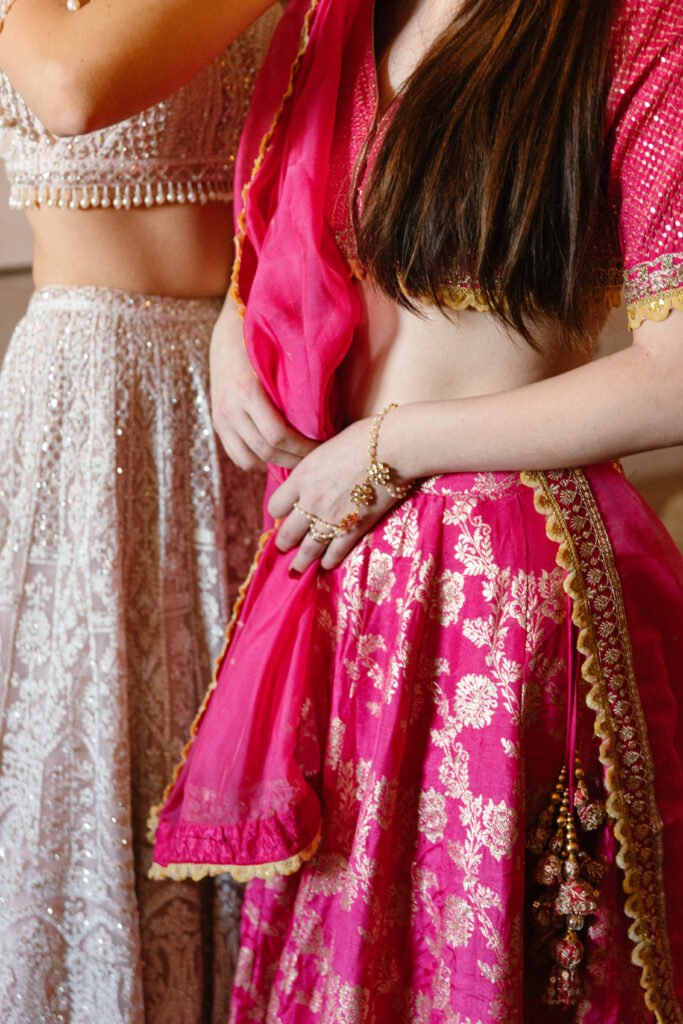
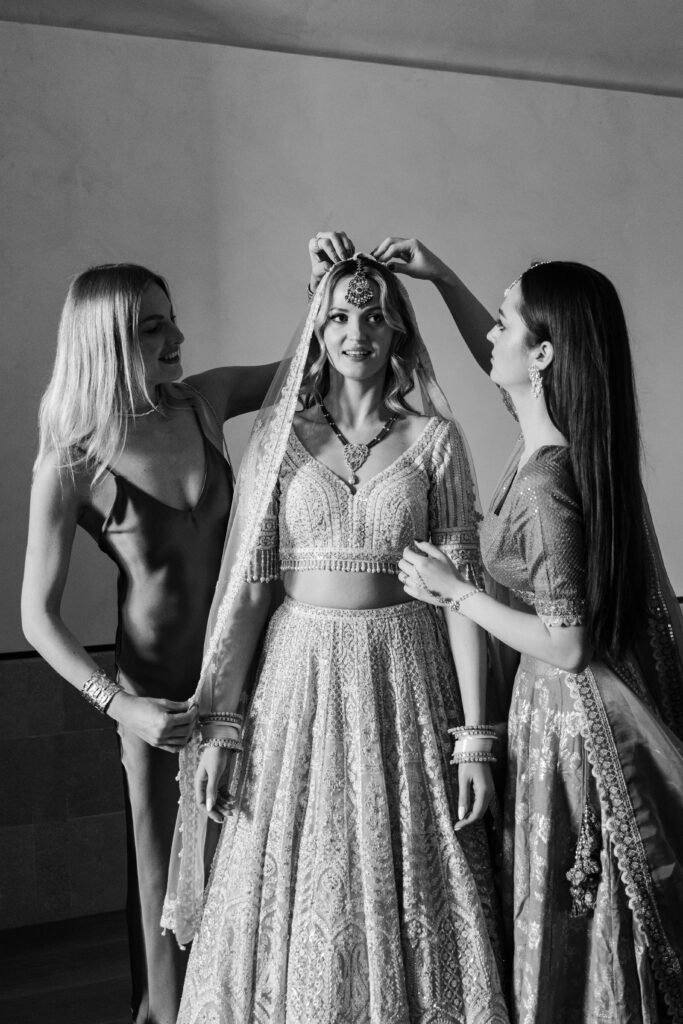
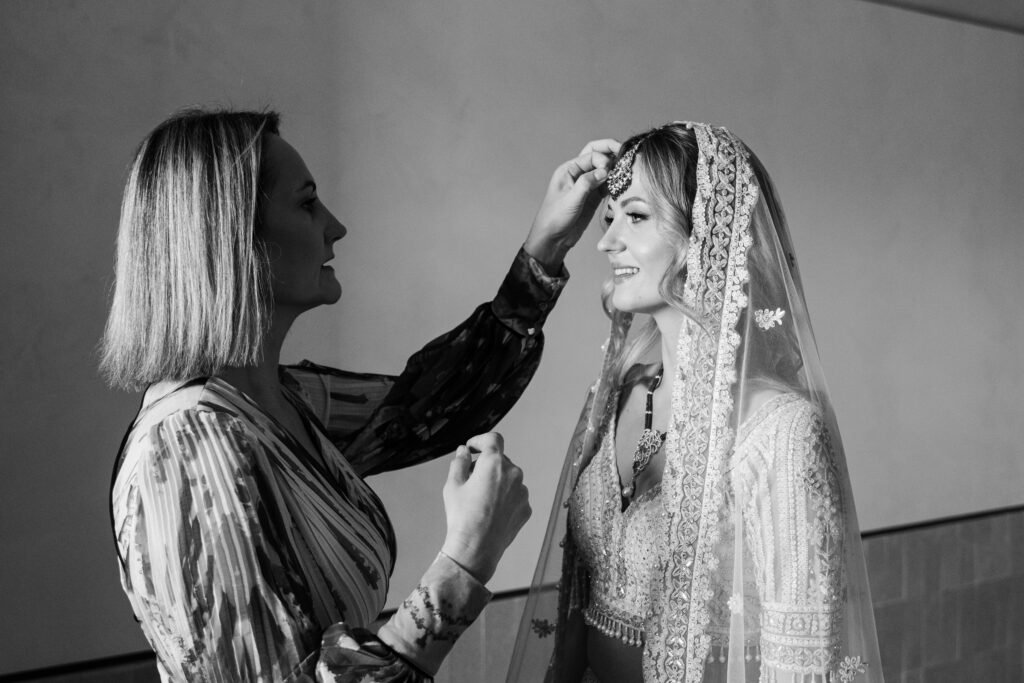
On the wedding day itself, the getting-ready moments became a grounding ritual rather than a rush. Hair and makeup weren’t just about preparation — they marked the transition into the day emotionally, offering a quiet pause before everything unfolded. Looking back, Eidvilė feels that choosing simplicity was key. It allowed her to stay present, comfortable, and confident — fully immersed in the experience rather than preoccupied with how she appeared.
Kulpreet’s morning
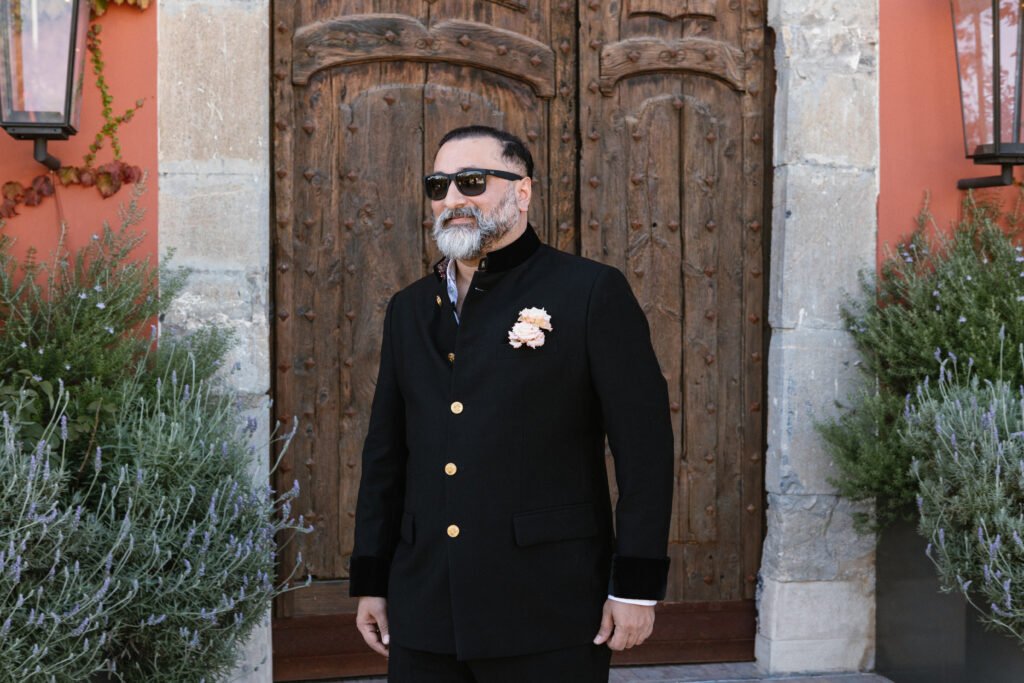
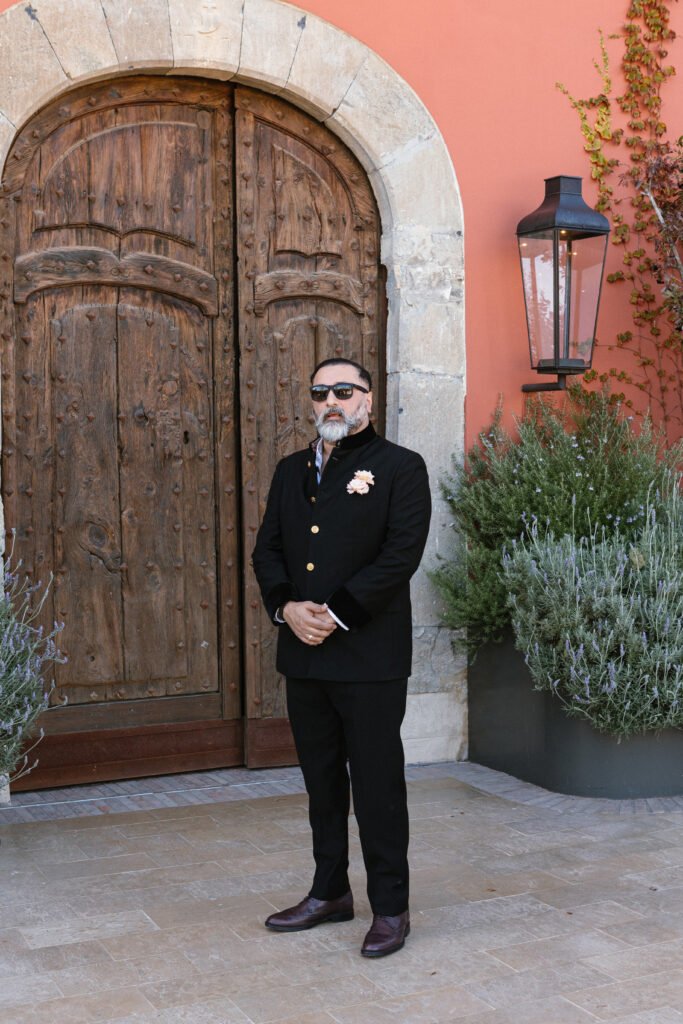
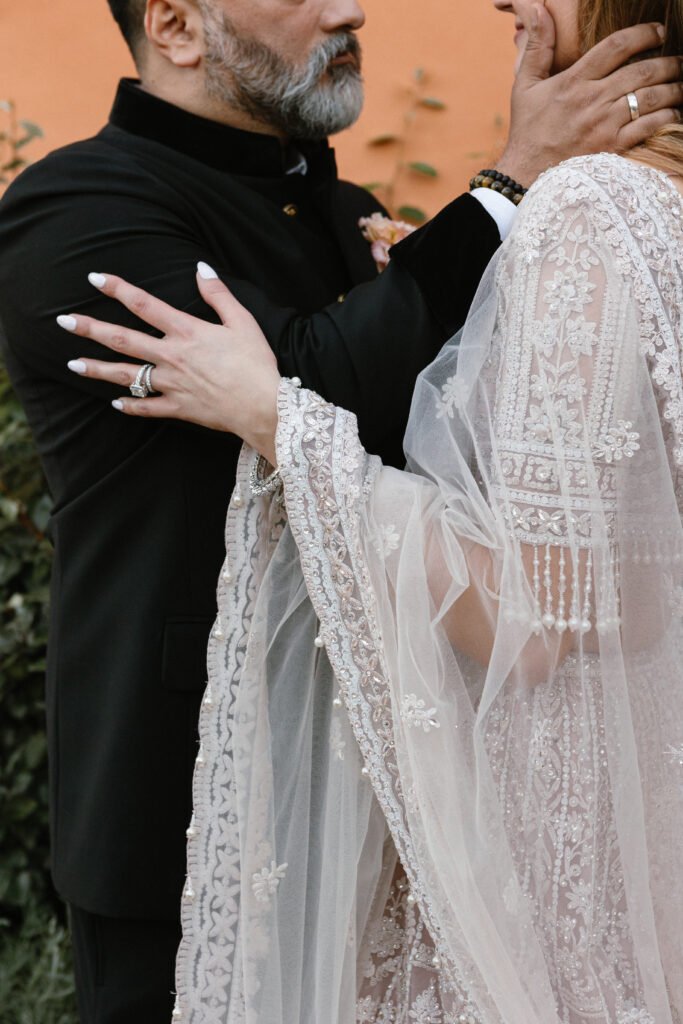
For Kulpreet, the wedding day began with a quiet, reflective energy rather than nerves or rush. While much attention often goes to the bride’s preparation, his morning carried its own meaning — a space to pause, breathe, and fully arrive in the moment. His outfit was chosen with intention. Rather than leaning into something overly formal or restrictive, Kulpreet wanted his look to feel comfortable, elegant, and aligned with the overall atmosphere of the day. It needed to feel like him. “I wanted to feel relaxed in what I was wearing,” he shares. “Comfort mattered just as much as how it looked.”
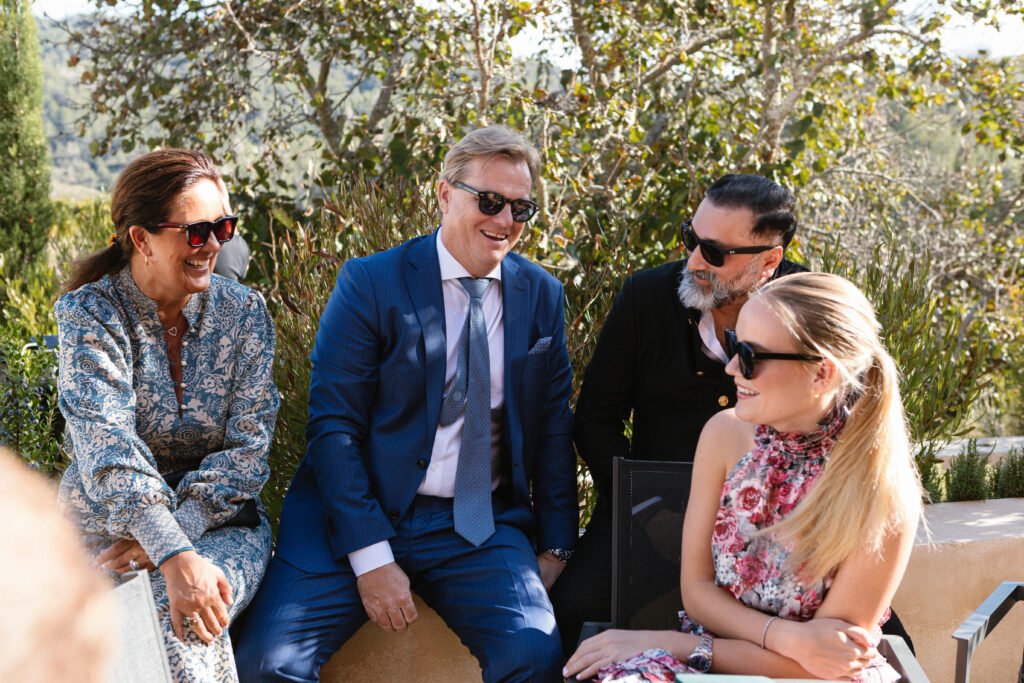
The getting-ready process was simple and unforced. Surrounded by close people, the atmosphere was calm, filled with light conversation and anticipation rather than stress. There was no strict timeline — just a gradual transition into the day ahead. “That calm in the morning set the tone for everything that followed,” Kulpreet reflects. His look complemented Eidvilė’s without mirroring it too closely. Together, their outfits felt cohesive — not matching by design, but connected through mood, texture, and intention. Looking back, Kulpreet describes those quiet pre-ceremony moments as grounding. Before the emotions, the ceremony, and the celebration began, there was simply space — to feel grateful, present, and ready.
The Ceremony
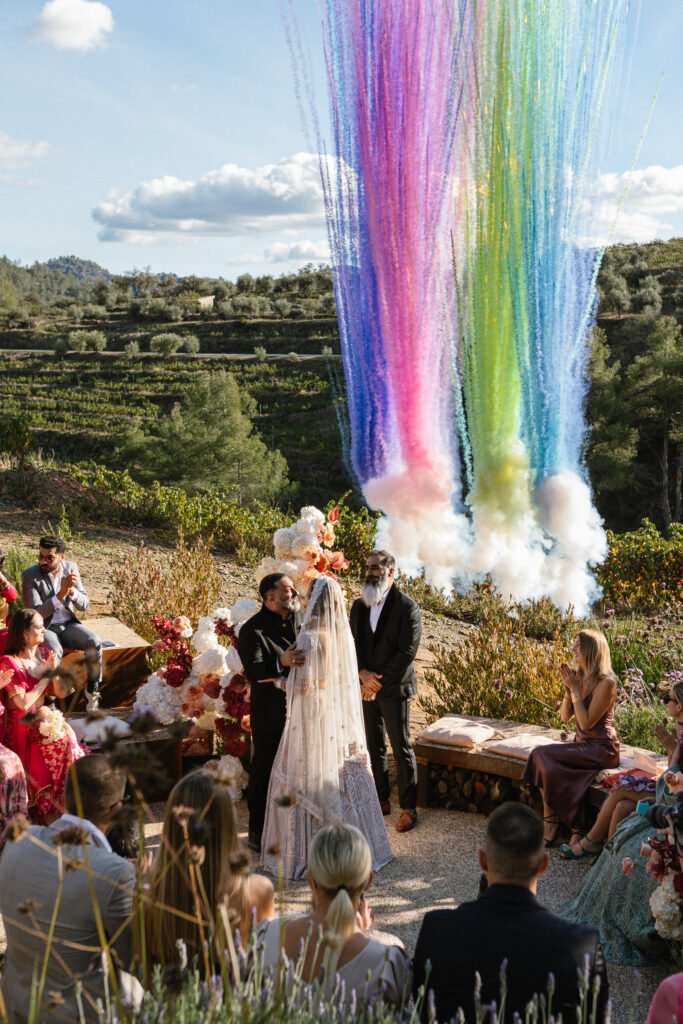
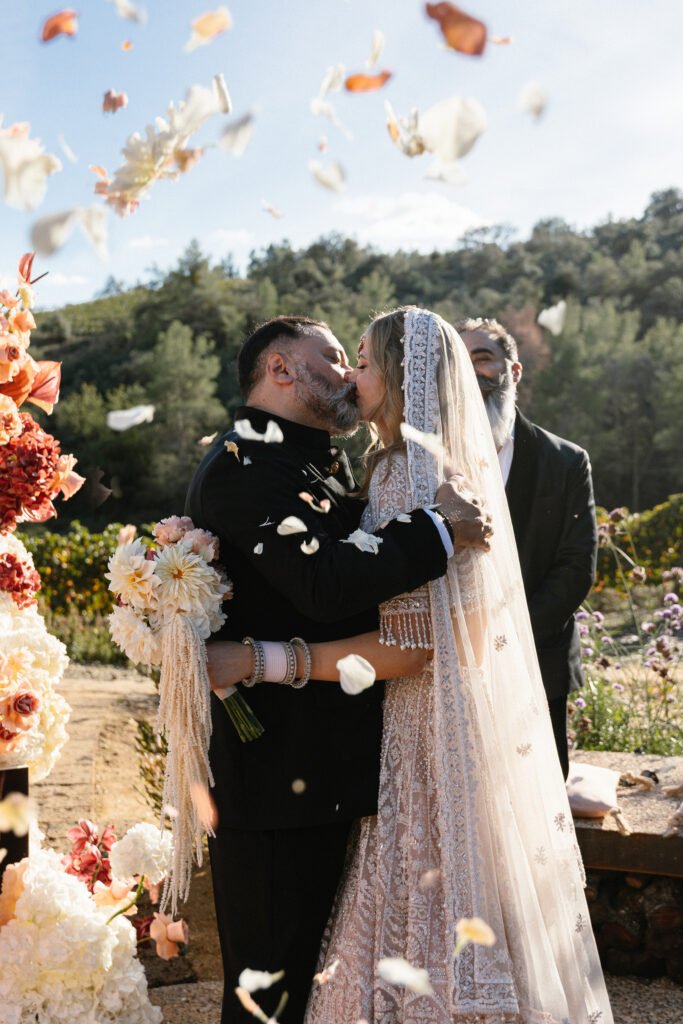
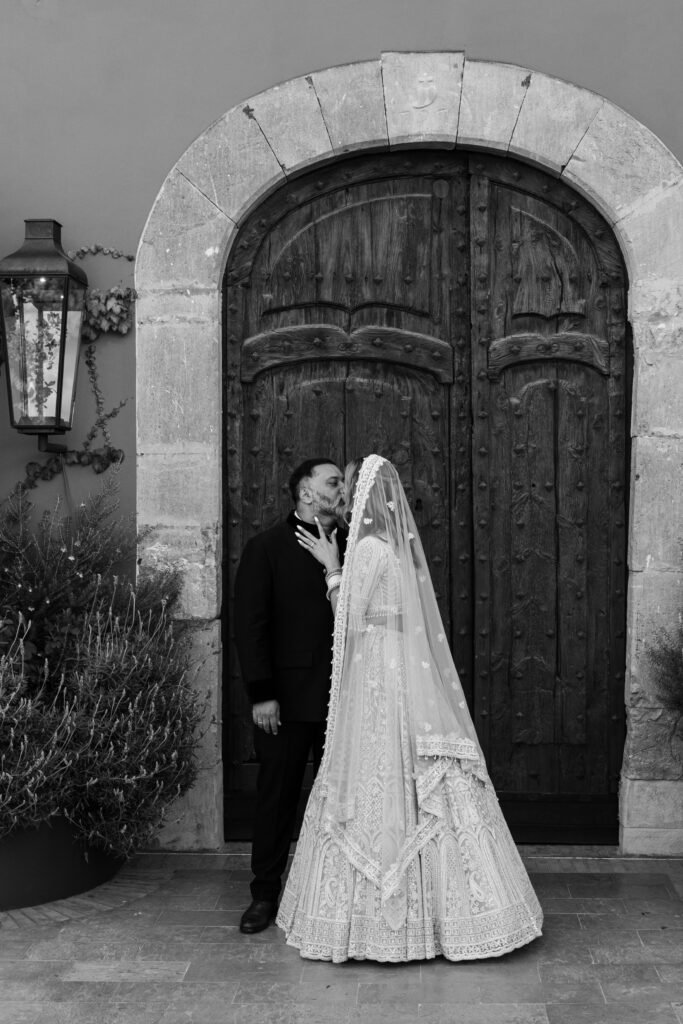
The ceremony was the emotional heart of Eidvilė and Kulpreet’s wedding — quiet, sincere, and deeply present. There was no need for grand gestures or excessive structure. What mattered most was the meaning behind each moment. As they stood together, surrounded by nature and their closest people, time seemed to slow down. The setting allowed emotions to surface naturally, without distraction.
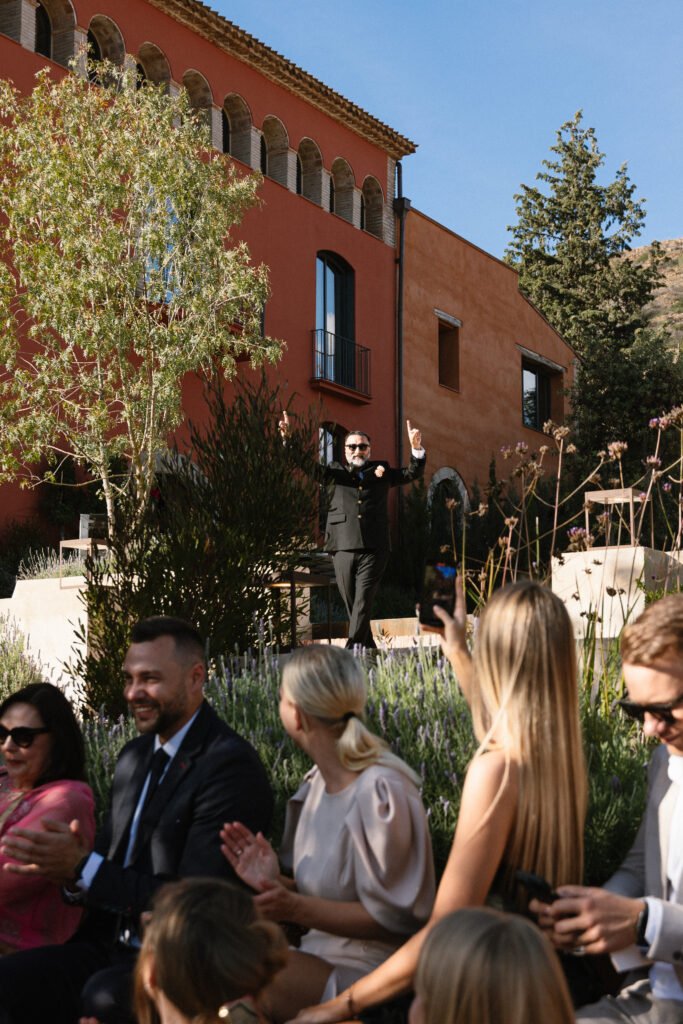
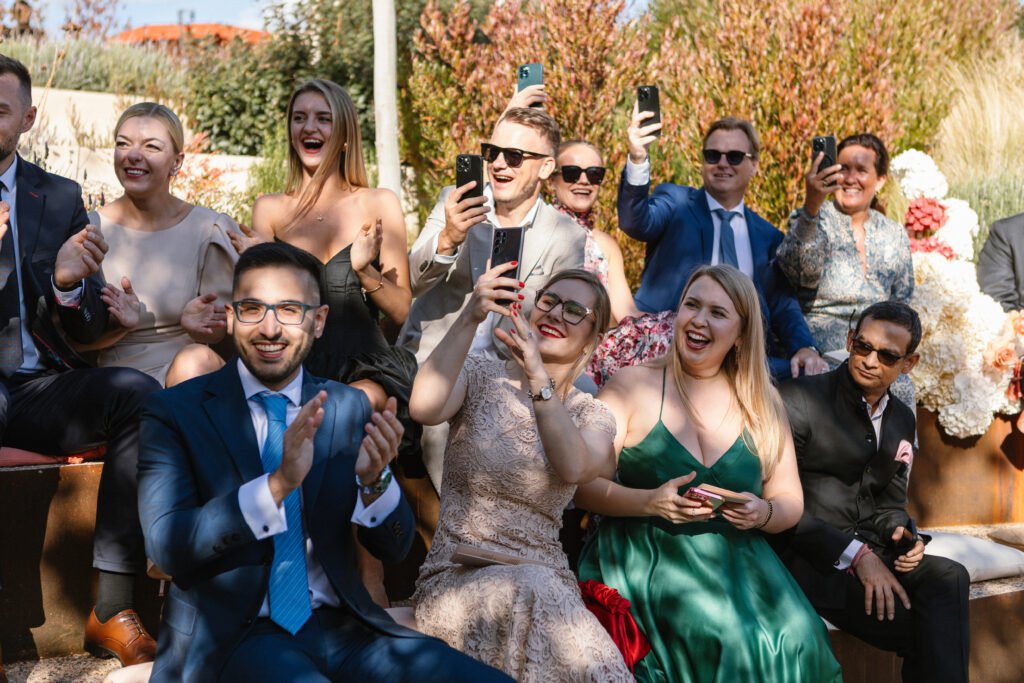
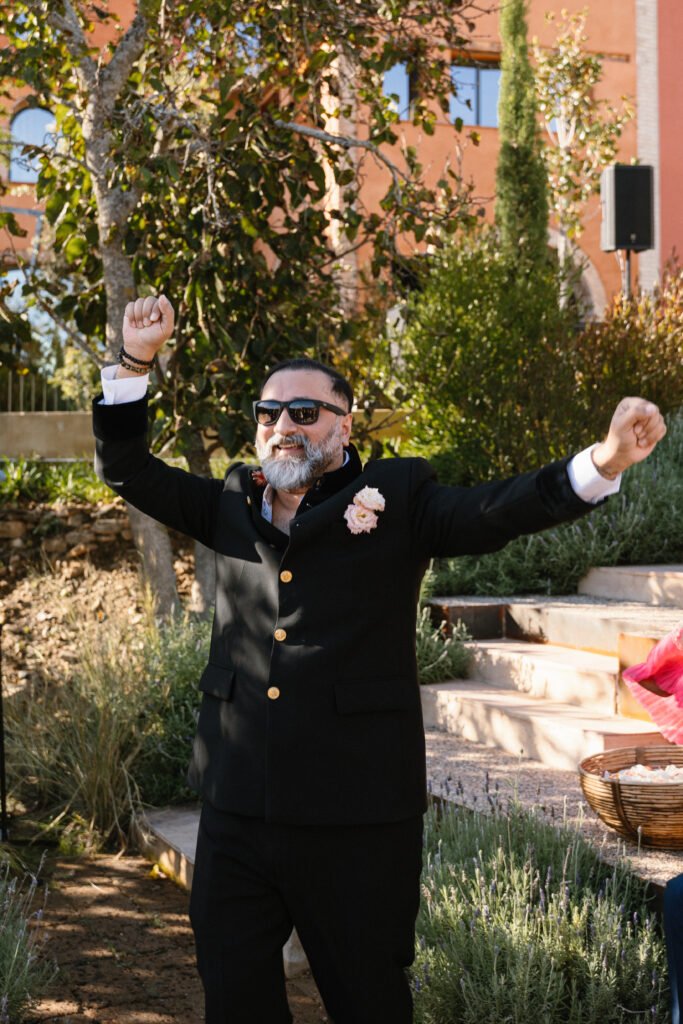
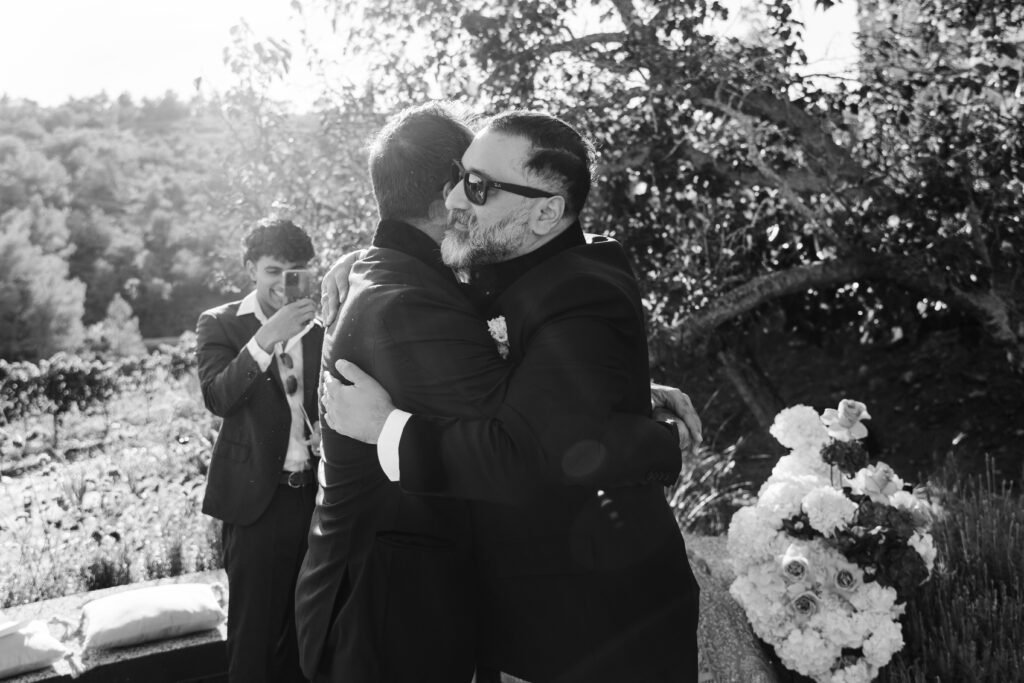
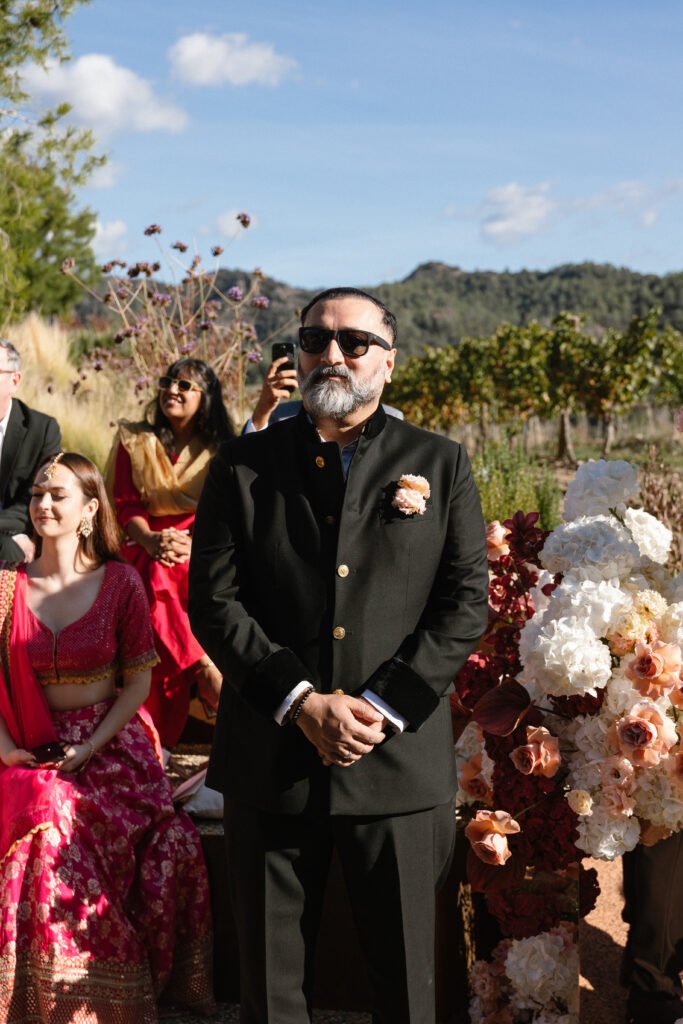
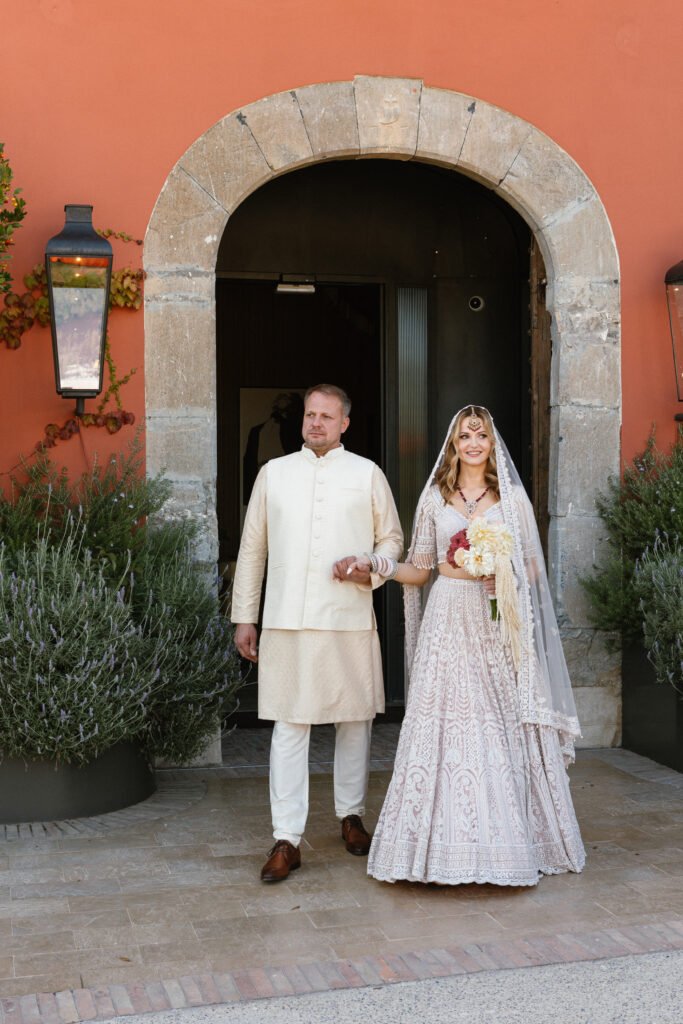
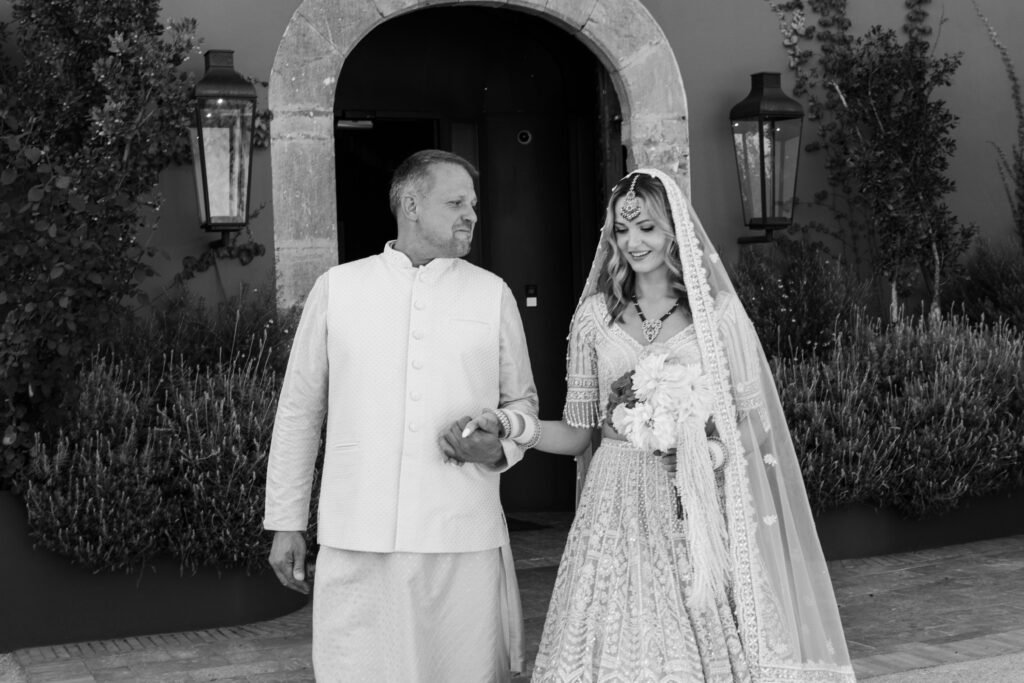
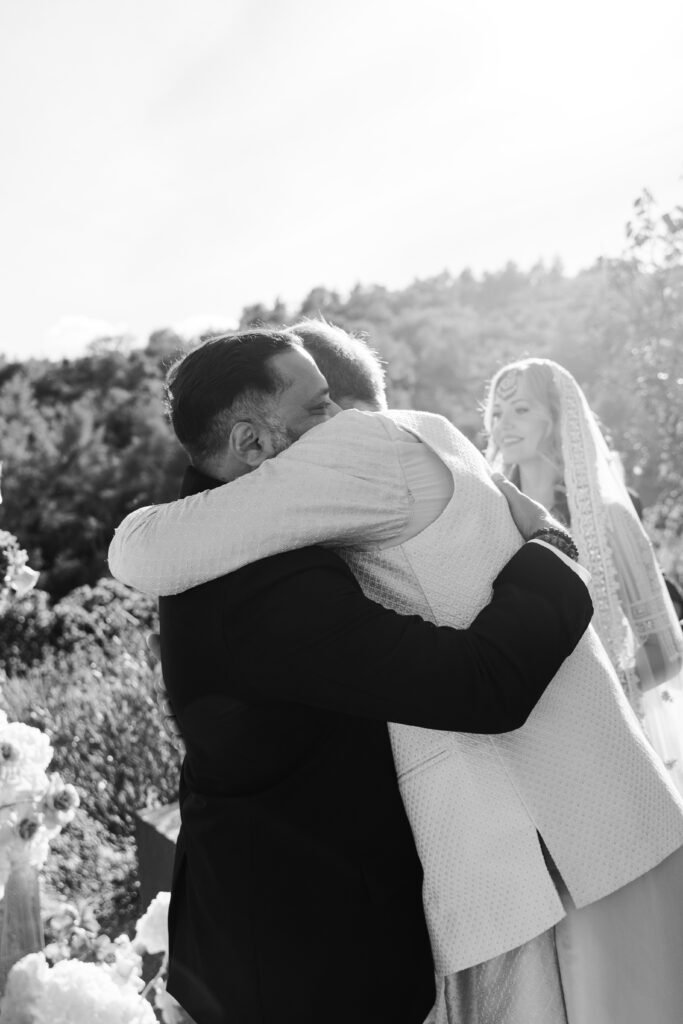
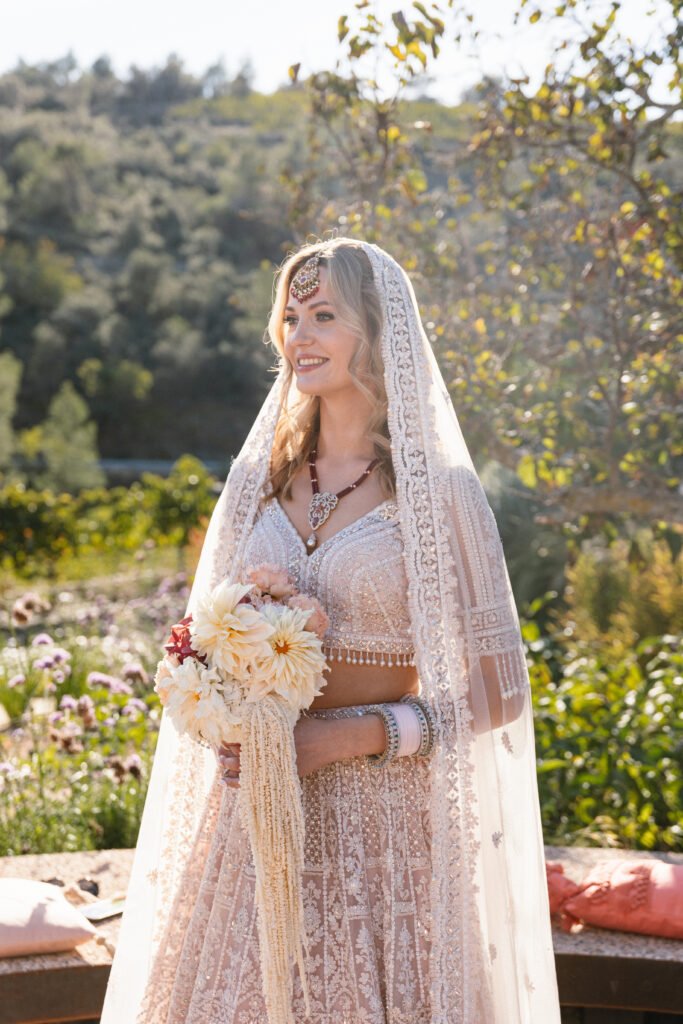
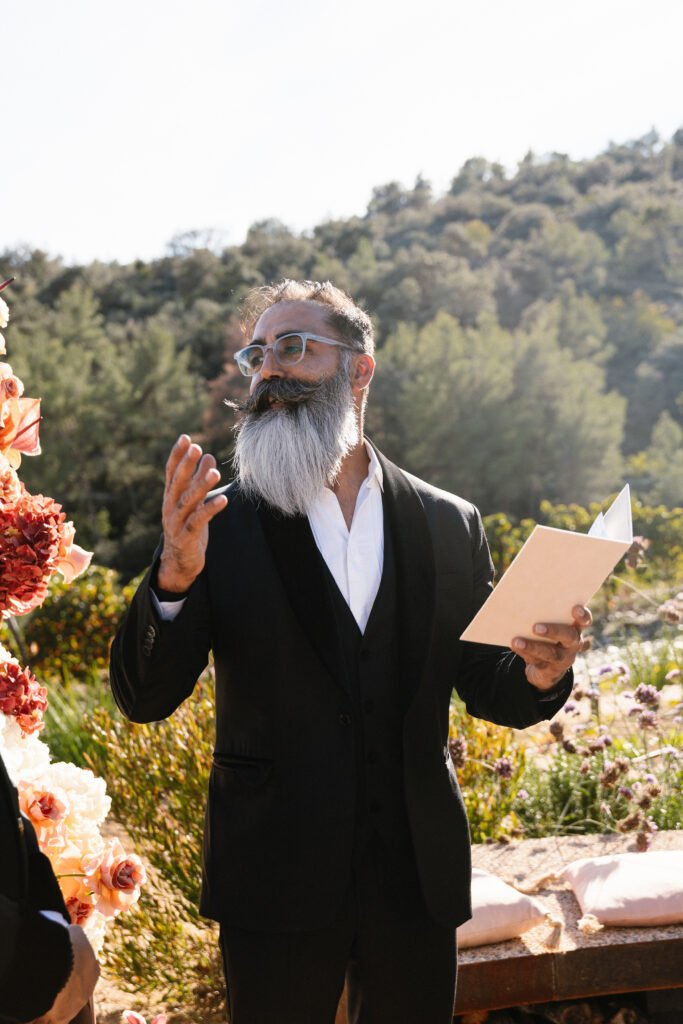
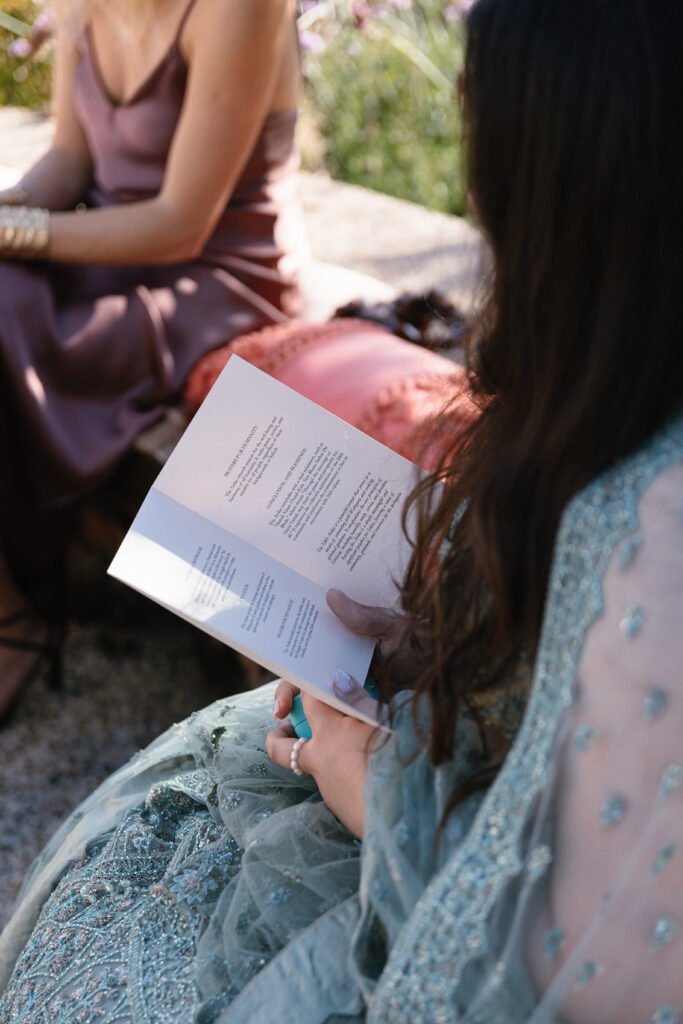
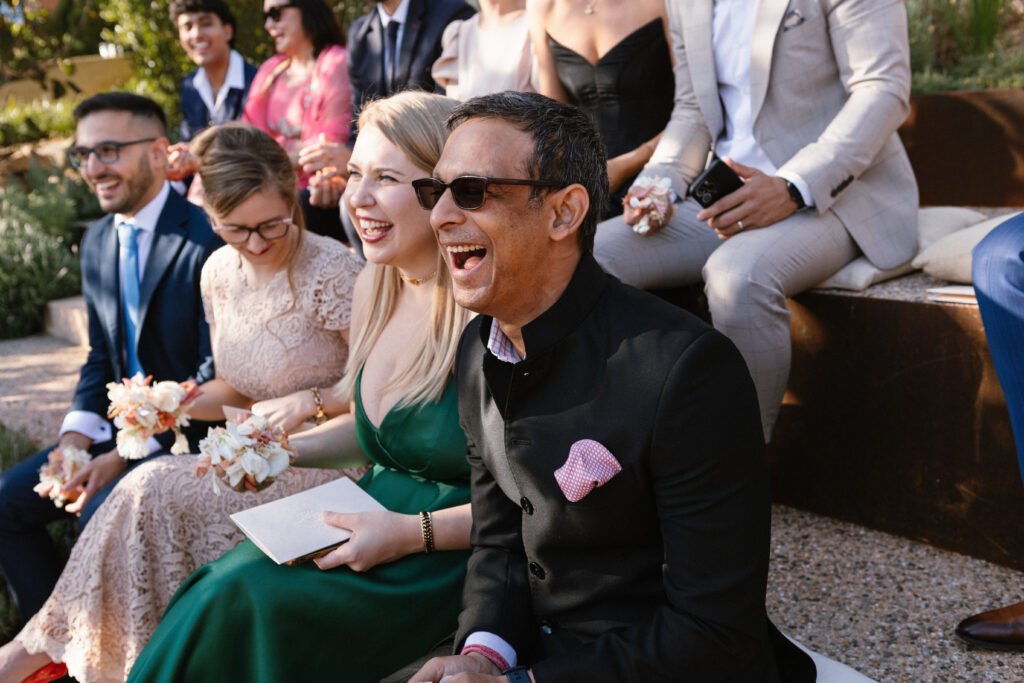
“That moment when we saw each other during the ceremony… it’s something I still feel in my body,” Eidvilė shares. “Everything else faded away.” For Kulpreet, the power of the ceremony came from its intimacy. Being able to hear the wind, see familiar faces, and feel fully present made the exchange of vows feel grounded and real. “It wasn’t about performing,” he reflects. “It was about truly being there — with each other, and with everyone who mattered to us.” One of the most memorable aspects was the collective stillness. Guests weren’t rushing to capture the perfect photo or waiting for the next cue. They were simply witnessing — emotionally invested, attentive, and connected. Even now, certain seconds from the ceremony still return unexpectedly — a look, a breath, a shared smile — bringing back the same quiet goosebumps as on the day itself. It became a moment that didn’t just happen once, but continues to live on in memory.
Designing the atmosphere: décor that let the setting speak
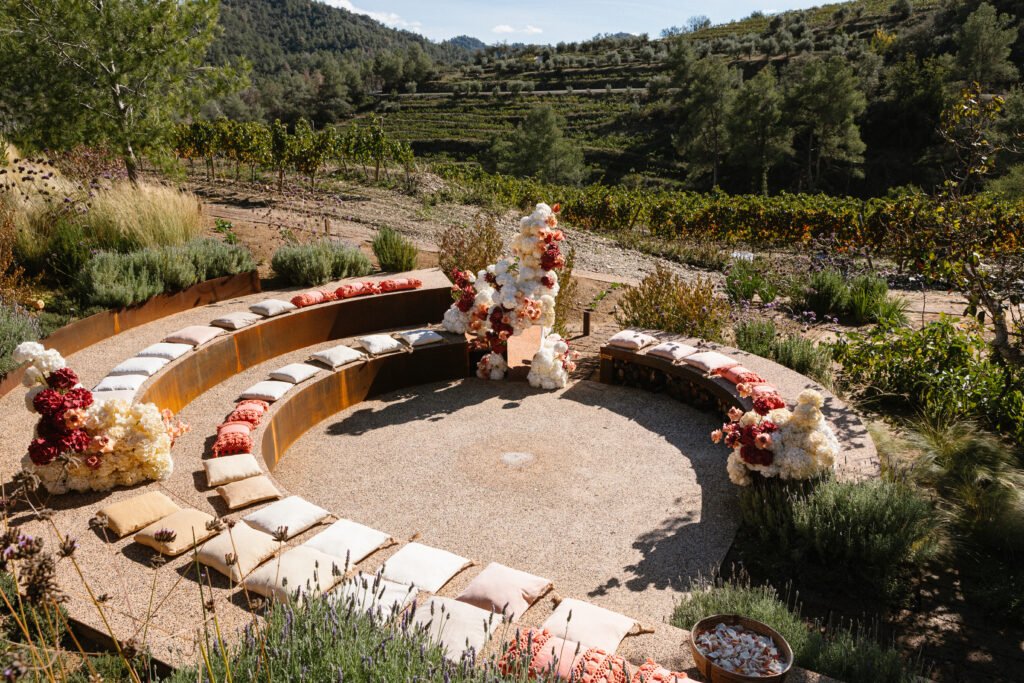
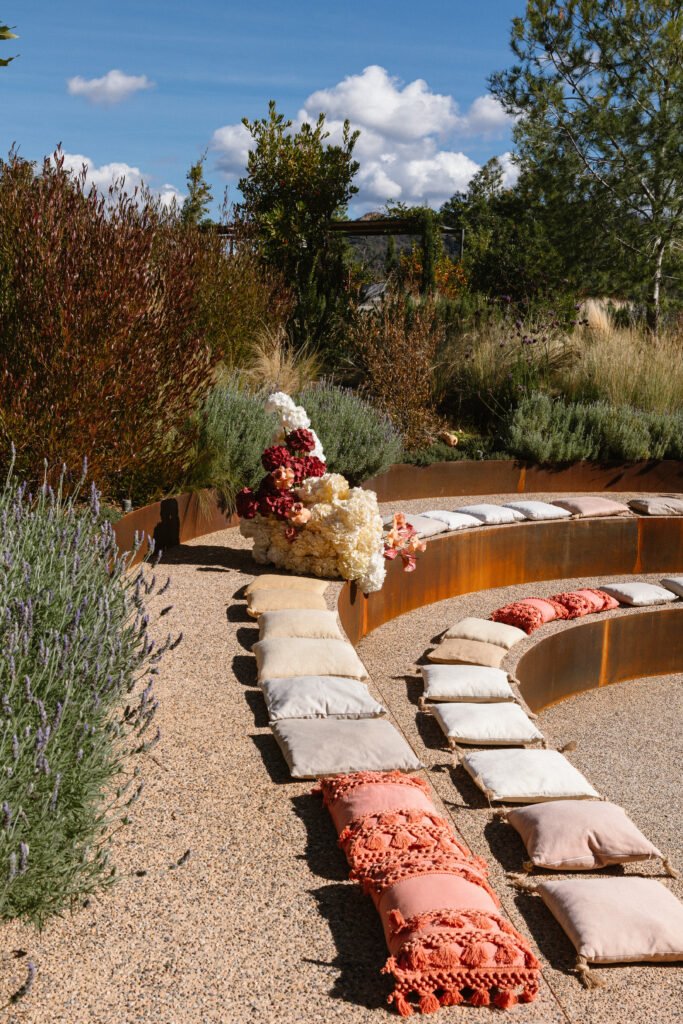
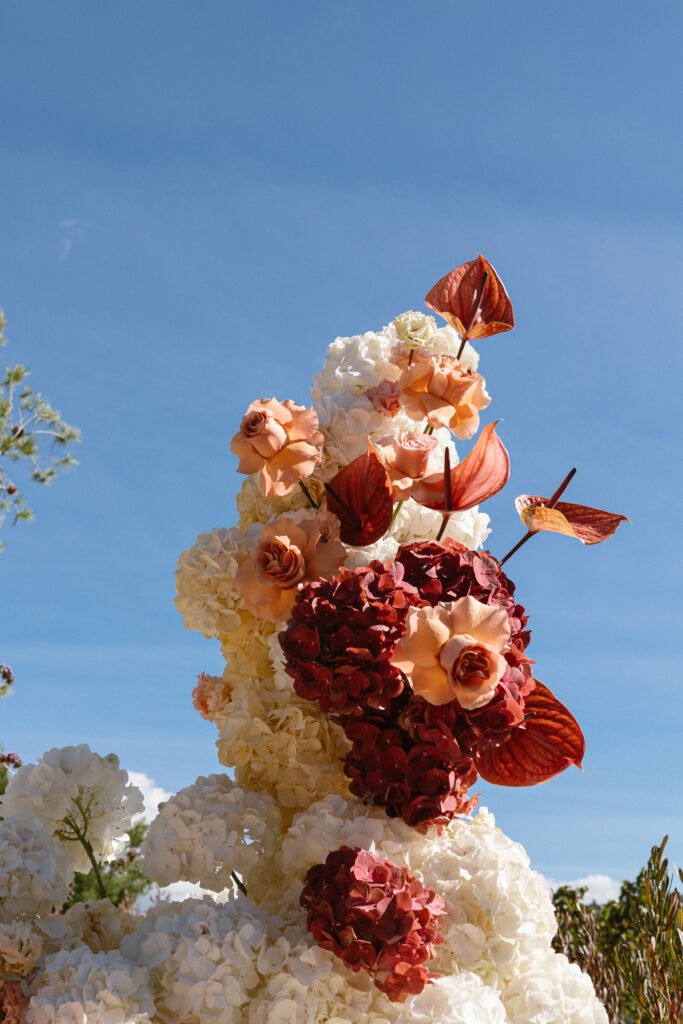
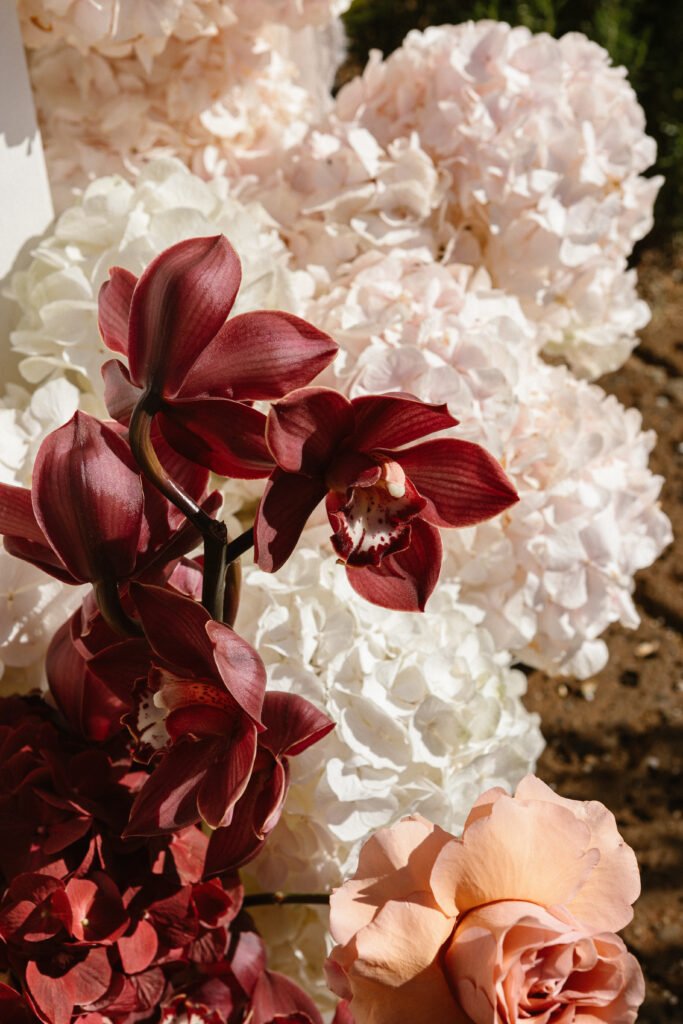
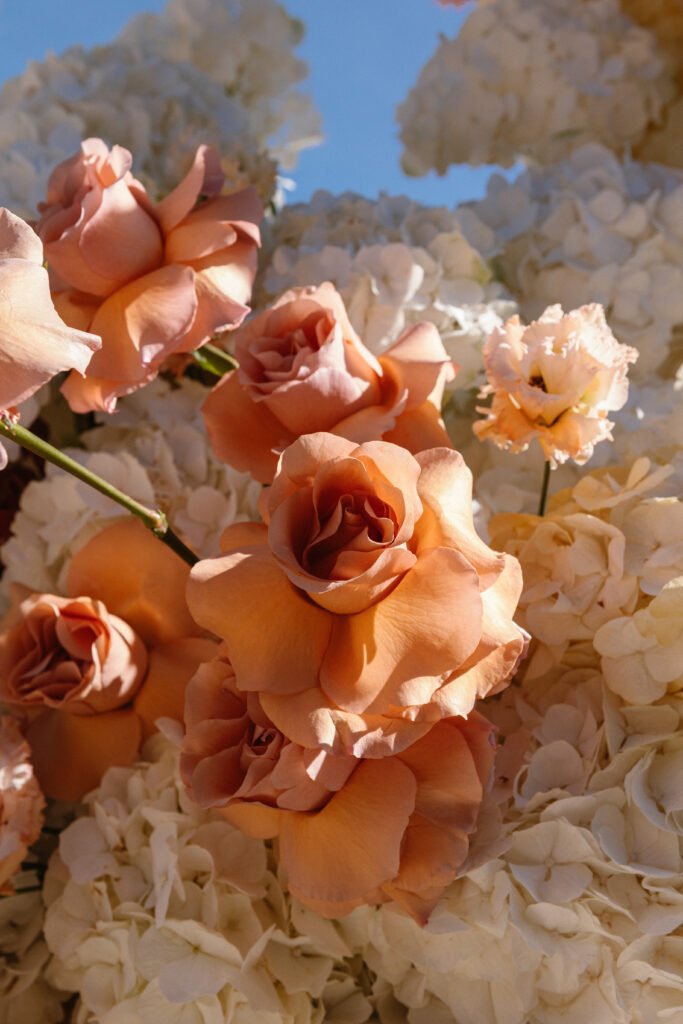
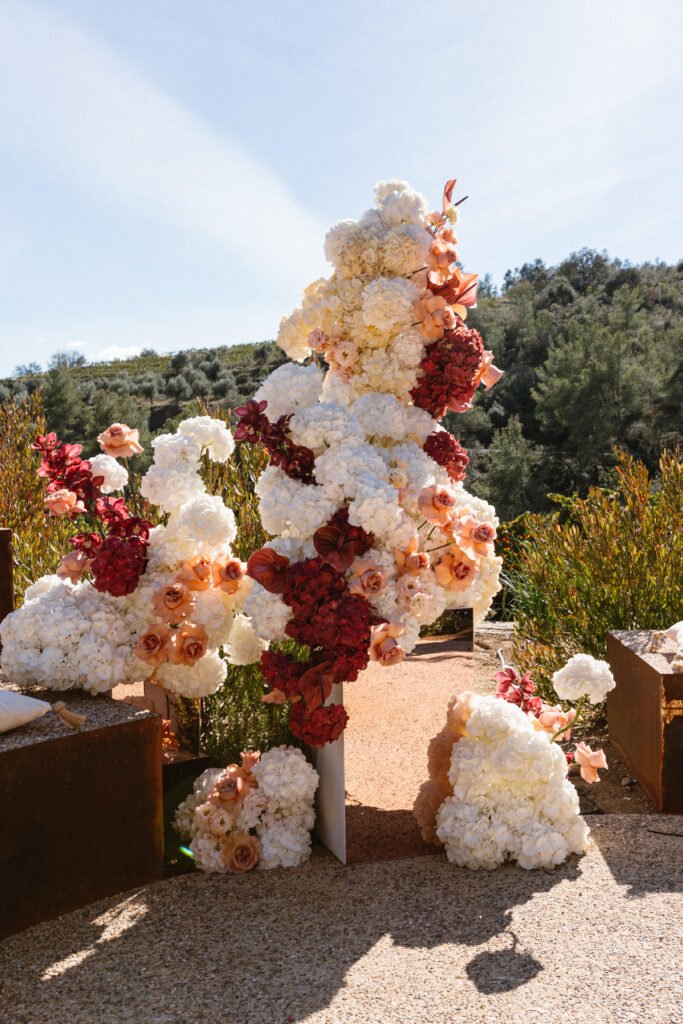
The décor was never meant to overpower the setting — it was there to support it. From the start, Eidvilė and Kulpreet were drawn to the idea of letting the surroundings lead, allowing nature, light, and textures to do most of the work. Rather than focusing on individual decorative elements, they thought in terms of mood: how should the space feel when guests arrive? How should it shift from day to evening? How can everything flow without feeling staged? “We didn’t want people to notice the décor,” Eidvilė explains. “We wanted them to feel something instead.” Natural materials, earthy tones, and soft layers created a sense of ease. Nothing felt overly polished or rigid — everything had room to breathe.
And here I wan to introduce David from „Maitemach”. This project marked the beginning of our friendship — one that continues to this day and has long since extended beyond the borders of Spain. David is always quick to respond, endlessly creative, incredibly reliable, and consistently willing to go the extra mile to achieve the best possible result. I truly believe we will be working together again in the season ahead.
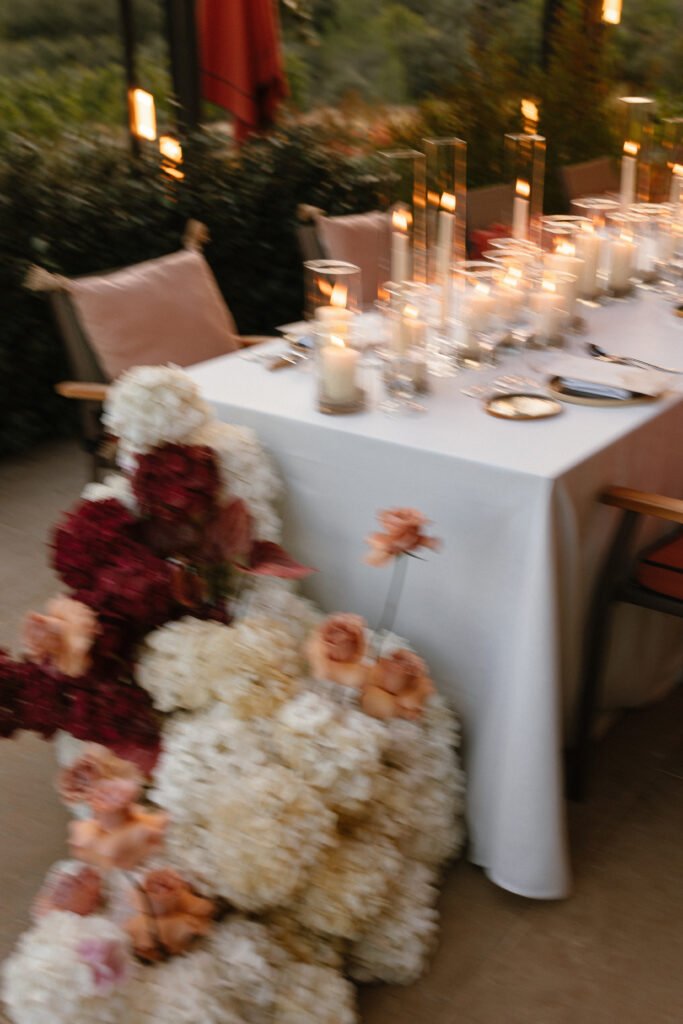
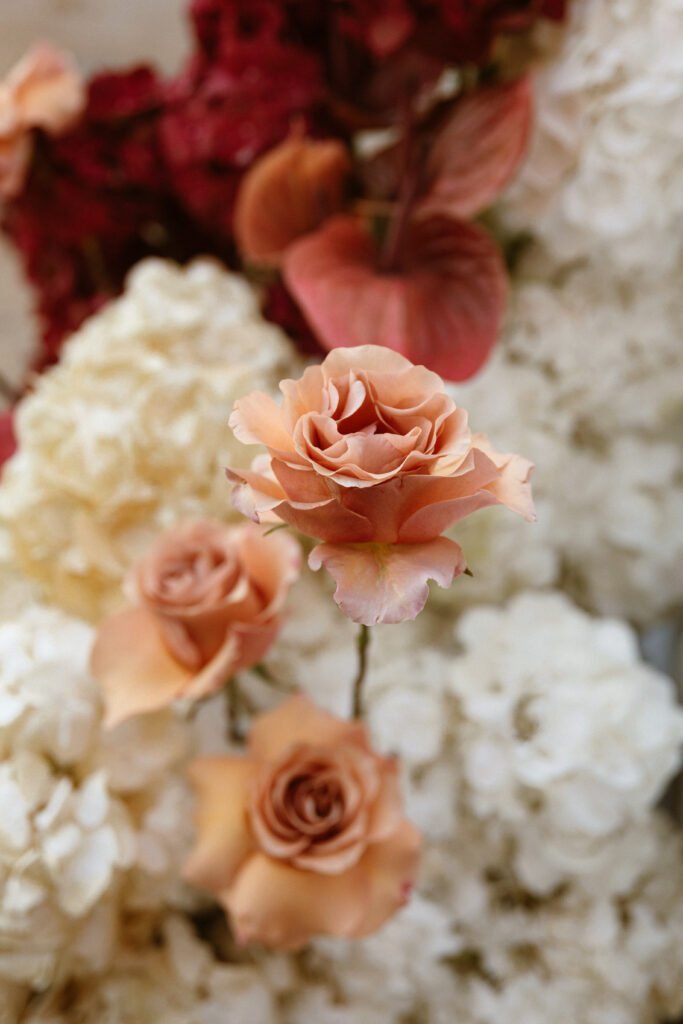
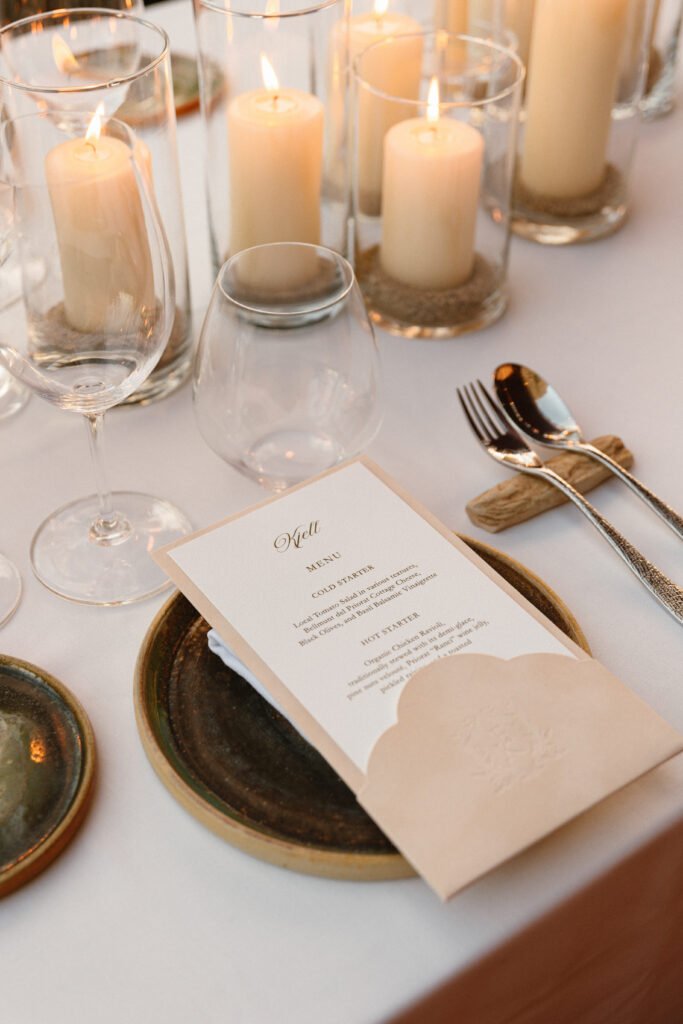
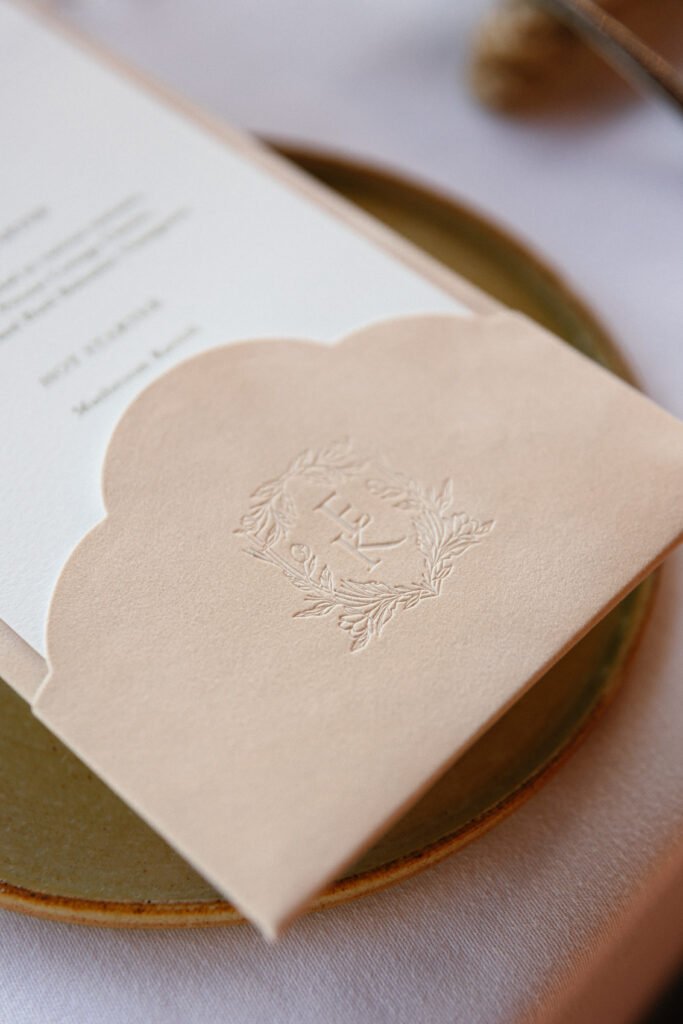
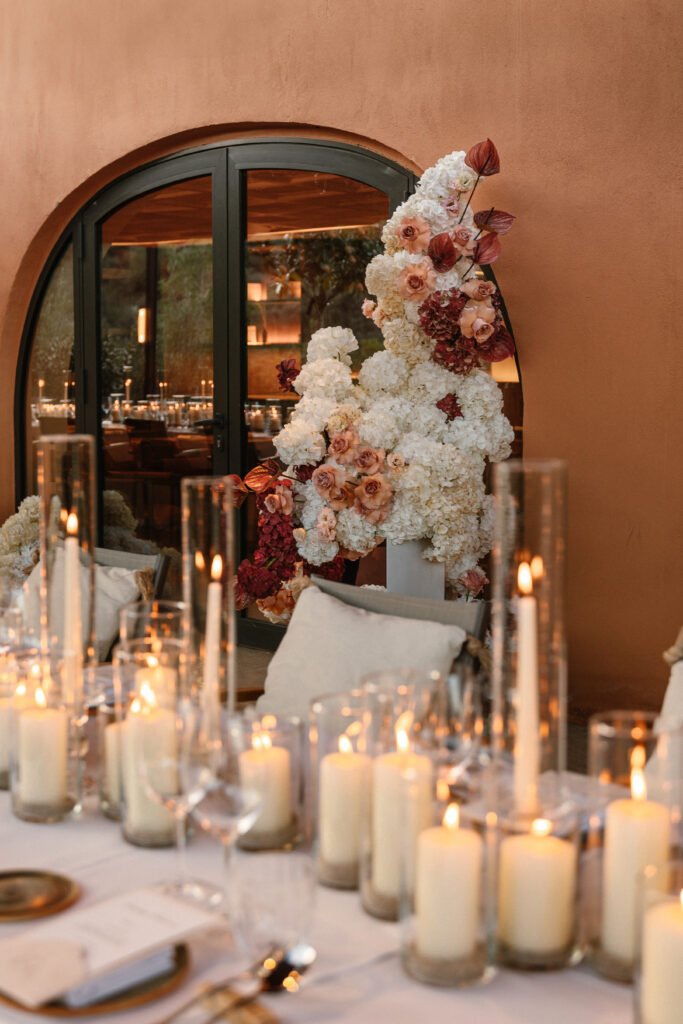
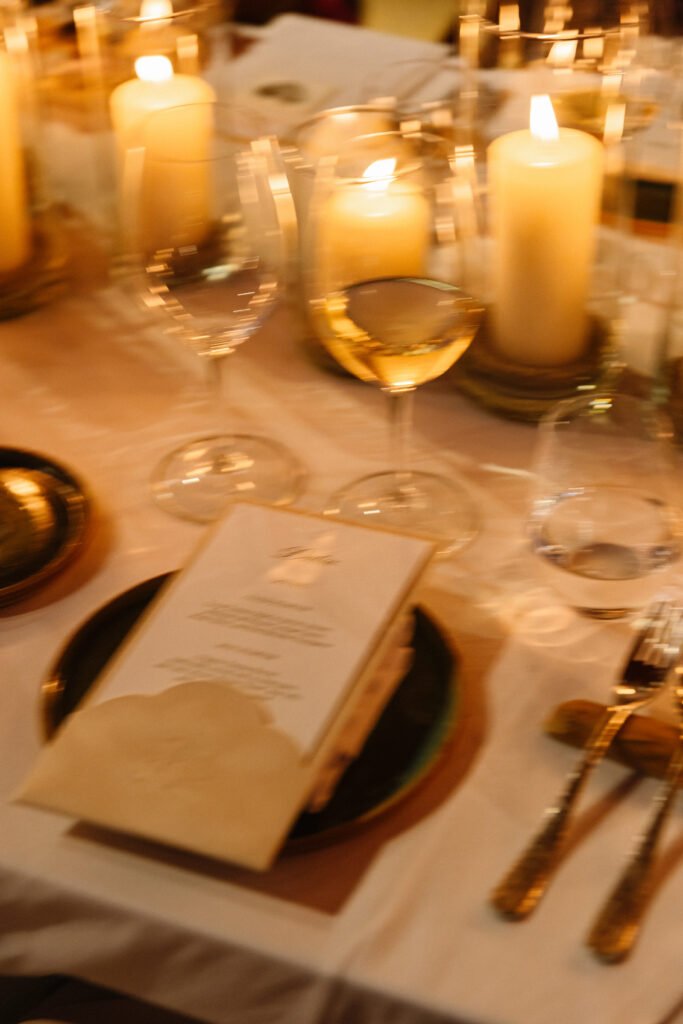
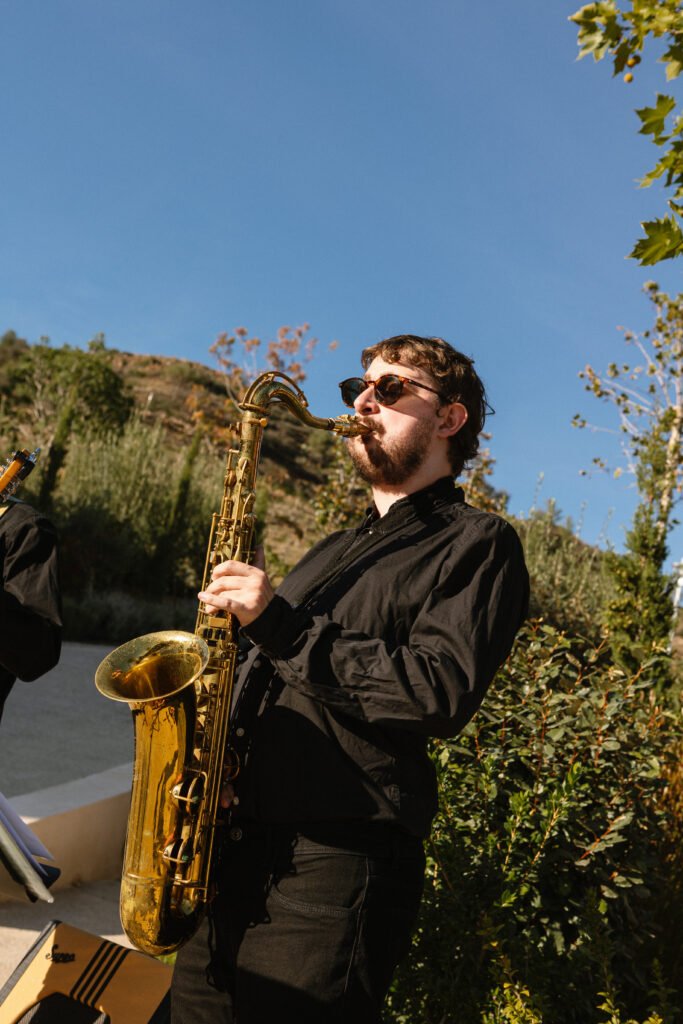
The space invited guests to slow down, linger, and truly be present. The beauty of „Mas d’en Bruno” played a central role. Instead of competing with it, the décor quietly echoed what was already there — enhancing, not distracting. “It felt important that everything belonged there,” Kulpreet reflects. “That it didn’t feel brought in for one day only.” As the light shifted and the celebration moved into the evening, the atmosphere transformed naturally. Candles, warm tones, and music softened the space, creating an intimate environment that encouraged conversation, laughter, and connection. Décor became almost invisible — not because it lacked intention, but because it blended so seamlessly into the experience. It supported the emotions of the day rather than demanding attention.
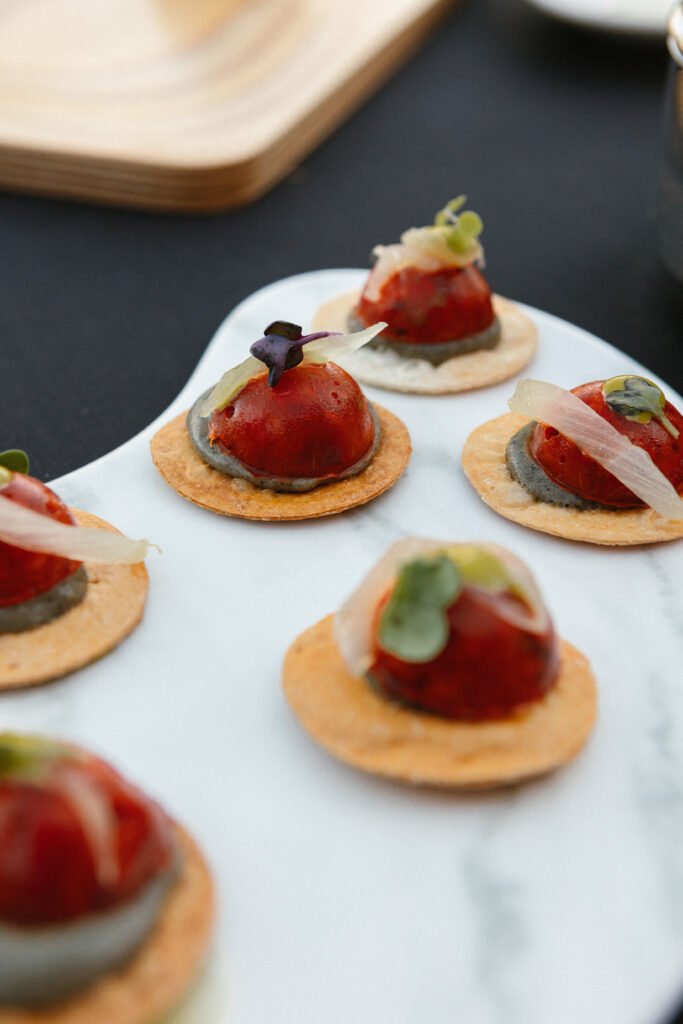
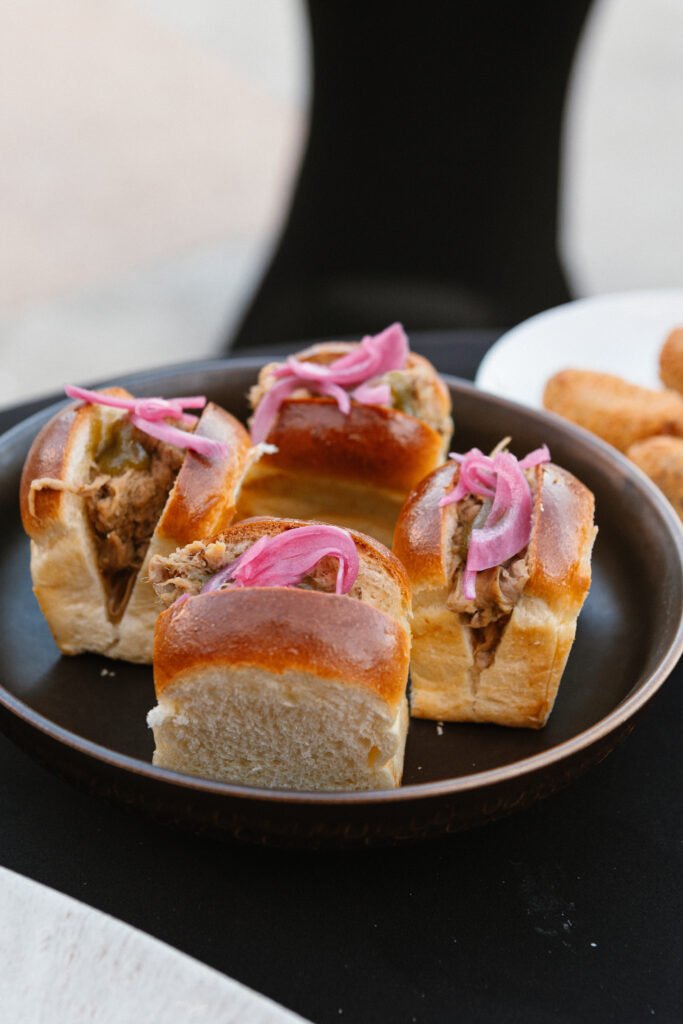
Of course, it’s impossible not to mention the hotel restaurant’s chef, whose dishes contributed so much to the overall atmosphere of the celebration. He masterfully brought together Indian and European cuisines for the wedding feast, while also incorporating local Spanish flavours and bites throughout the experience.
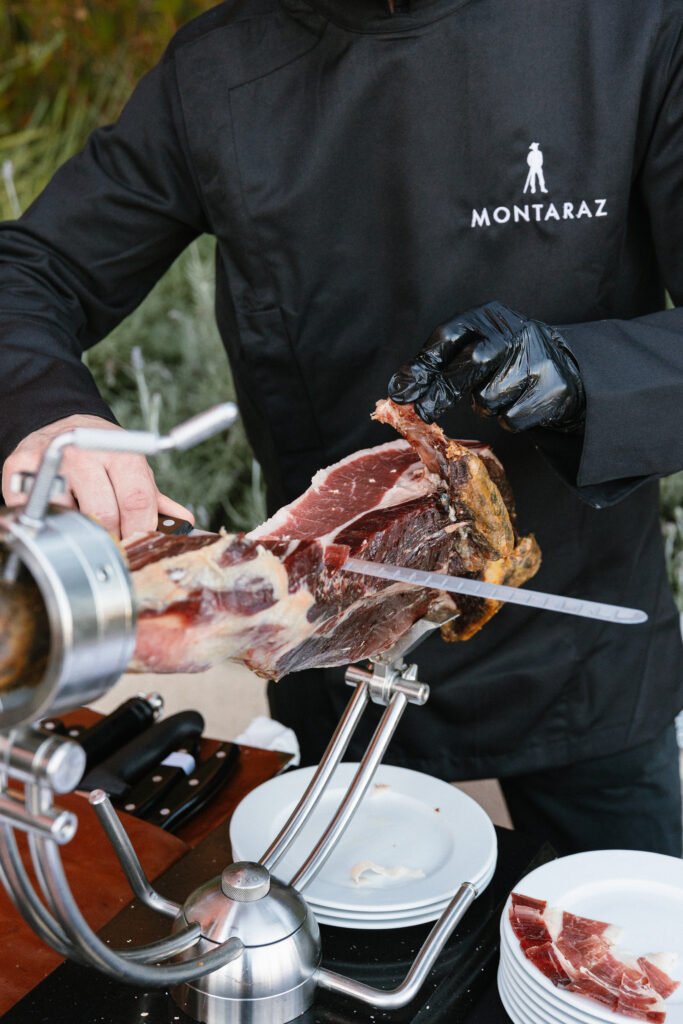

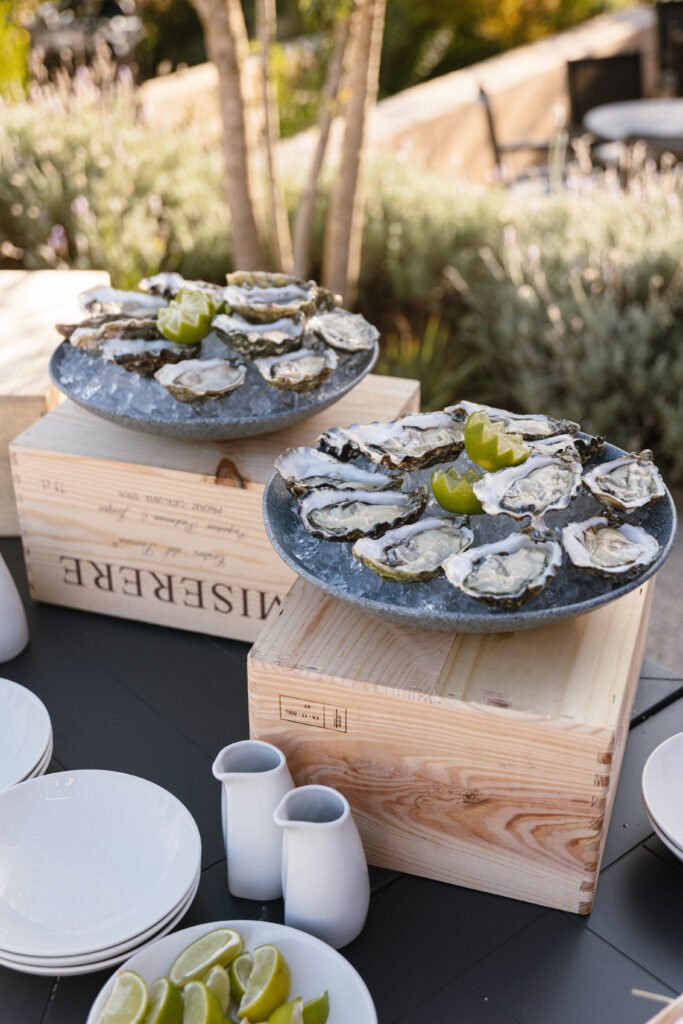
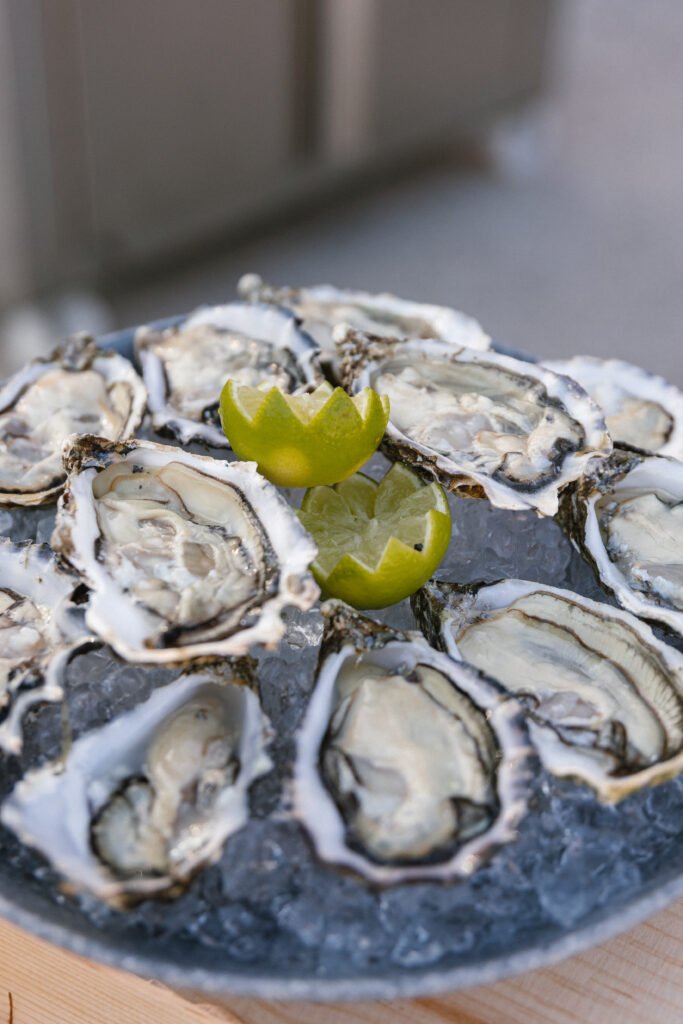
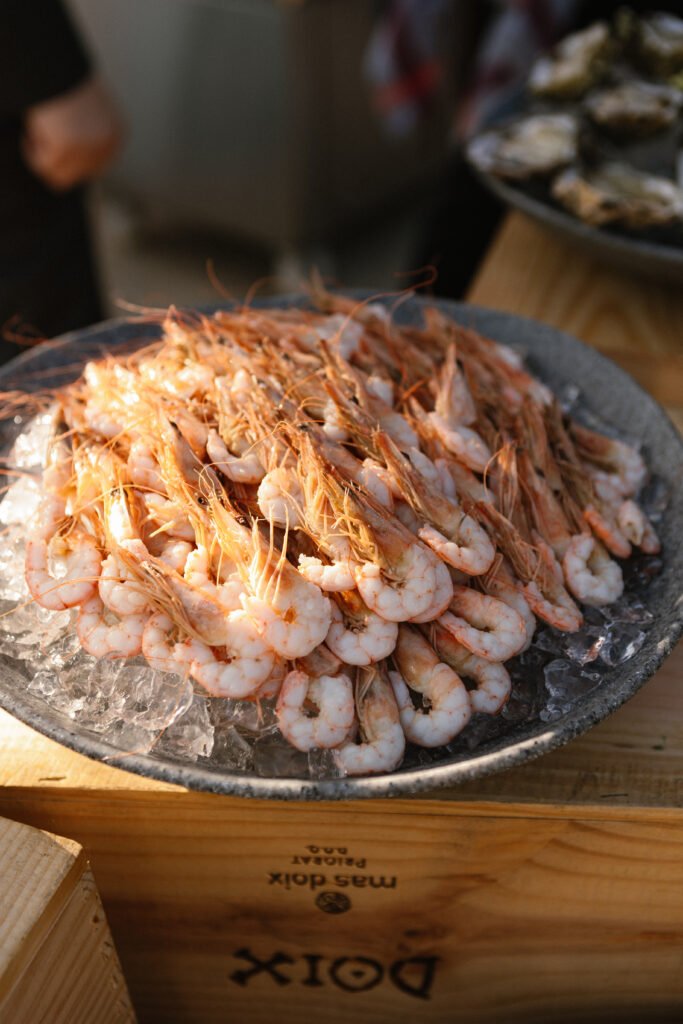
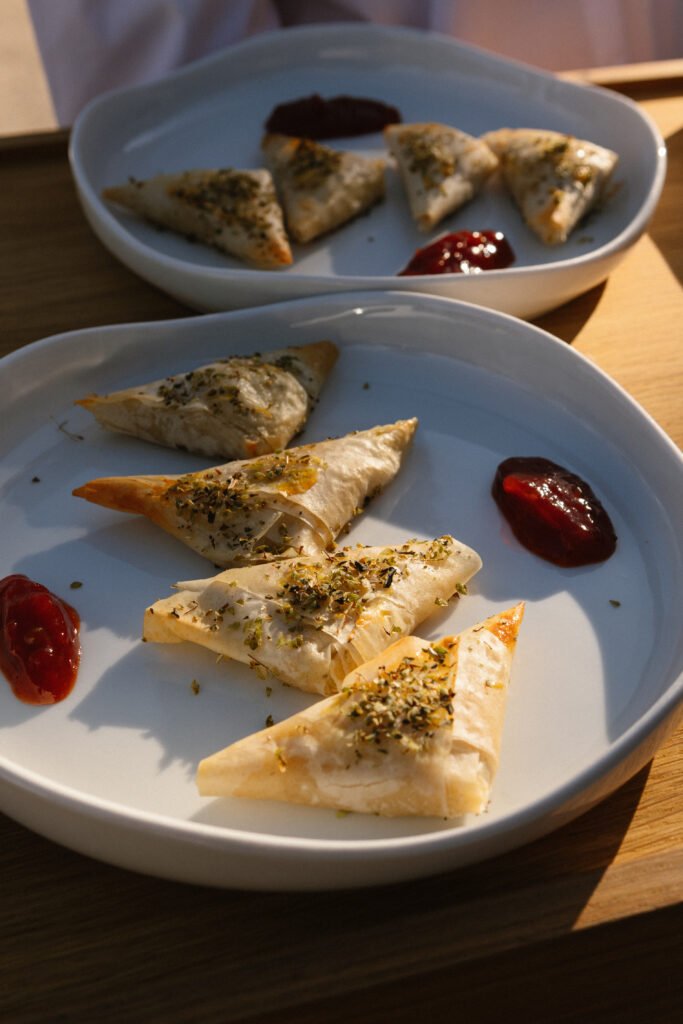

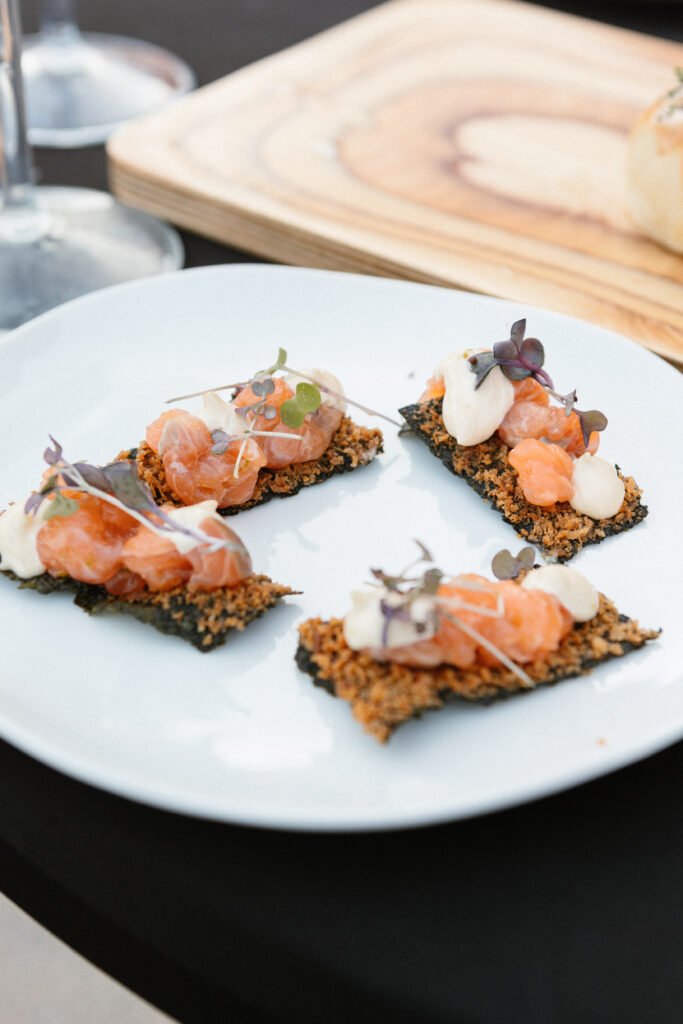
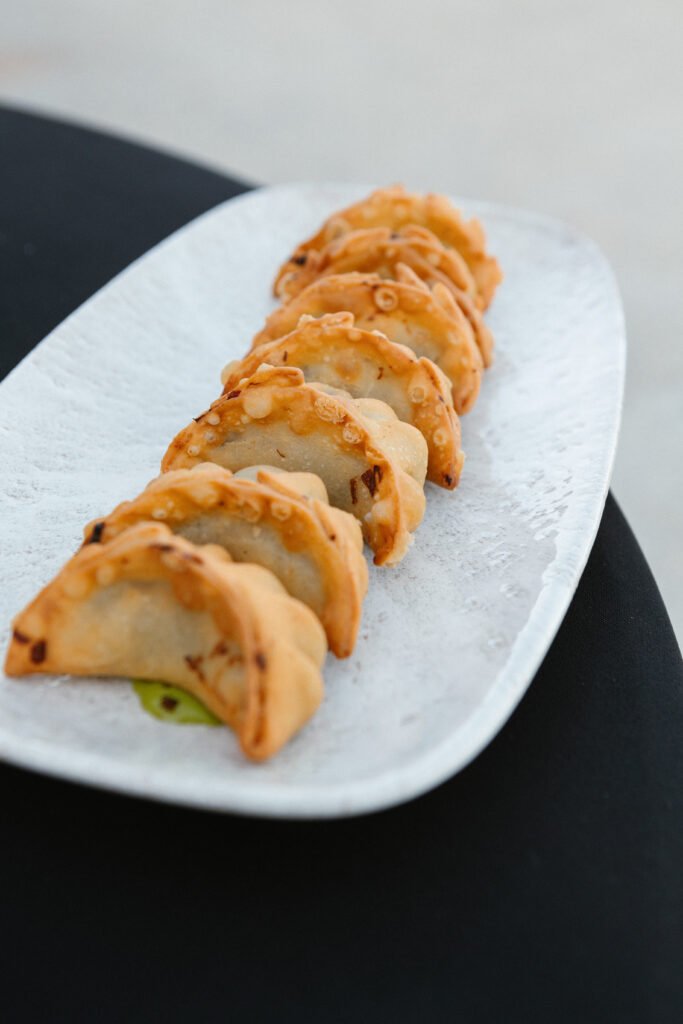
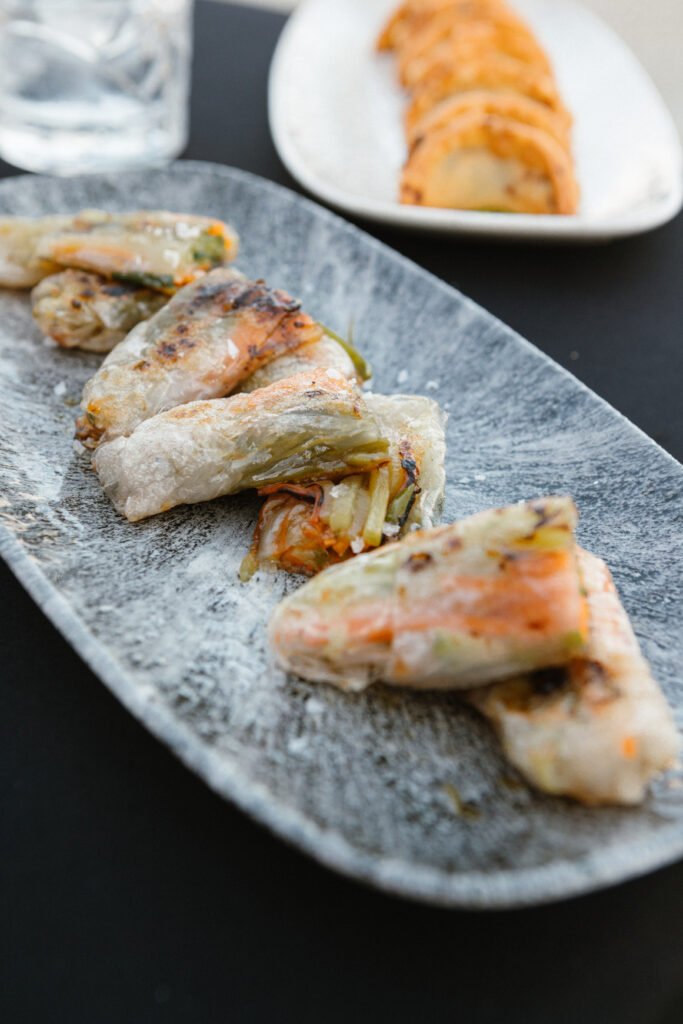
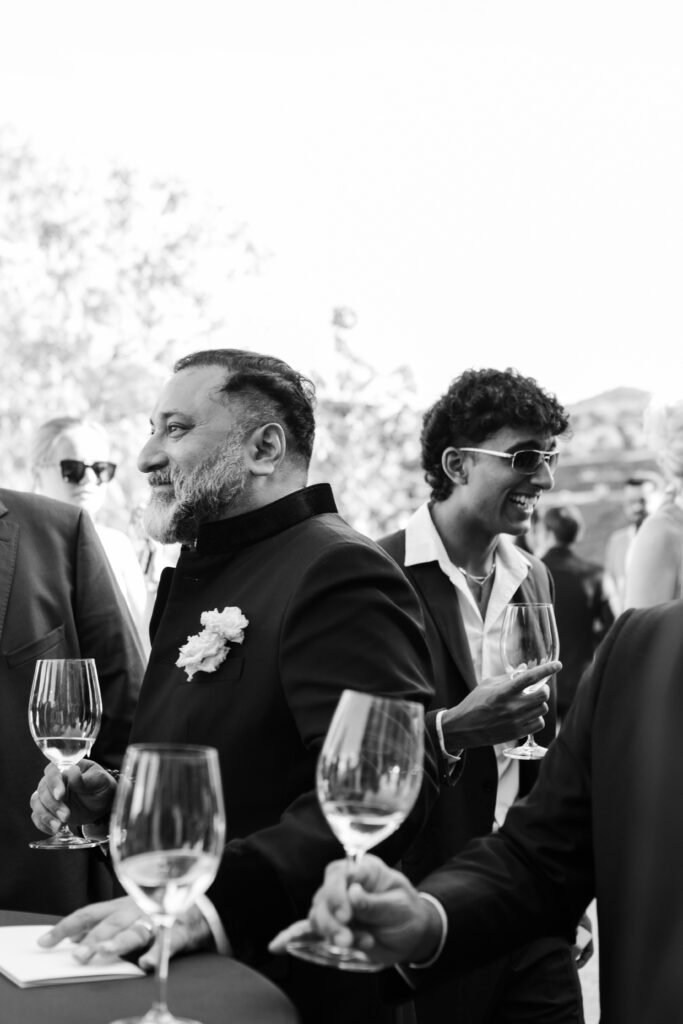
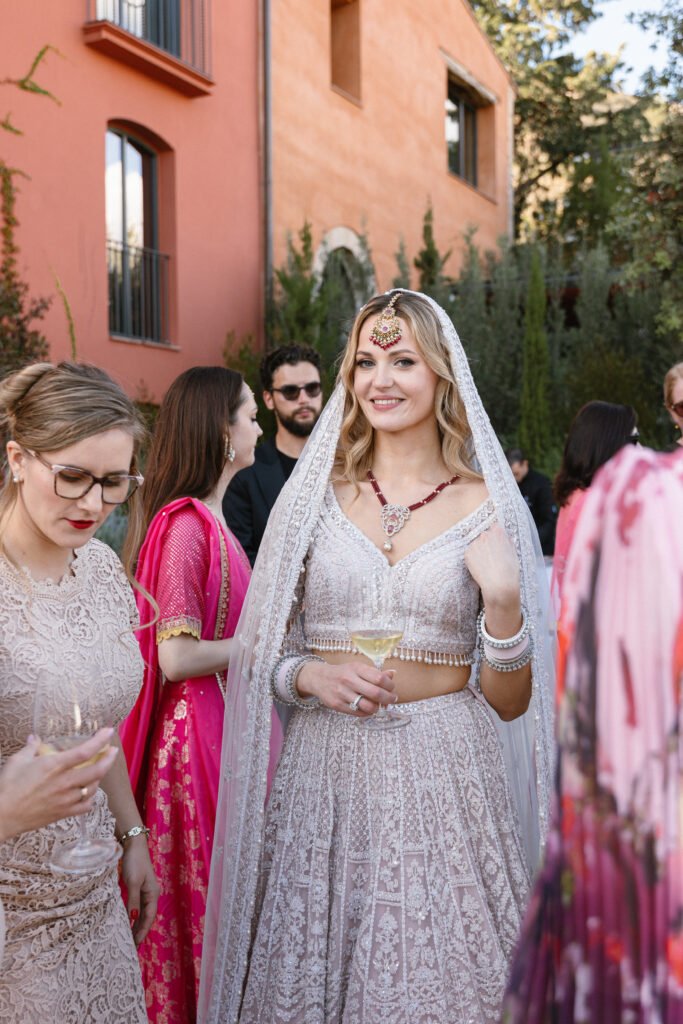
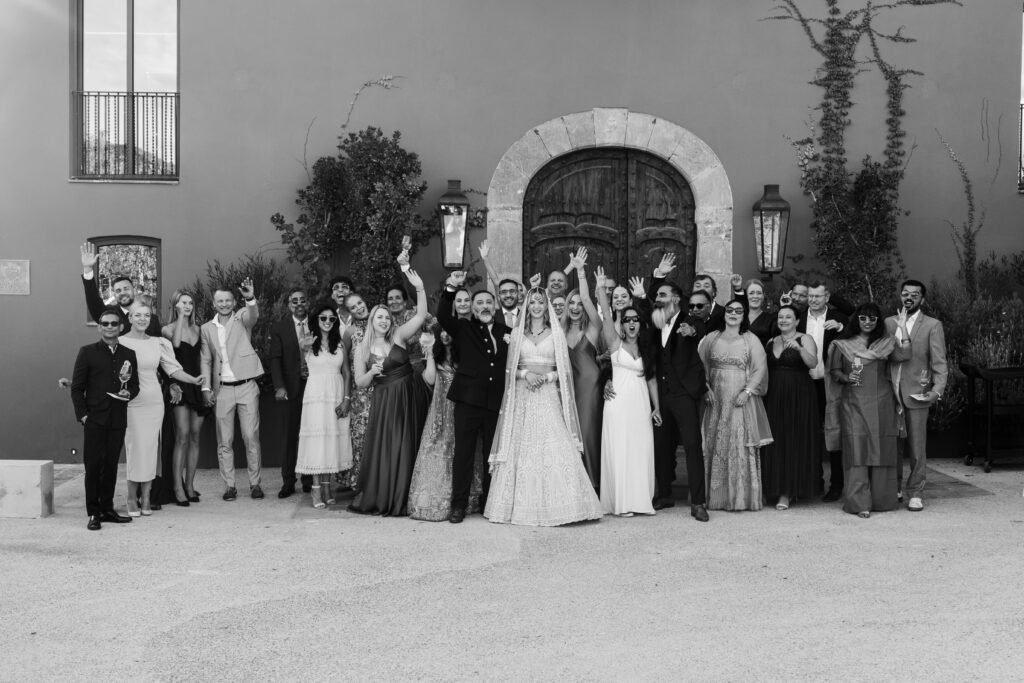
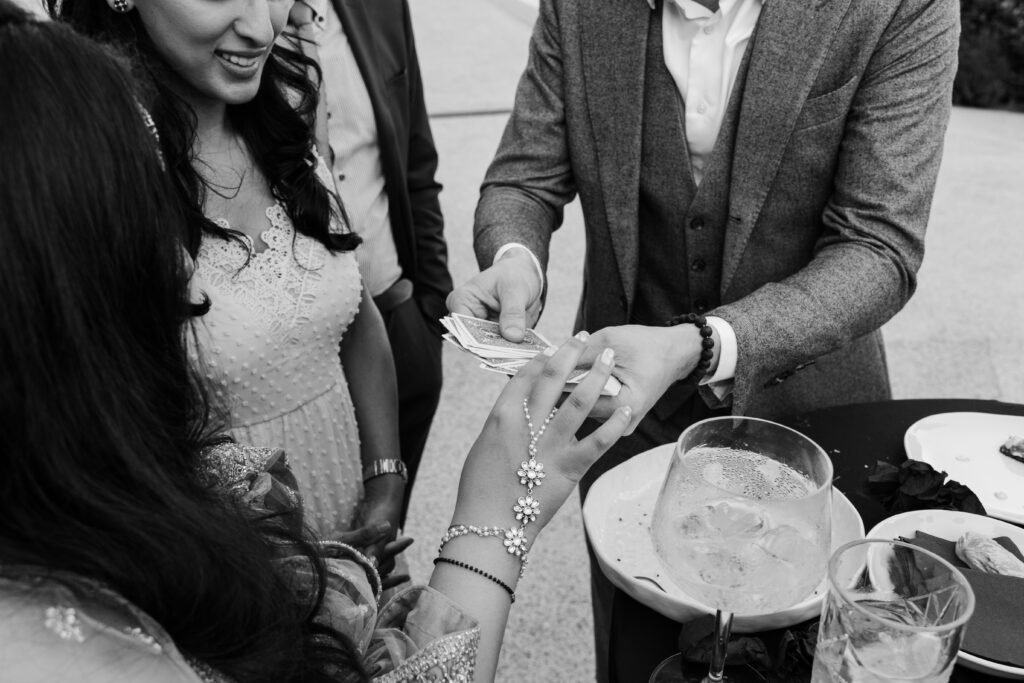
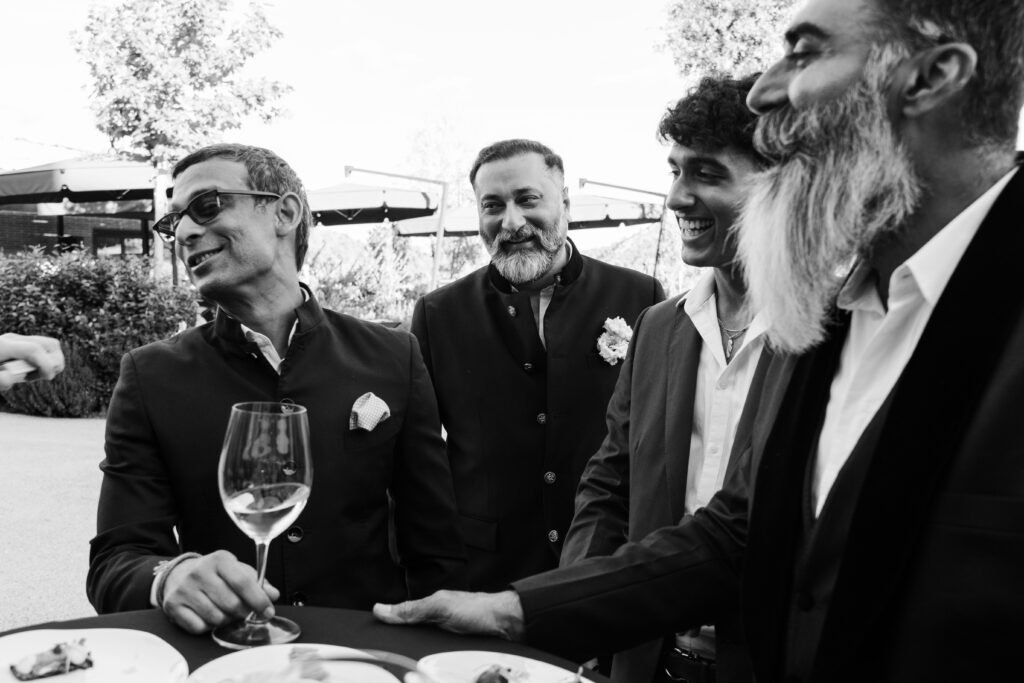
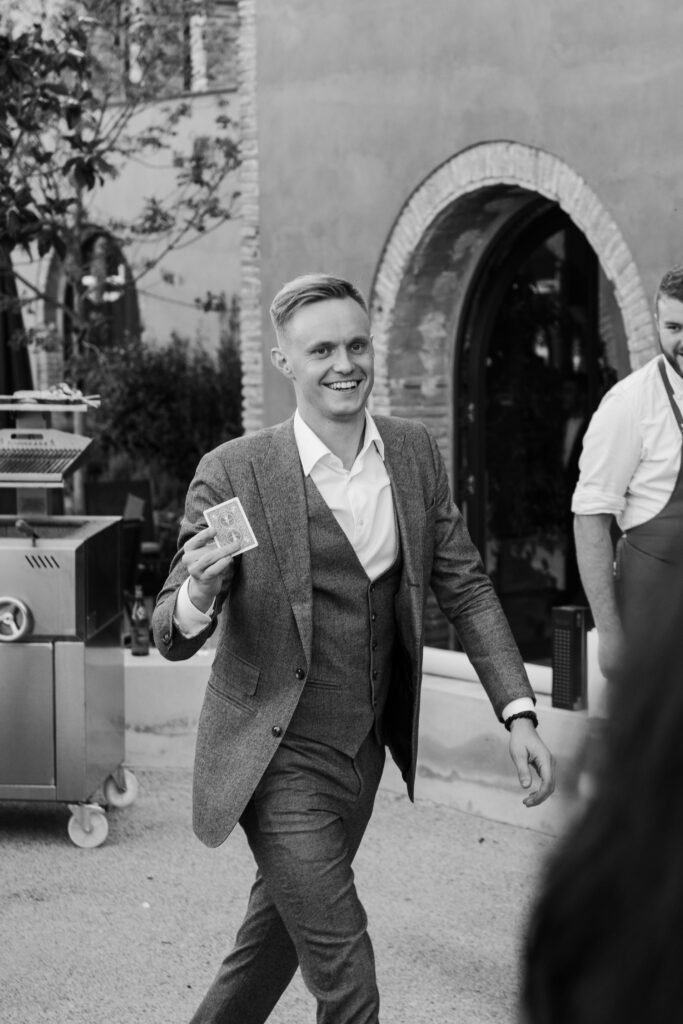
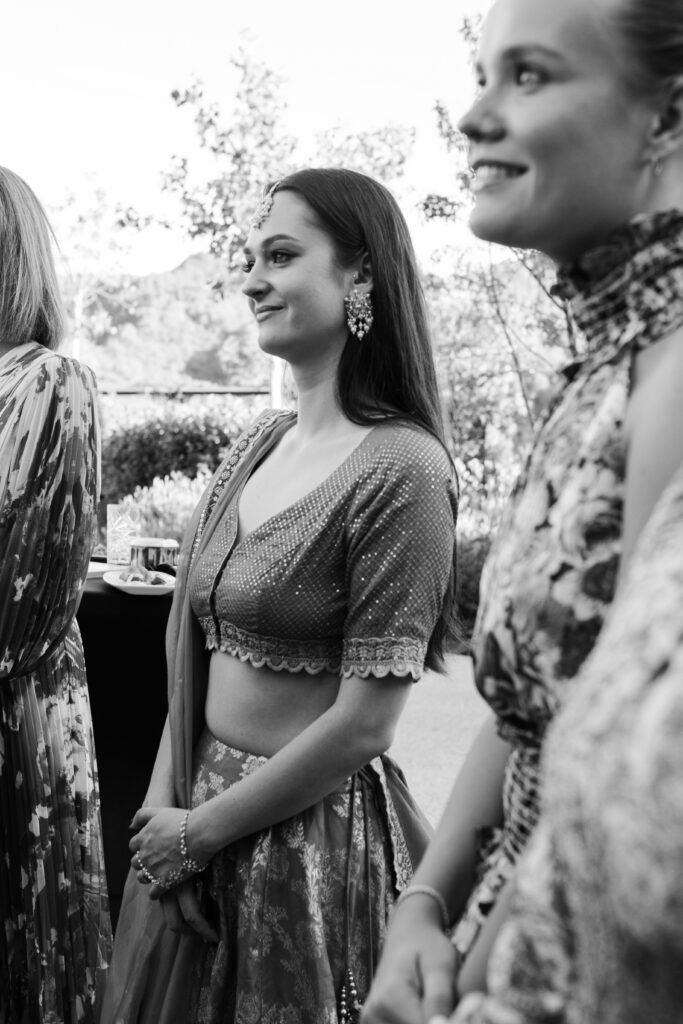
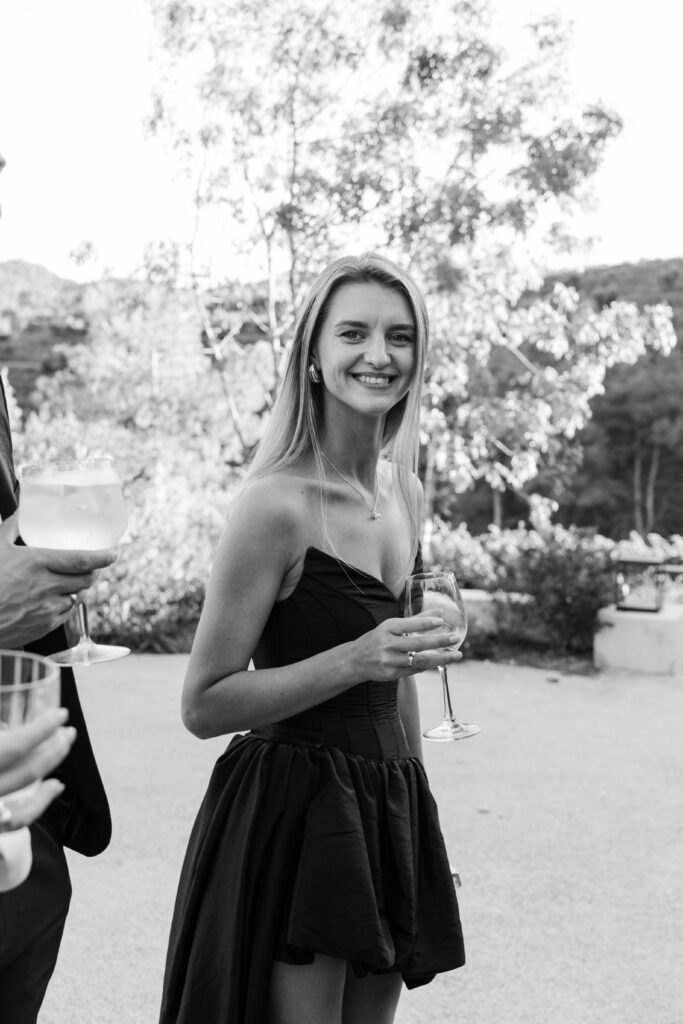
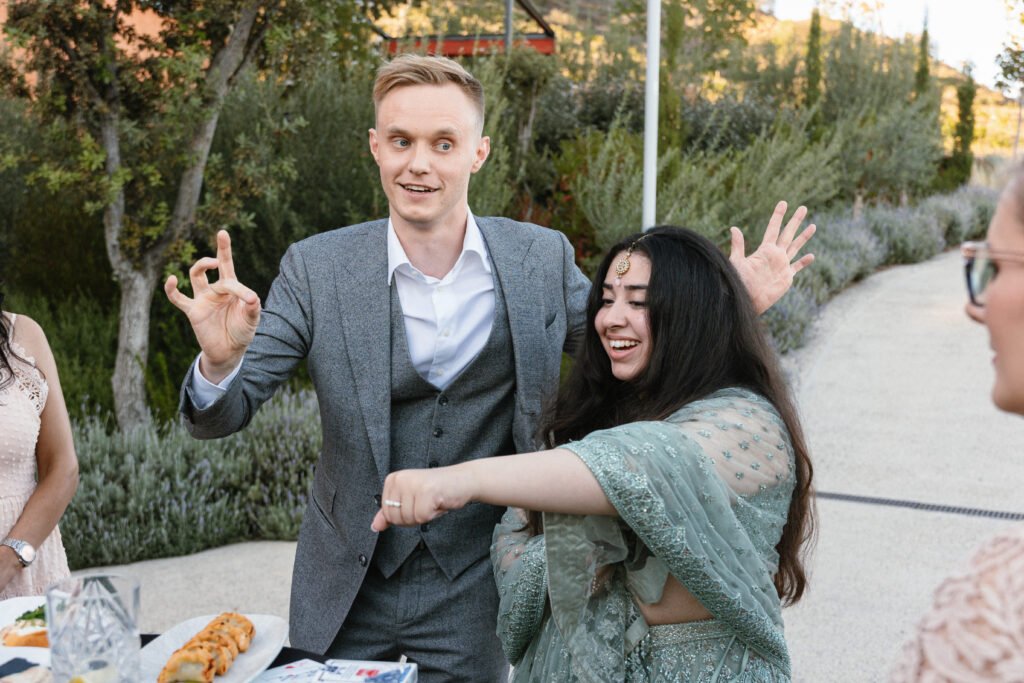
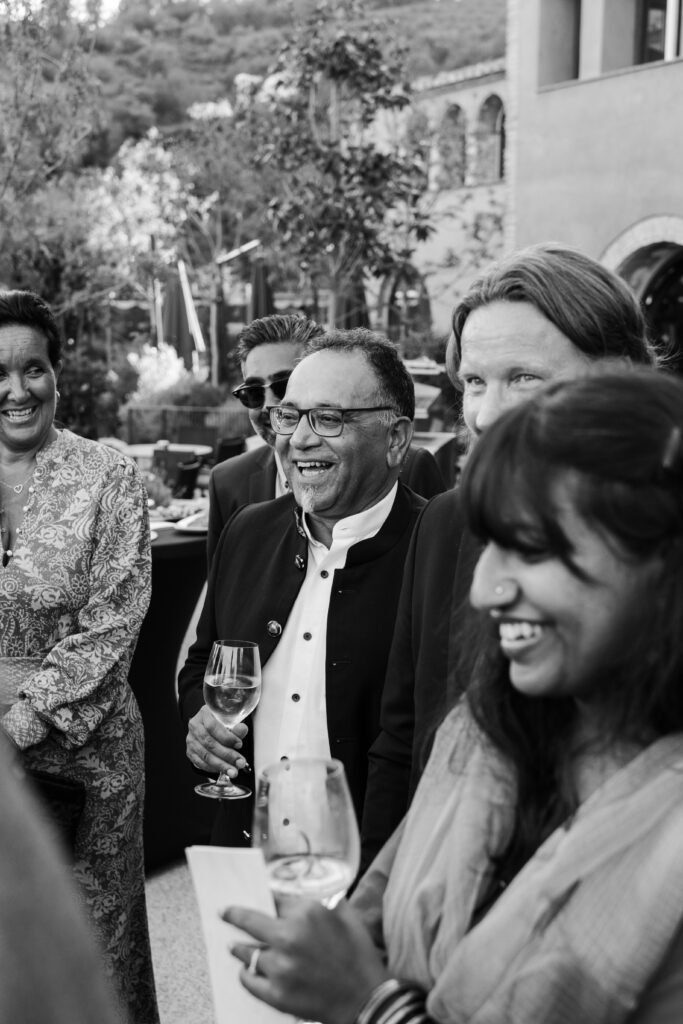
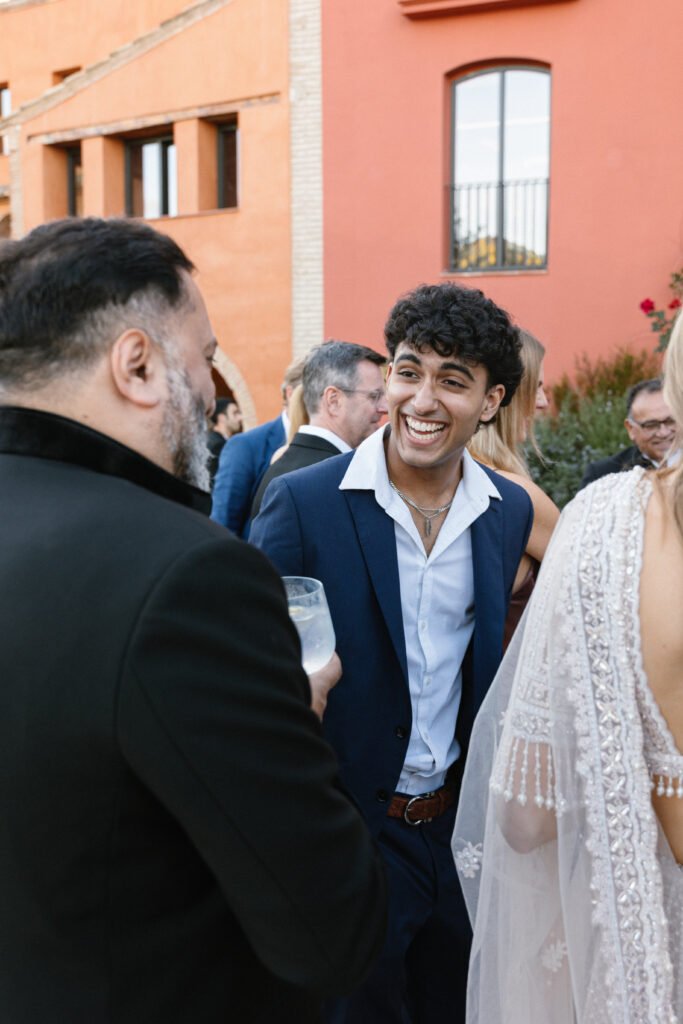
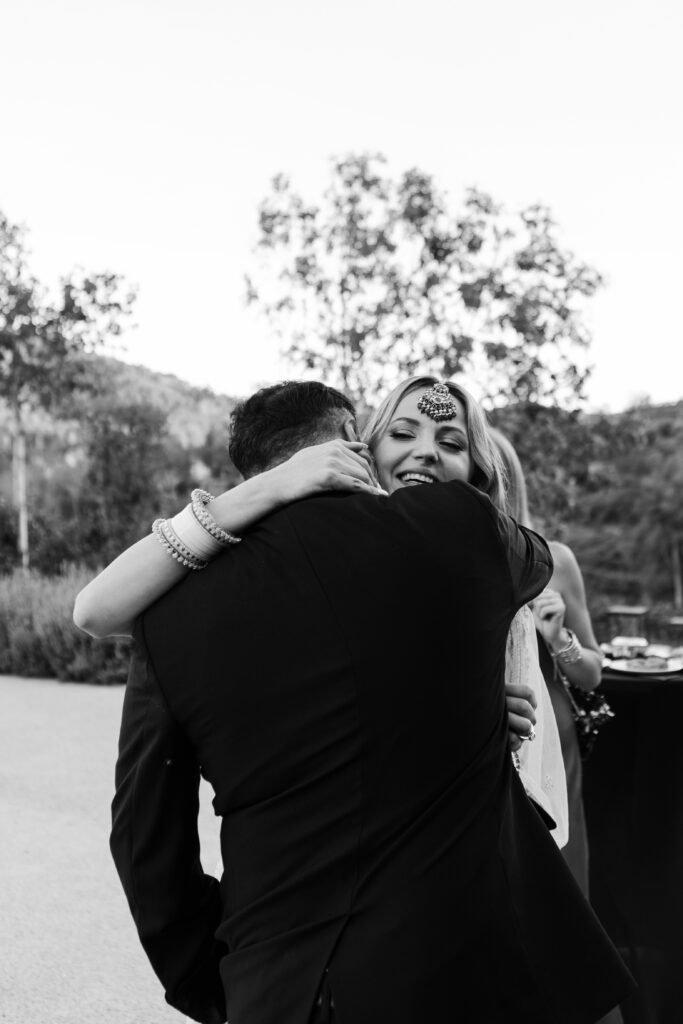
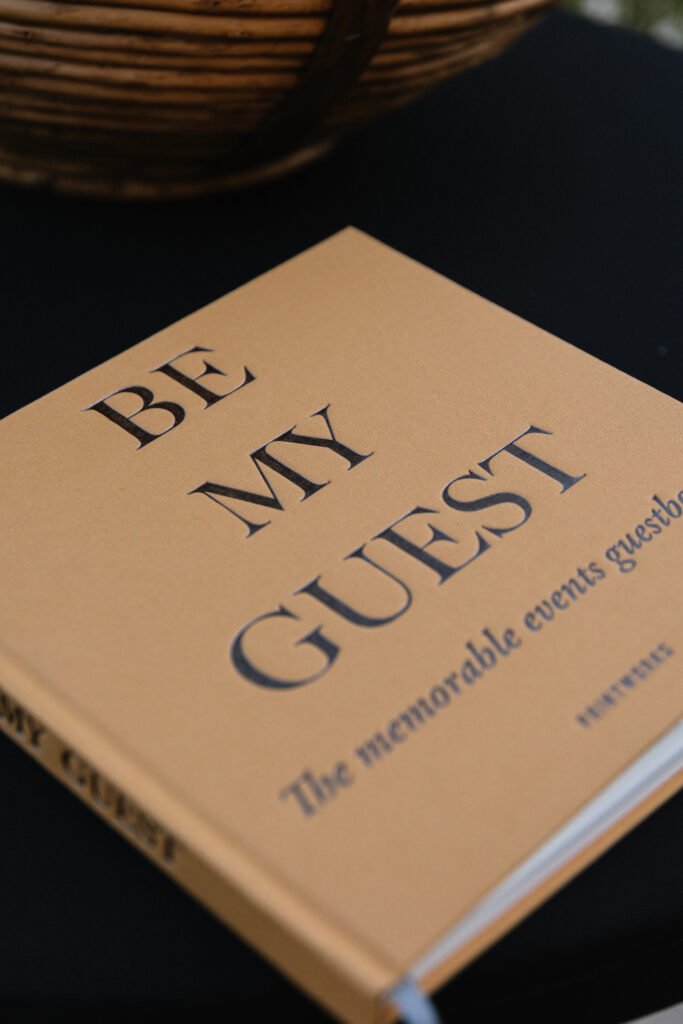
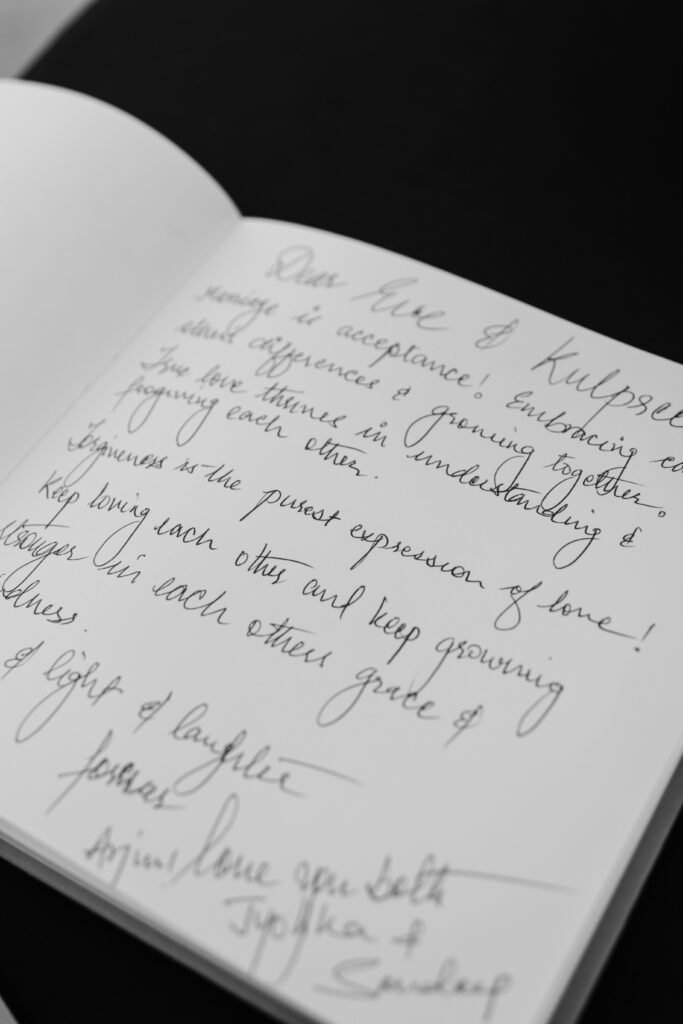
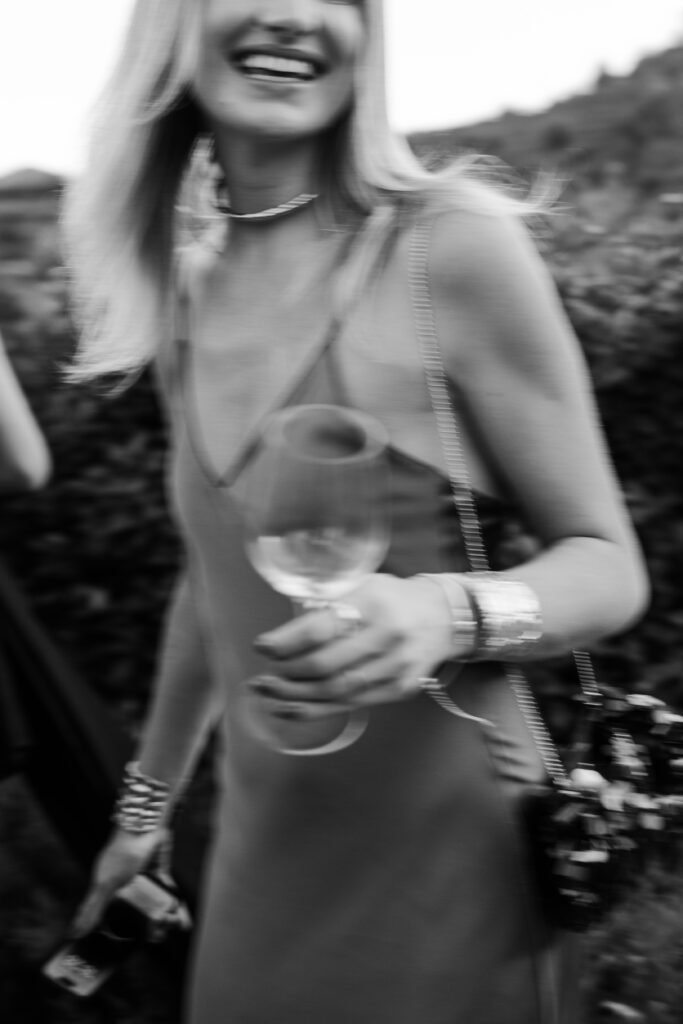
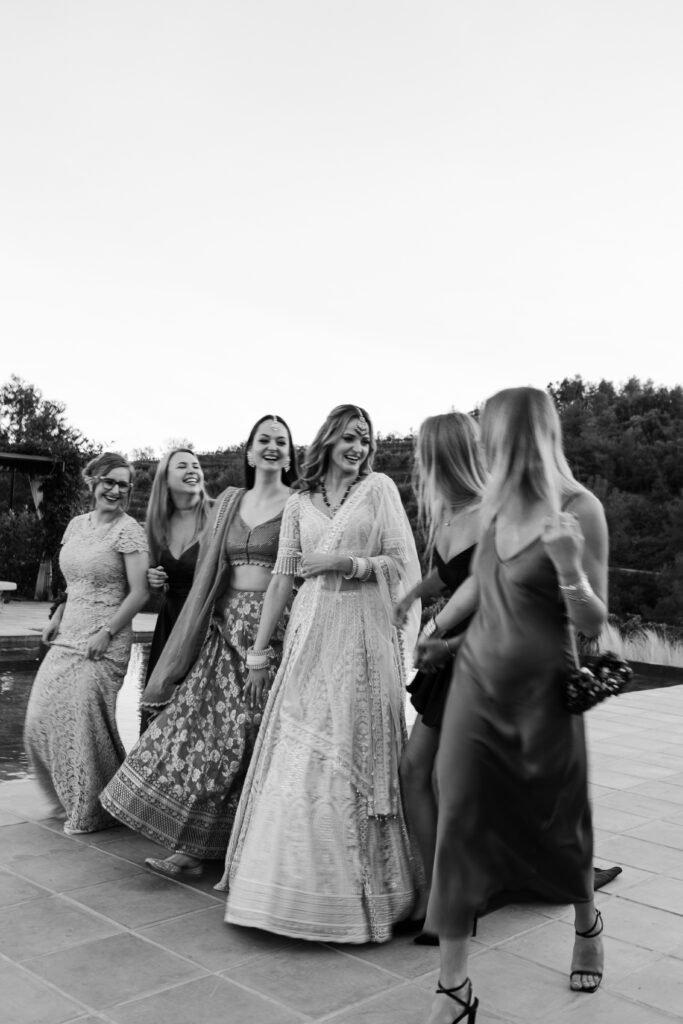
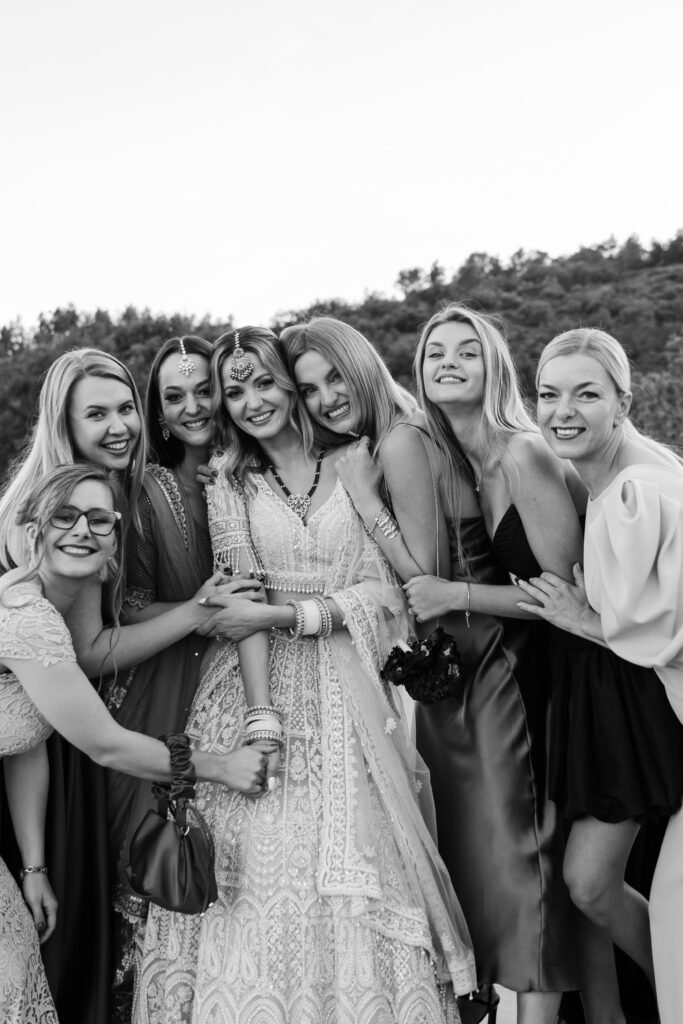
No matter what, the most important part of any celebration is the guests. Their smiles, their presence, and the way they truly let go create that intangible aura of happiness.
After Sunset
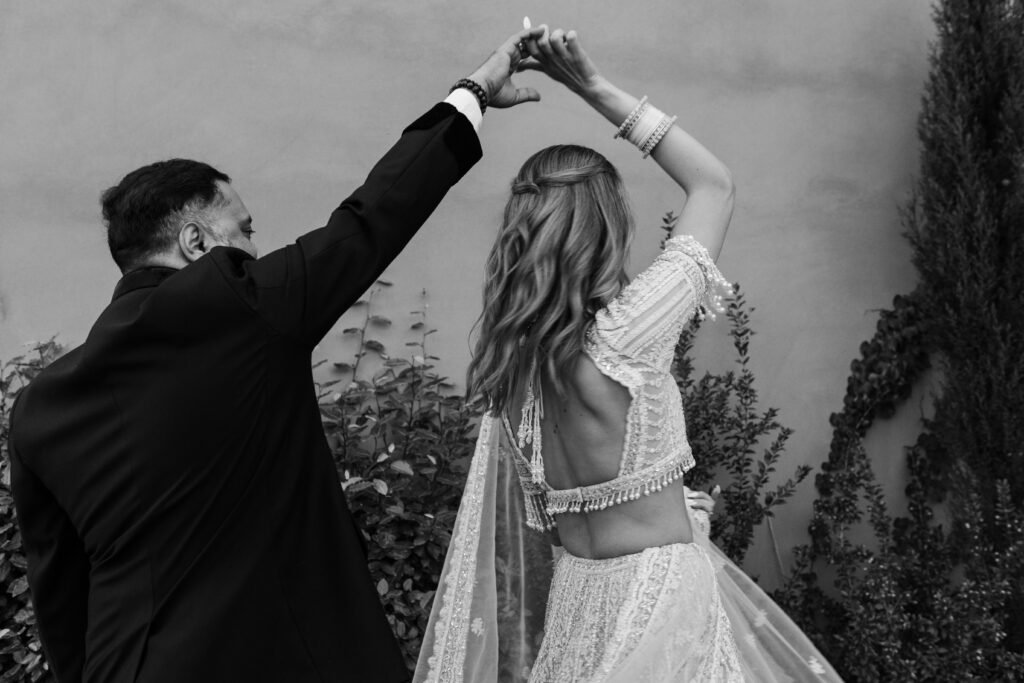
As the sun set and the day gently shifted into evening, the celebration took on a different rhythm — looser, warmer, and more instinctive. The structure of the day dissolved, making space for movement, laughter, and spontaneous moments. There was no single highlight that defined the evening. Instead, it was a series of small, vivid memories: shared glances across the table, conversations that stretched late into the night, music that pulled people onto the dance floor without hesitation. “It didn’t feel like a program,” Kulpreet recalls. “It felt like time unfolding naturally.” Guests weren’t rushing or watching the clock. The atmosphere invited everyone to stay present, to dance barefoot, to laugh loudly, to connect in ways that rarely happen in everyday life.
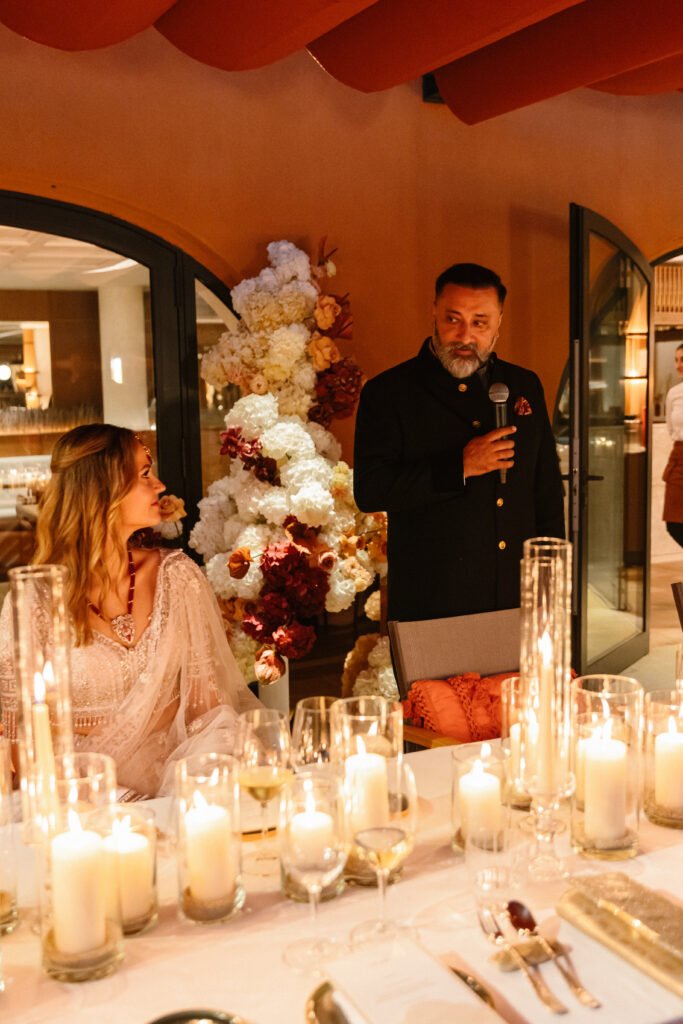
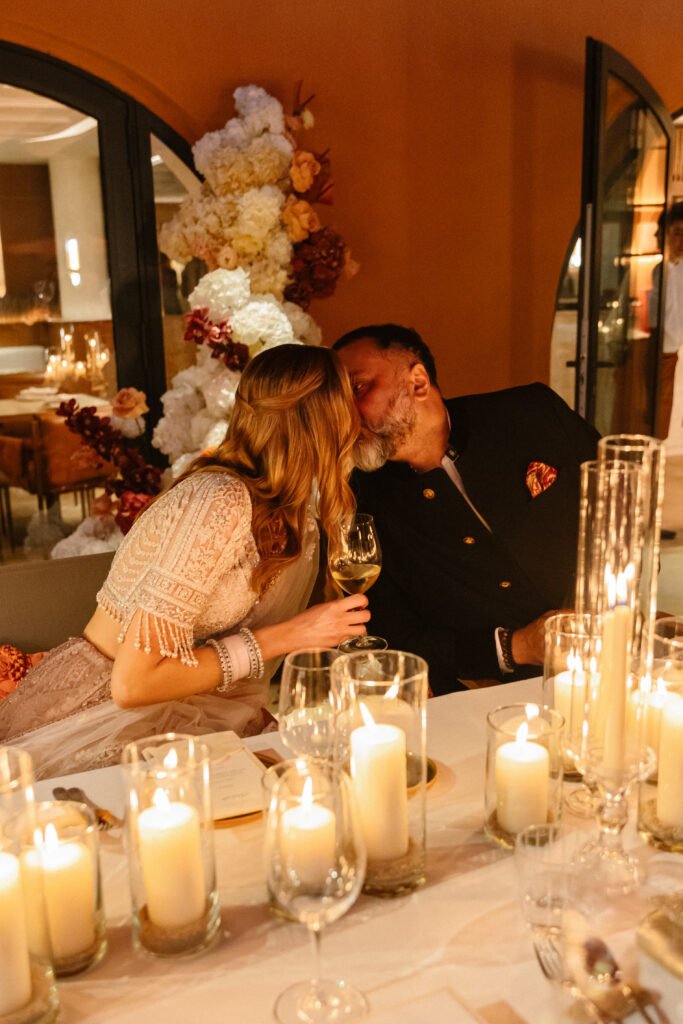
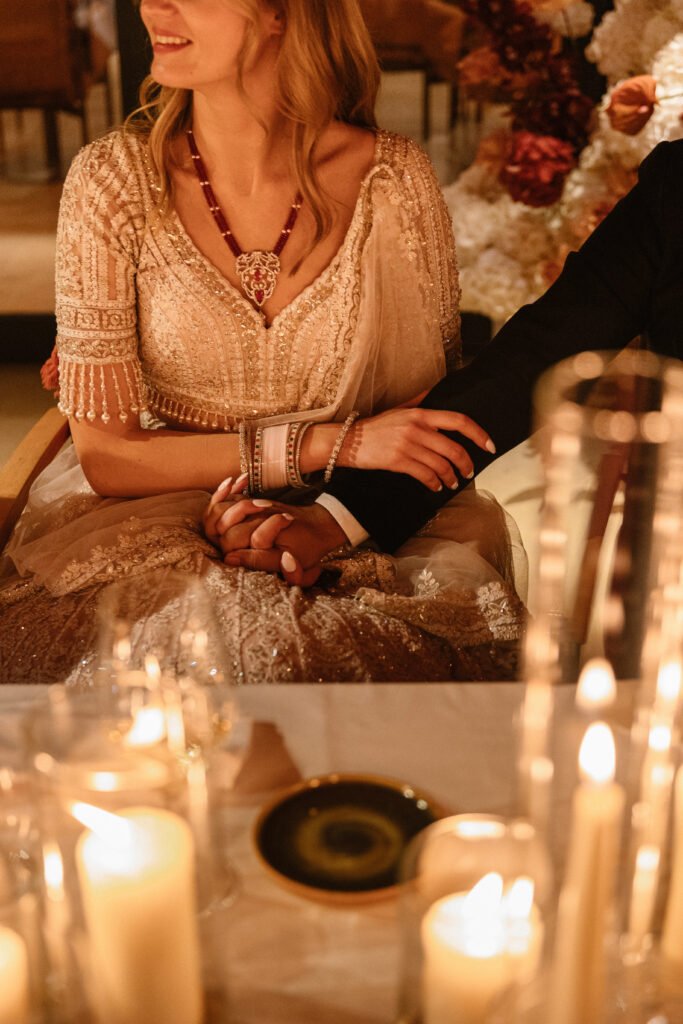
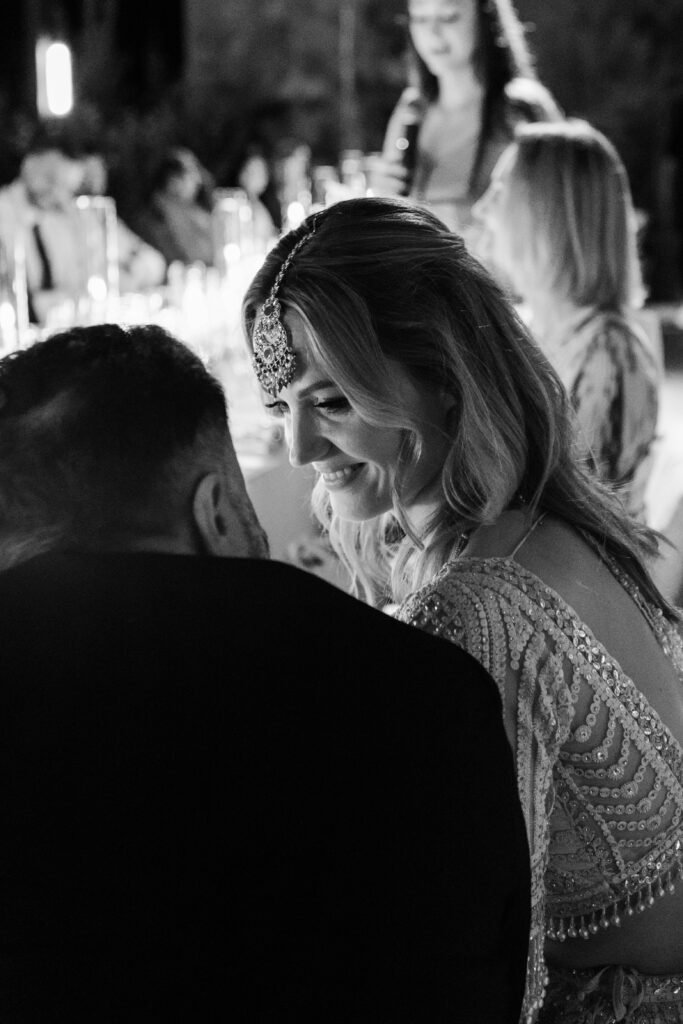
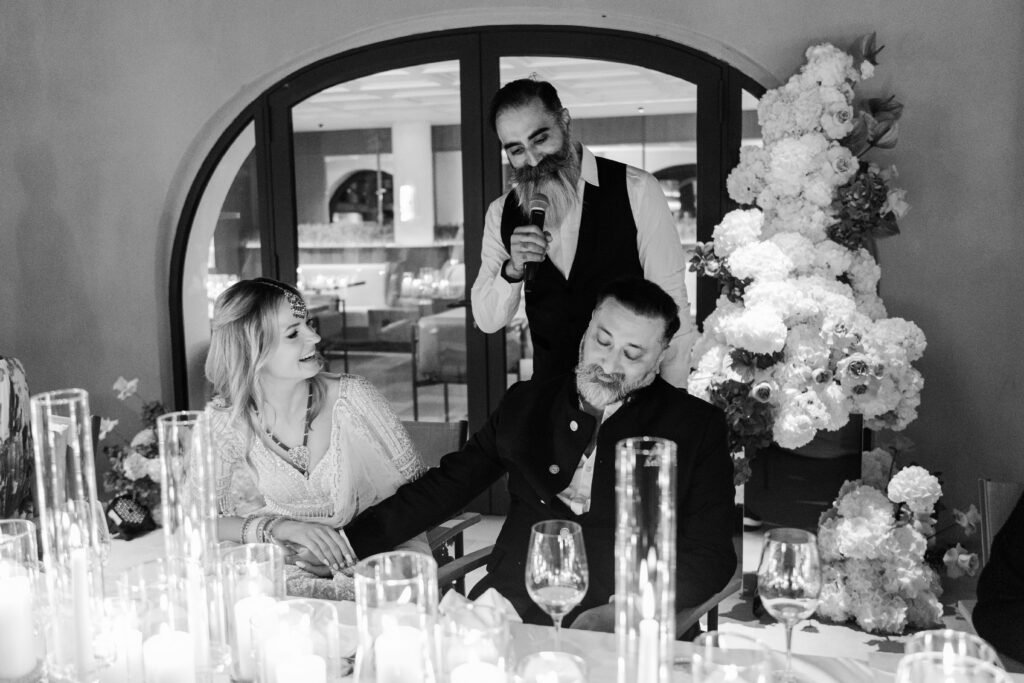
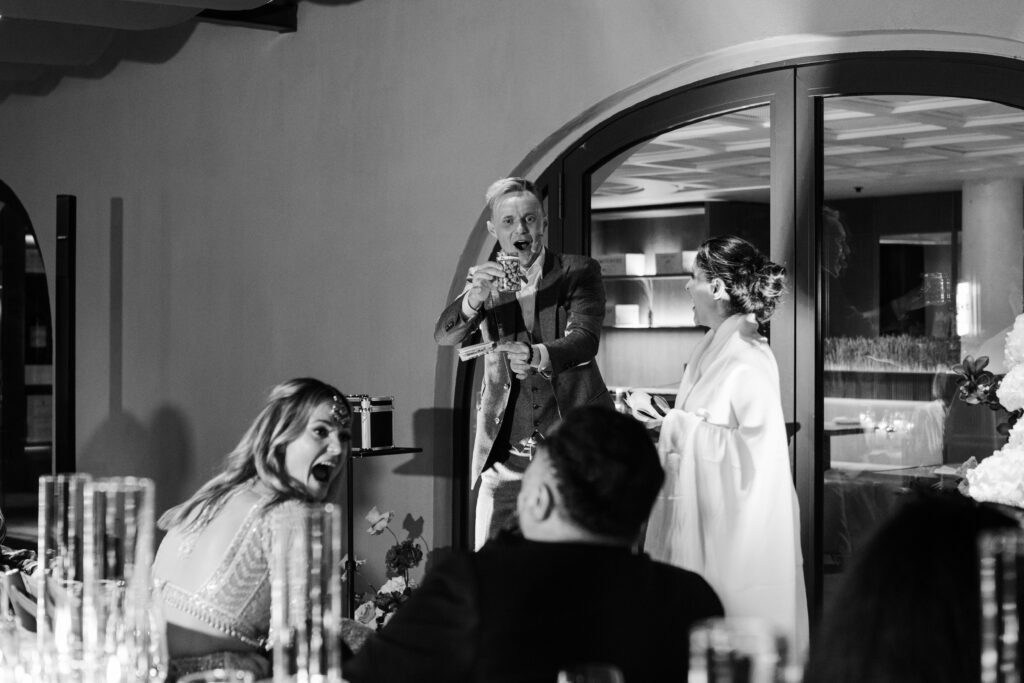
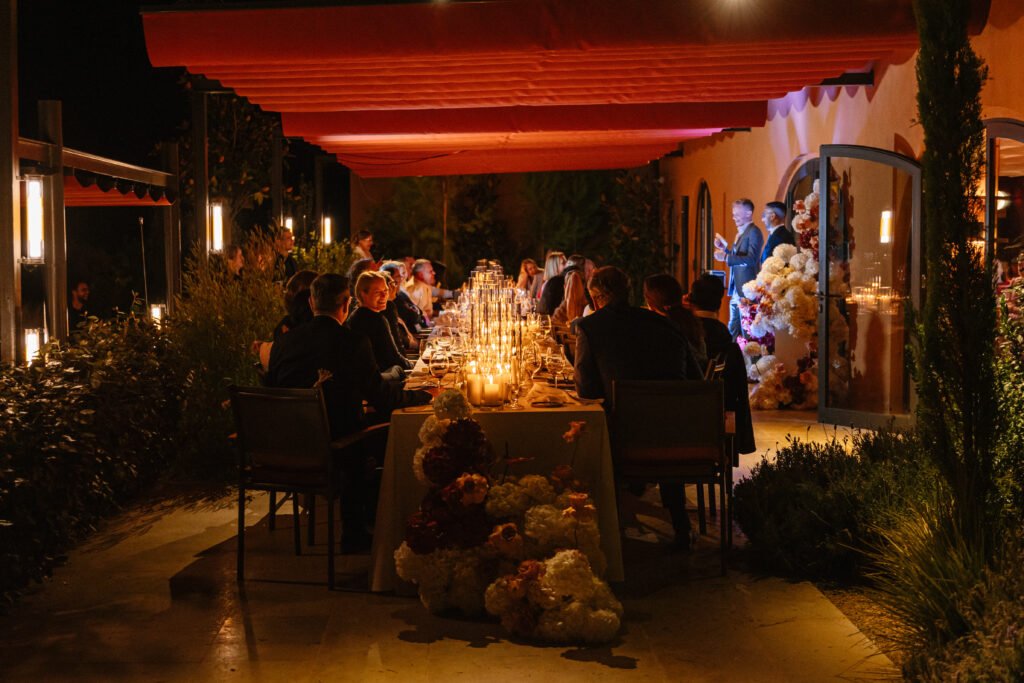
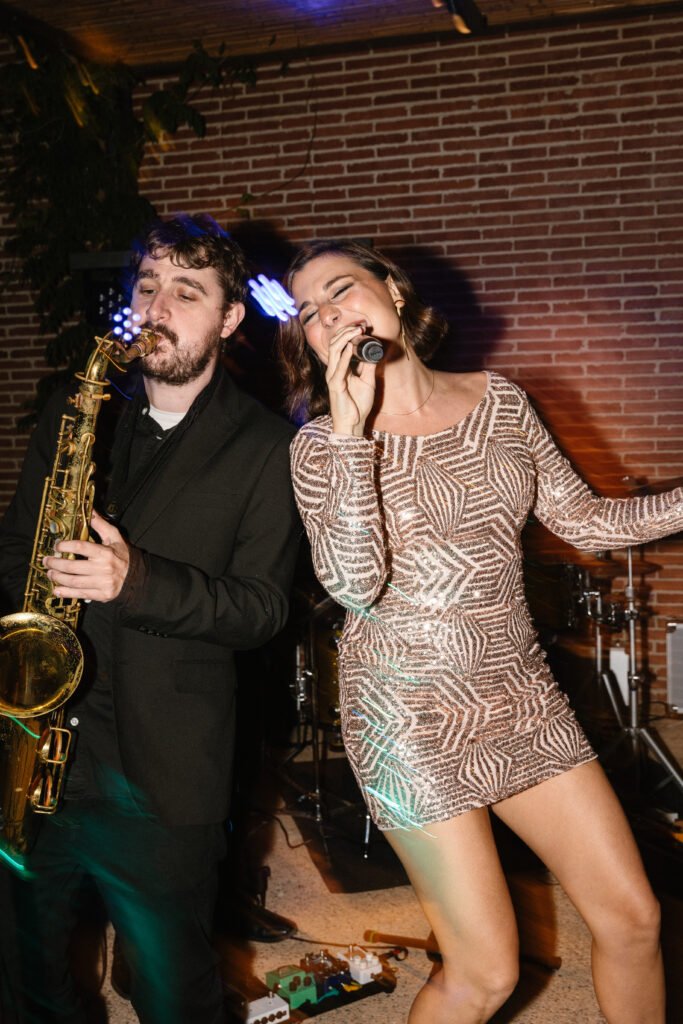
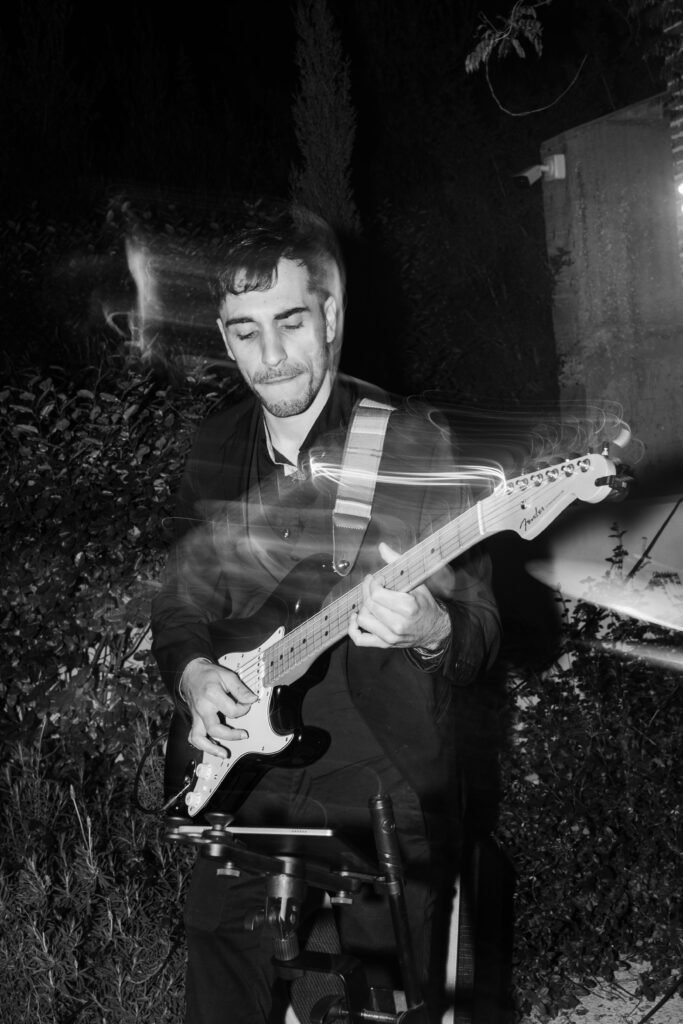
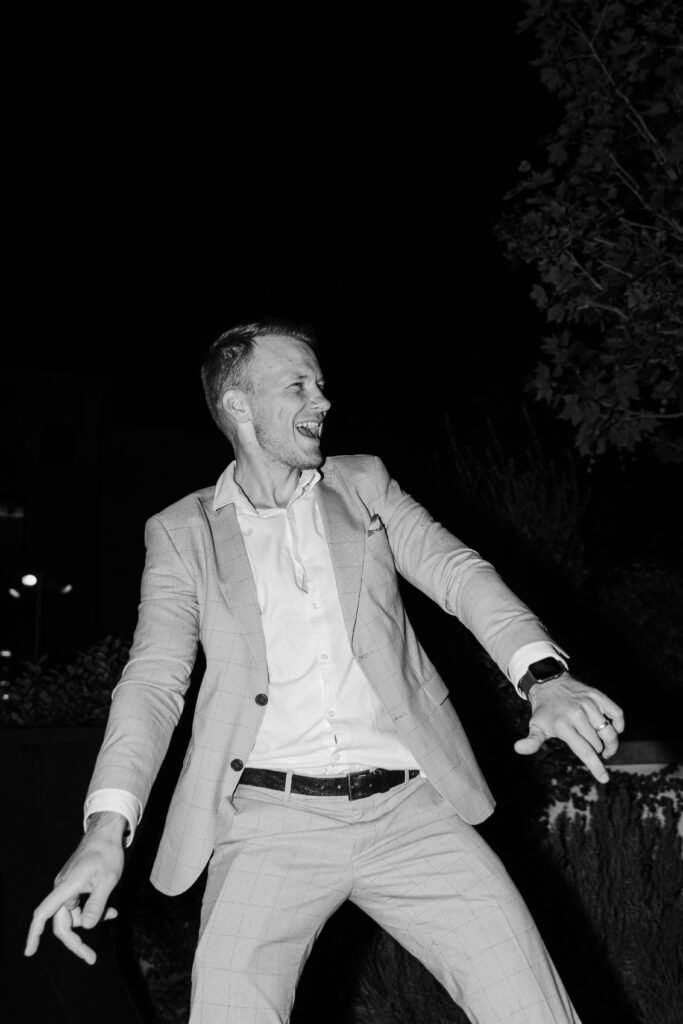
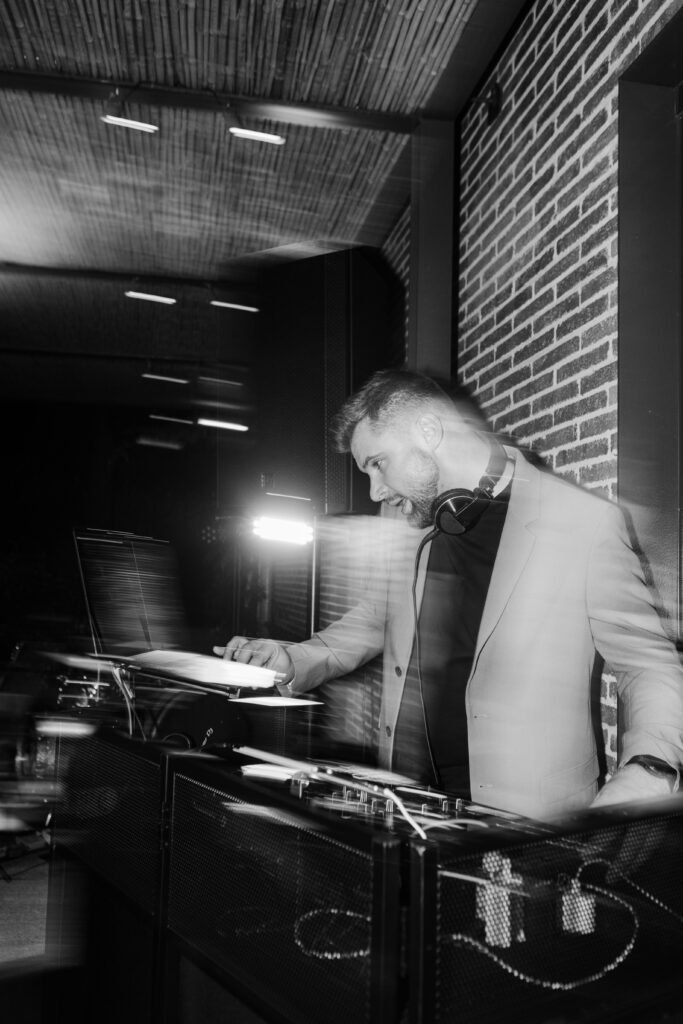
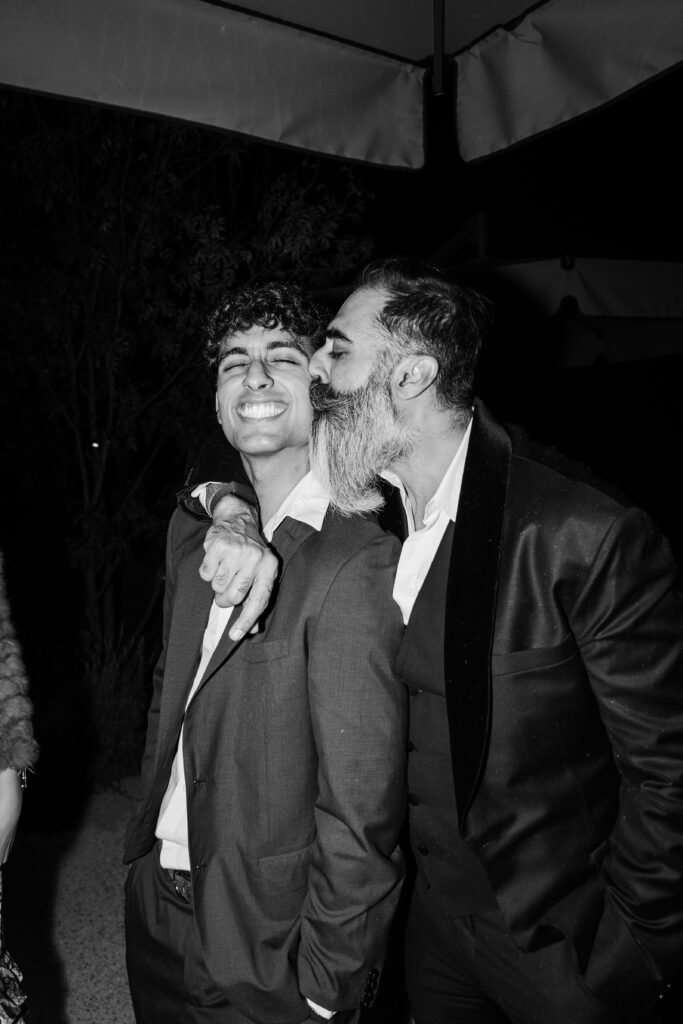
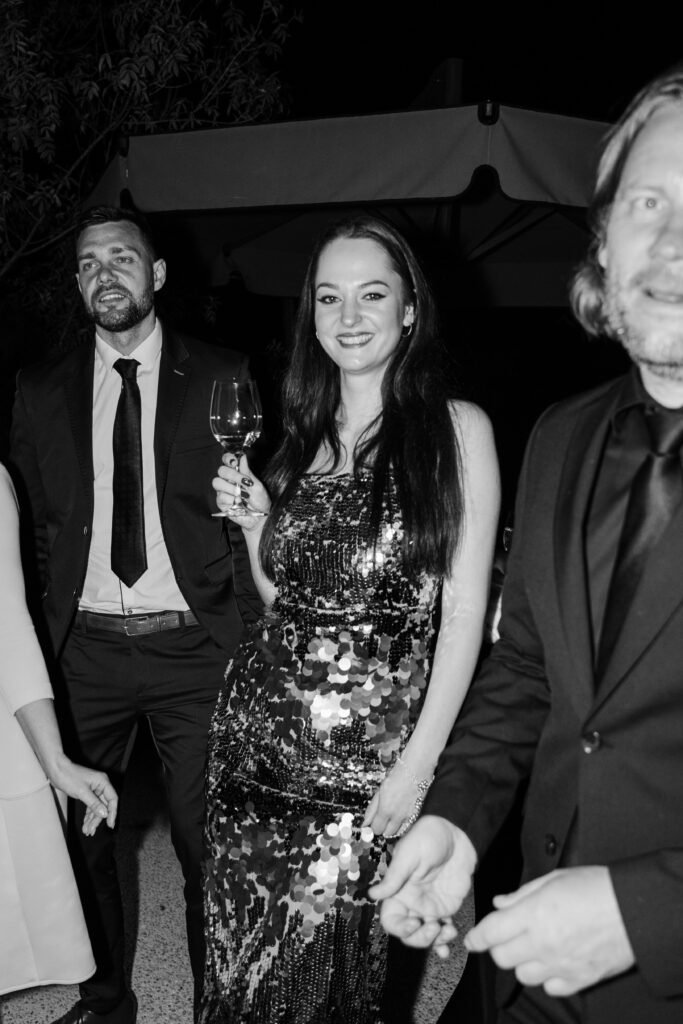
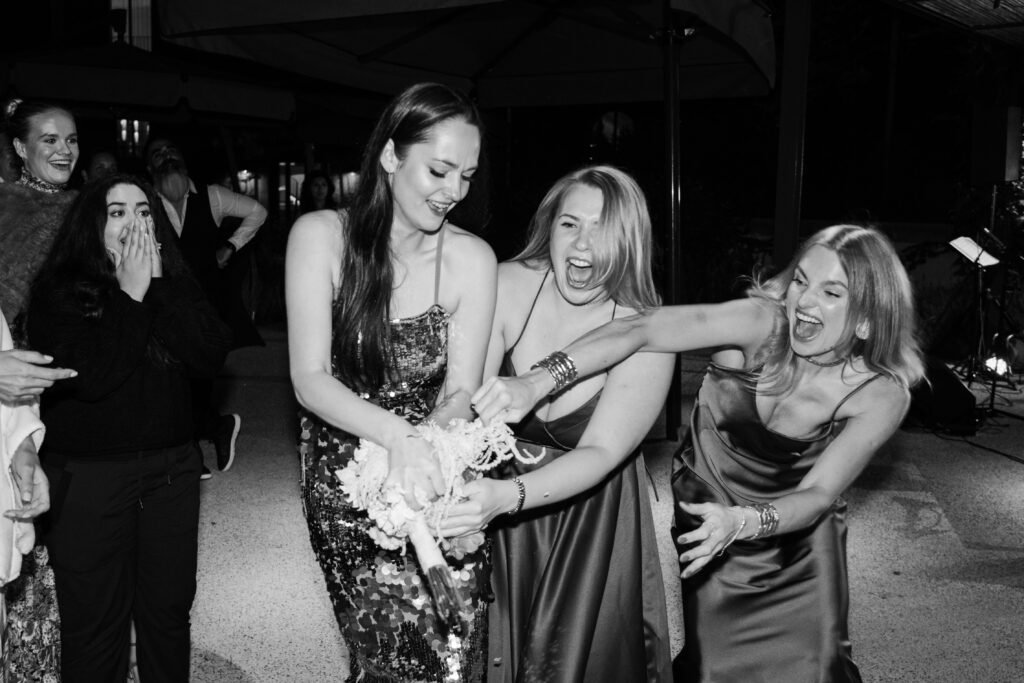
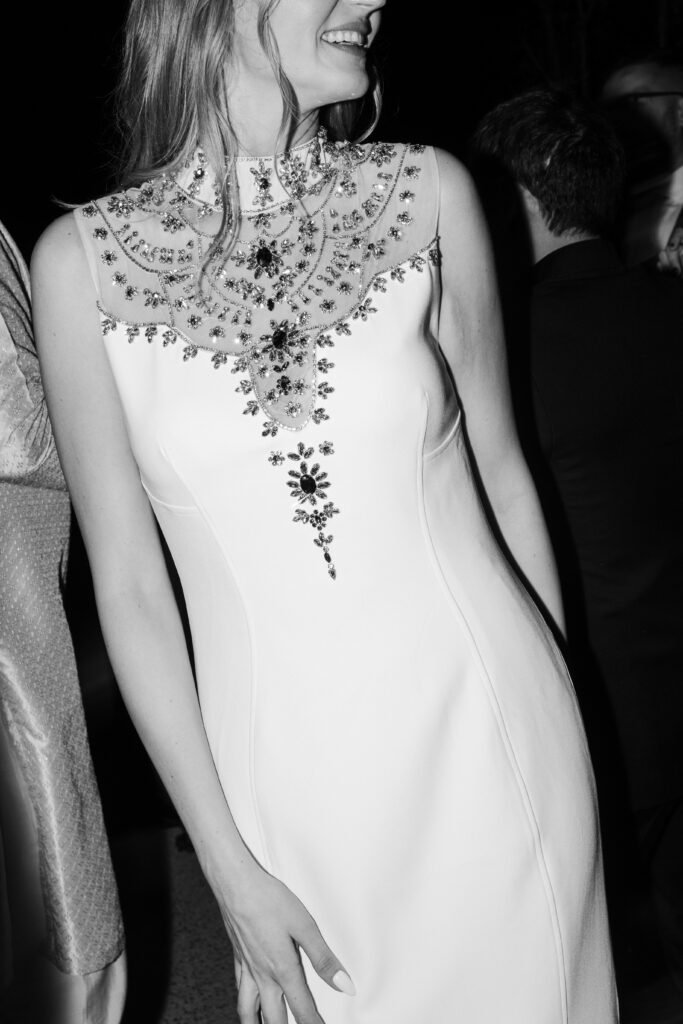
For Eidvilė, one of the most meaningful parts was seeing different worlds come together so effortlessly — friends and family from different places, cultures, and stages of life sharing the same space, the same joy. “There was a moment where I just stood back and watched everyone,” she says. “That’s when it really hit me — this is it. This is what we dreamed of.”
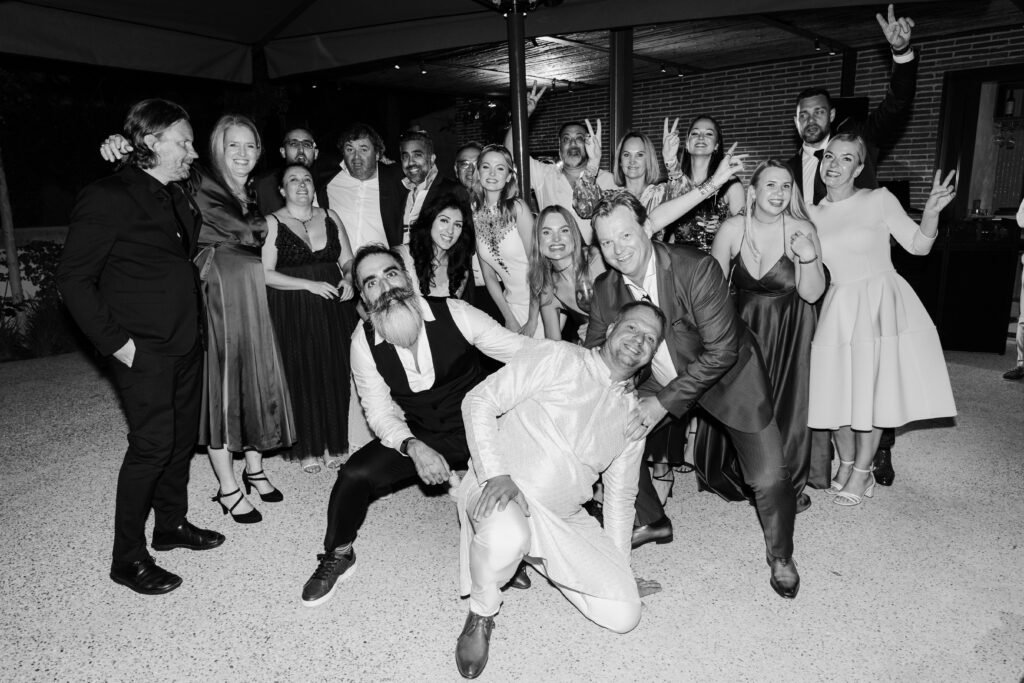
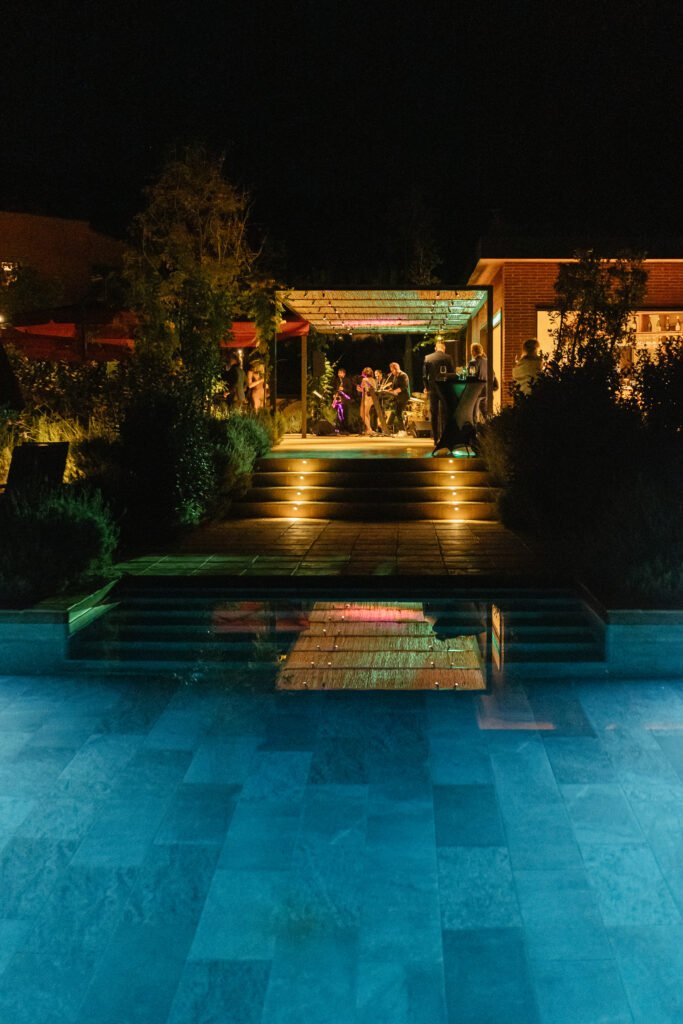
Long after the music faded, what remained was a feeling rather than a specific image. A sense of closeness. Of having shared something real. The evening didn’t end with a final moment — it slowly softened into memory.
Looking Back: What Truly Matters
Looking back at their wedding, Eidvilė and Kulpreet agree that what made the experience truly meaningful wasn’t any single decision, but the intention behind them all. Planning a wedding abroad, from a distance, requires trust — in people, in timing, and in your own instincts. Their biggest advice to other couples is to stay connected to why you’re doing it in the first place. “There are so many decisions,” Eidvilė reflects. “It’s easy to get caught up in details that don’t actually matter to you.” What helped them most was clarity. Knowing what was important — atmosphere, presence, connection — made it easier to let go of everything else. Not every choice needs to be perfect; it just needs to align with your values as a couple. “If something supports the feeling you want to create, it’s the right decision,” Kulpreet adds. “If it doesn’t, it’s okay to let it go.”
From a practical perspective, they emphasize the importance of working with people you genuinely trust, especially when planning from afar. Clear communication, shared vision, and the ability to let professionals do what they do best made a tangible difference. There isn’t much they would change. And that, perhaps, is the biggest confirmation that the process worked.
“In the end, what stays with you isn’t the timeline or the details,” Eidvilė says. “It’s the way the day made you feel.”
Their wedding became exactly that — not a performance, not a checklist, but a shared experience. One that continues to live on in memory, in photographs, in stories retold, and in the quiet certainty that they created something deeply their own.